New England Landmark Realty (NELR) · Kore's Design Eye
Vermont buyers make their go/no-go call in the first 90 seconds. The entry is where that clock starts. Most listings in Central Vermont are losing that race before the buyer even takes off their coat.
The Short Version
Vermont entries — cluttered, dim, and defeated — are triggering buyer doubt before a single room is seen. The fix costs less than a tank of gas and takes a weekend, but it has to happen before mud season turns the problem from staging into evidence.
If You Only Do 3 Things
- Clear the entry completely — every boot, coat, and piece of mail — then add back only one intentional layer (a rug, a hook rail, one plant)
- Replace the entry bulb with a warm 2700K LED today; cold white light in a small space photographs like a police lineup
- Add a mirror — it doubles perceived space in listing photos and gives buyers something to look at instead of looking away
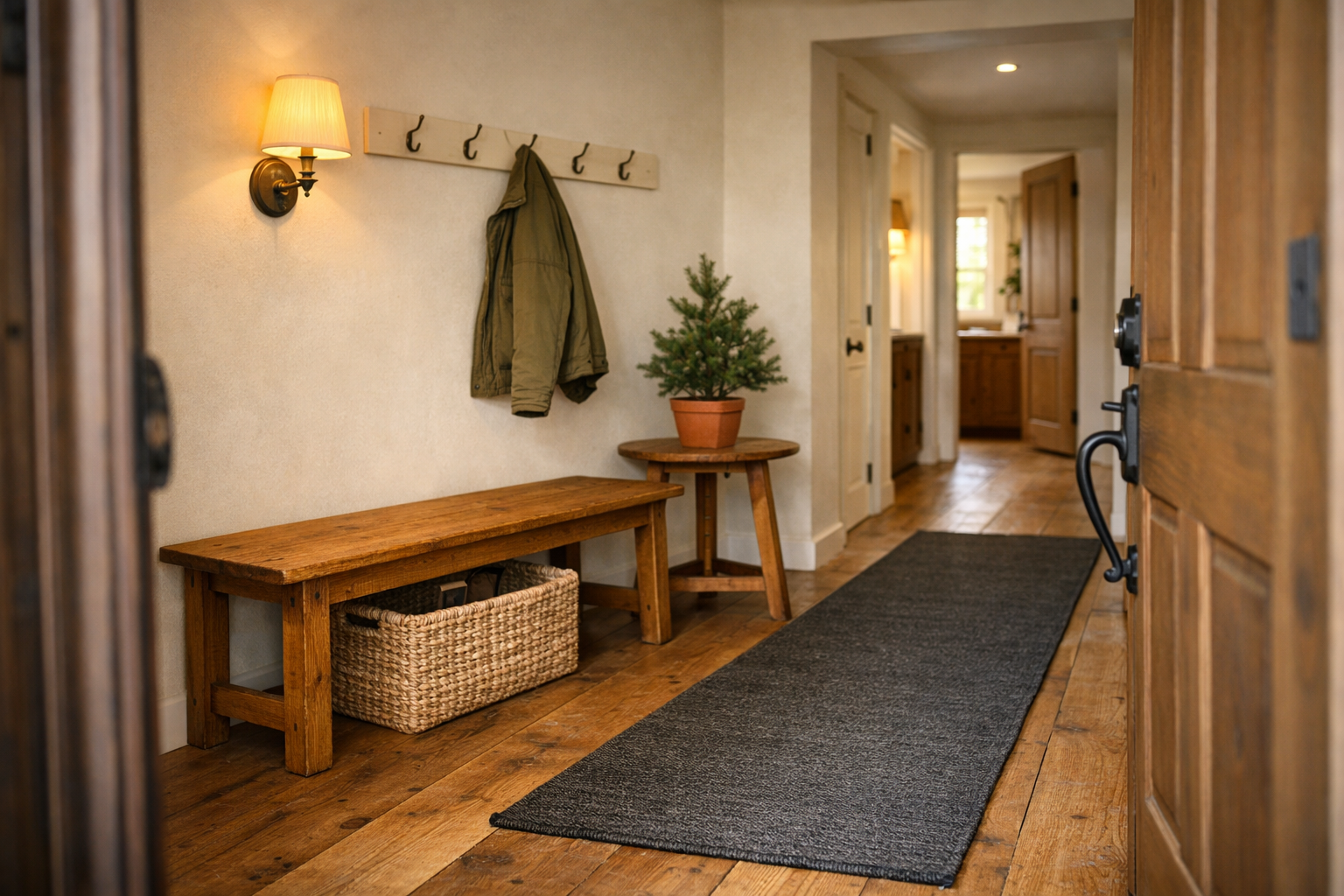
A staged Vermont entry: warm light, one rug, one hook, one basket. Everything the buyer's brain needs to say yes.
The moment buyers decide — and most sellers don't know it's happening
Here's the quiet problem: sellers think buyers are rational. They think buyers will look past the entry, mentally redecorate, and evaluate the square footage on its merits. They won't. Buyer psychology doesn't work that way. The brain files the first impression before conscious thought kicks in — and it doesn't revise easily.
What buyers say when they leave a poorly presented entry: nothing. They say they "just didn't feel it." They ask if there's something structurally wrong. They come in at $30,000 below asking "to account for updates." They were never making a rational calculation. They were rationalizing a feeling that started eight feet inside the front door.
The quiet problem — what's actually turning people off
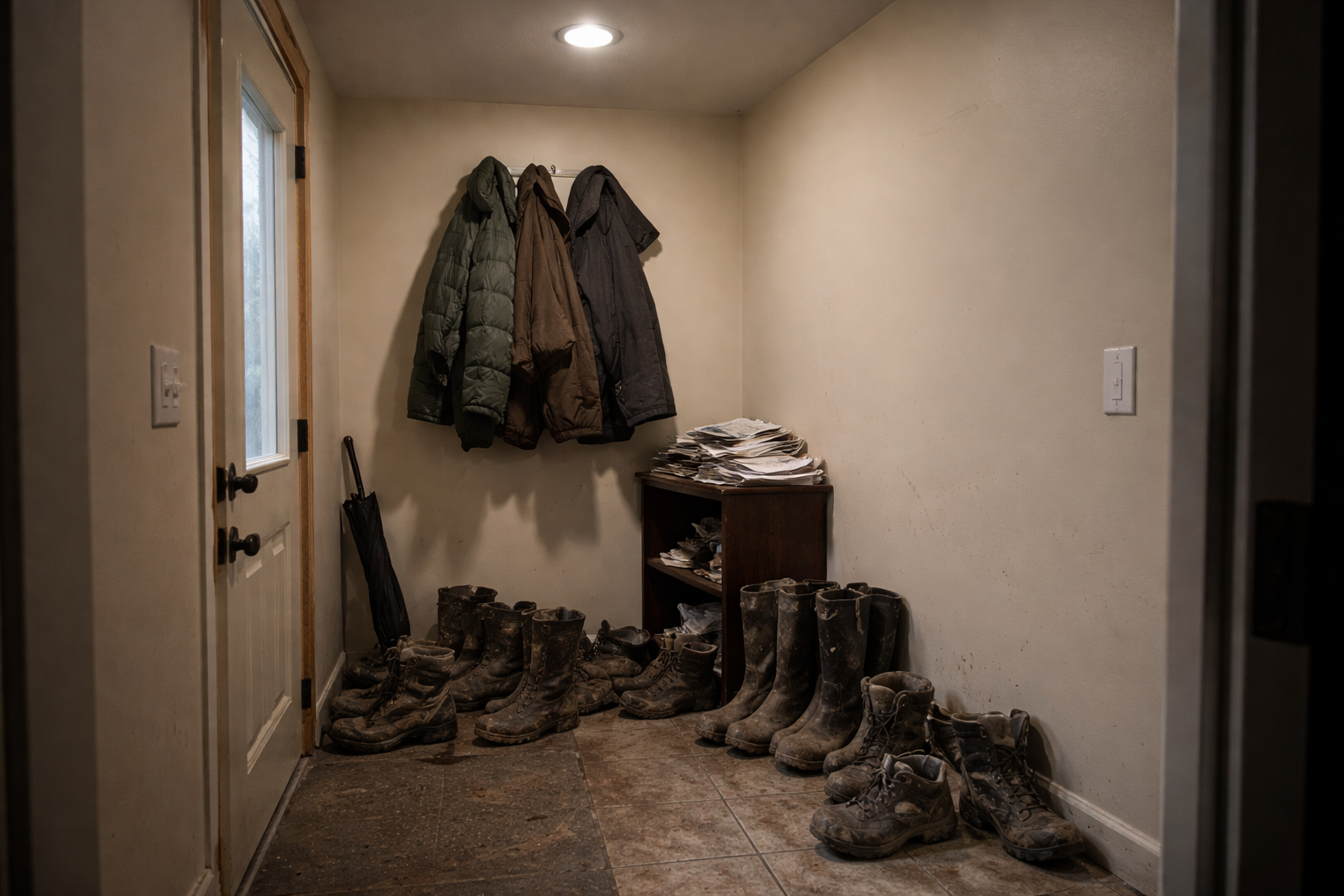
This is what the buyer's brain files in the first 5 seconds. The rest of the showing starts at a deficit.
Central Vermont homes are often beautiful — wide-plank floors, original woodwork, proportions that newer construction can't touch. But the entry tells a different story. Four generations of coat hooks. A boot tray that long ago gave up trying. A light fixture bought when the Clinton administration was still young. These aren't crimes. But in listing photos, they're killers.
And here's the timing problem: mud season is six weeks out. Once March arrives, Vermont entries become a functional disaster zone — sand-tracked floors, wet boots multiplying, jackets that smell like February. Right now, in mid-February, is the last clean window to stage, re-photograph, and get ahead of it. Sellers who wait for "the market to pick up in spring" are staging for mud season. That's not a strategy. That's a hope.
The fix — three budget tiers, one weekend
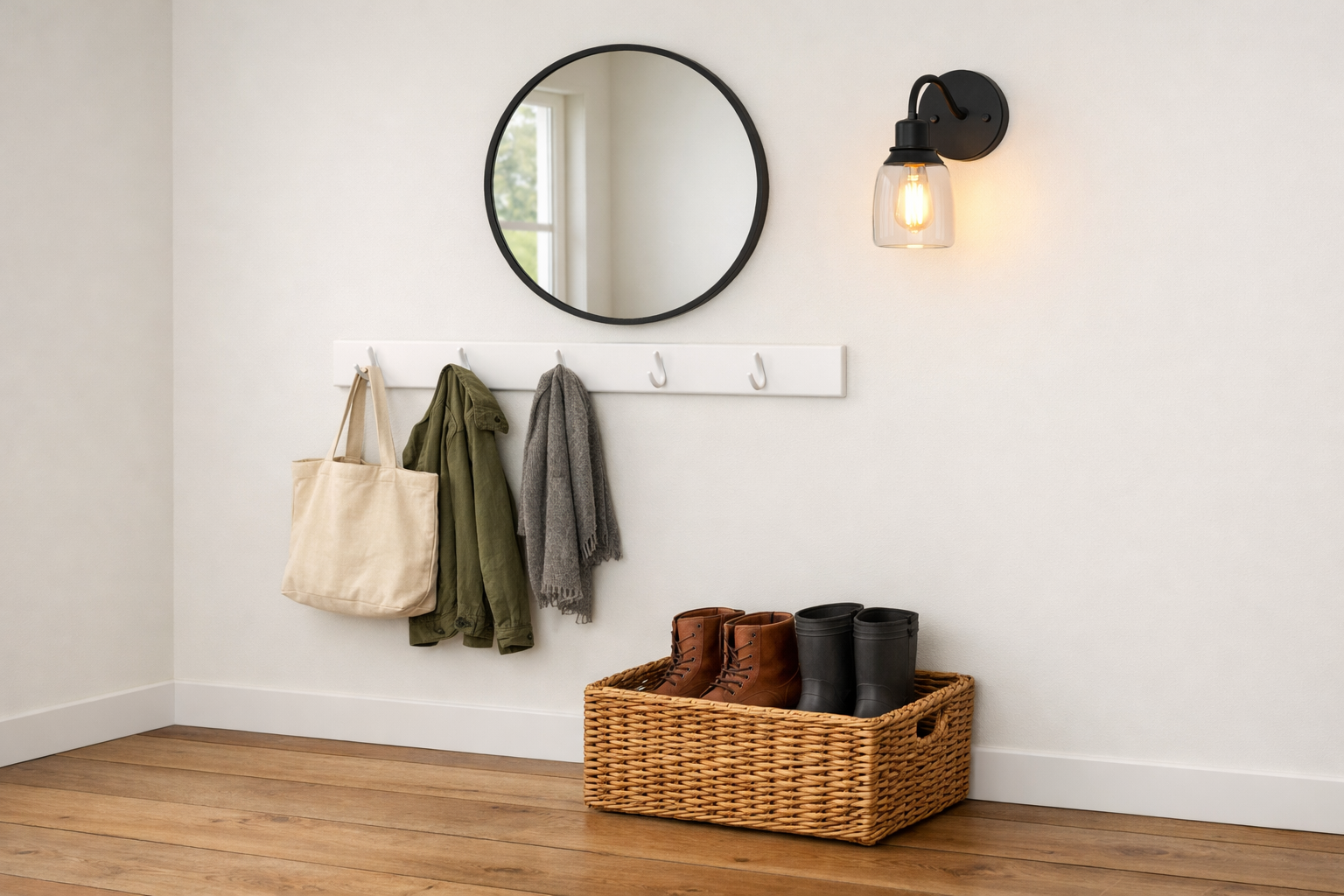
The mid-tier fix: hook rail, basket, mirror, warm bulb. Total cost: under $300. Total impact: significant.
Budget Fix
Clear absolutely everything from the entry — every boot, every coat, every piece of mail, the umbrella stand nobody has touched since 2021. Then add back exactly one curated layer: a rug if you have one, or a single plant, or a basket. Nothing else. Replace the overhead bulb with a warm 2700K LED ($8 at any hardware store). If you have a mirror anywhere in the house, move it here.
What changes: listing photos go from "sad hallway" to "intentional space." Buyers walk in and their brain registers calm instead of chaos.
Mid Fix
Add a simple hook rail if one doesn't exist — IKEA's HEMNES and Wayfair both carry clean options under $80 that install in 20 minutes. One woven or wire basket for "approved" boot storage. A small round mirror above it. Swap the light fixture if it's truly beyond saving (a simple matte black or brushed brass wall sconce runs $40–$120 and installs in under an hour). A small indoor plant — pothos, snake plant, a small evergreen — adds life without maintenance drama.
What changes: the entry now has a clear focal point, defined storage, and warmth. It photographs like a deliberate design decision, not an afterthought.
Do It Right
If the entry floor is scratched or the walls are scuffed, address it now — a gallon of paint is $45 and an afternoon's work, and it changes everything in photos. A built-in bench with under-seat storage ($200–$600 depending on source) signals functional organization and photographs beautifully. For ski-area properties — Stowe, Mad River Valley, Sugarbush proximity — this investment pays back: buyers at that price point expect the mudroom to work as hard as the kitchen. If you're replacing the fixture, go warm and go good. A $120 fixture is not a luxury. It's a listing cost.
What changes: the entry becomes a selling point, not a deduction. Buyers stop mentally pricing out the fix and start imagining their skis hung there instead.
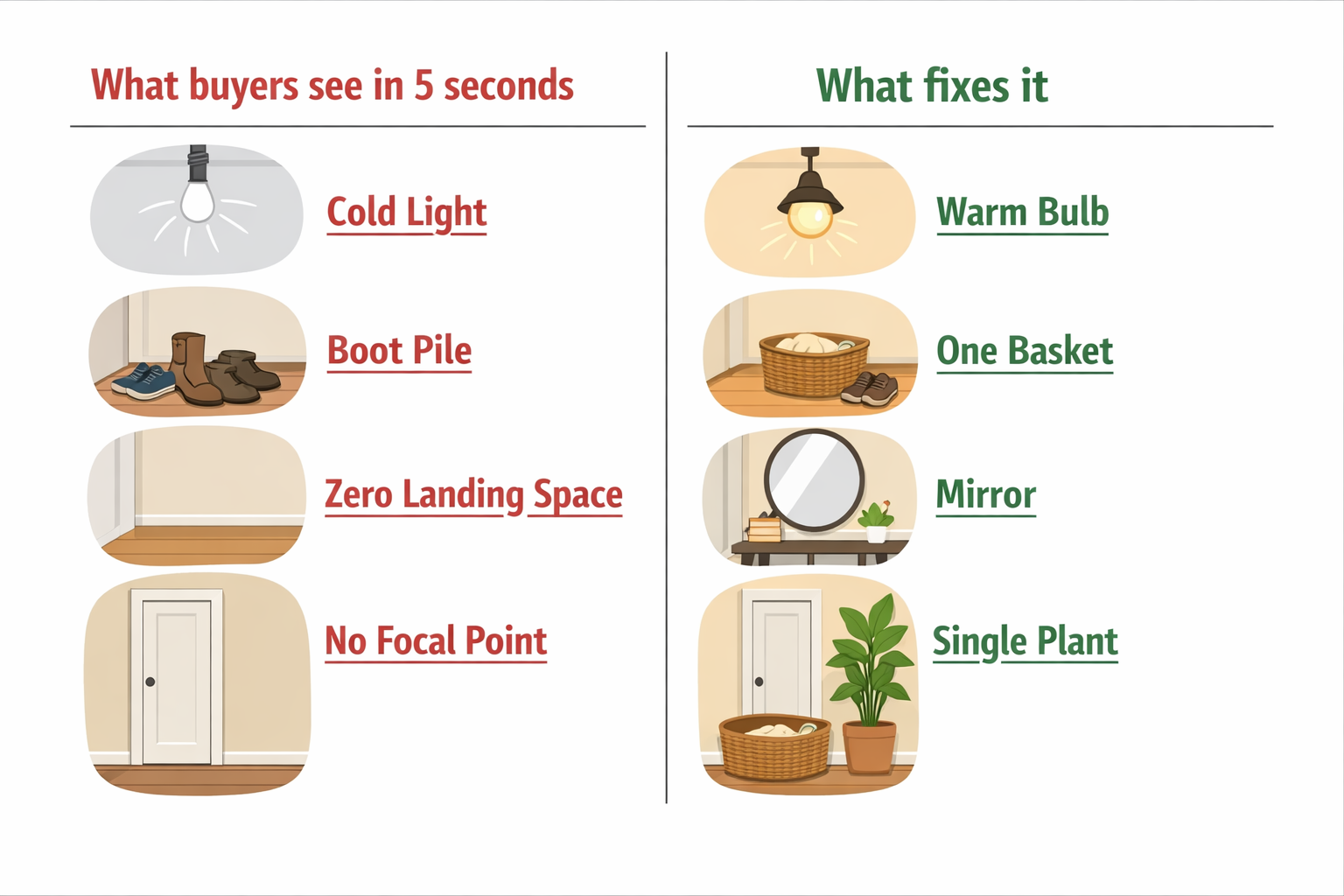
The 5-second checklist. Four problems, four fixes. Most cost under $50 each.
Vermont context — why this hits harder here than anywhere else
Central Vermont's housing stock skews older — a lot of it pre-1970, much of it pre-1950. These homes weren't built with "mudroom as staging opportunity" in mind. They were built to survive February. The result is entries that function but don't perform: utilitarian, lit for the task at hand, optimized for boots-off efficiency rather than buyer psychology.
The seasonal timing compounds everything. Vermont's listing window gets serious in mid-February. Sellers who photograph in late February or early March are shooting in the worst light of the year — low sun angles, gray flat days, and the accumulated evidence of a long winter at the threshold. A few hours of entry staging before the photo shoot changes the entire frame. It's not just about the entry photo. Warm entry light spills into the surrounding shots. A clear entry makes the photographer's job easier in every room they can see from the door.
One more Vermont-specific wrinkle: buyers here are shrewd about old houses. They're not scared of them, but they're watchful. A cluttered, dim entry activates that watchfulness immediately — it feels like the beginning of a list. A clean, warm entry does the opposite. It says: this house has been cared for. That perception is worth real money in a market where days-on-market have stretched to 91 (per Redfin, January 2026) and sale-to-list ratios have slipped to 96.3%. The sellers closing cleanly right now are the ones who understand that buyer perception is the market.
Don't let the entry kill your sale
Buyers don't say "the entry was cluttered so we passed." They say they didn't feel a connection. They make an offer $25,000 below asking to "account for updates" they can't fully articulate. That feeling started eight feet inside your front door — and it followed them through every room.
You can stop that from happening. Less than $300 and one weekend. But the window is now — mud season is six weeks out, and once it arrives, your entry stops being a staging problem and starts being evidence.
📞 Tony's Cell: (802) 233-4107
📞 Office: (802) 253-4711 or (866) 324-2427
🌐 www.nelandmark.com
→ Download the Free Vermont Seller's Guide
→ Download the Free Vermont Buyer's Guide

:format(webp):quality(80)/u.realgeeks.media/rgtemplate/Market-Report-2.png)