House in Progress • New England Landmark Realty
A good sunroom does more than catch light. It carries gray afternoons, guest overflow, quiet mornings, and the hard months when a Vermont house needs one more place to exhale.
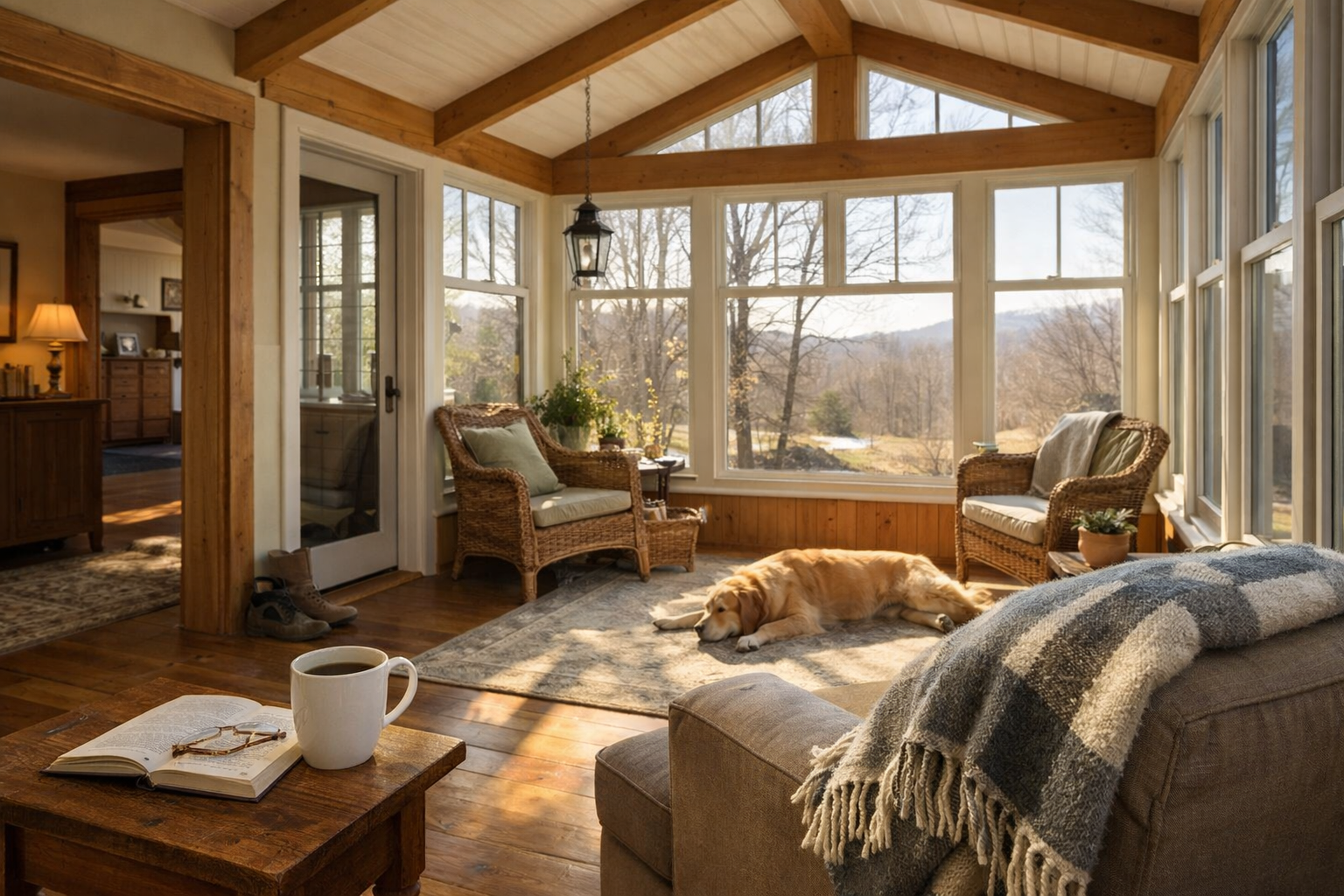
Hero image: a four-season Vermont sunroom that feels attached to daily life, not staged for a brochure.
By late winter, every house reveals its weak spots.
One room gets crowded by 4 p.m. One chair gets dragged toward the only decent patch of daylight. Boots gather near a door that was never meant to handle real weather. The dog finds the sun before anyone else does, which is often the best design feedback in the house.
Key Takeaways: fast read before the full piece
Two-Sentence Summary
This piece is for homeowners weighing a sunroom addition and trying to separate daily usefulness from design temptation. In Vermont, the smartest sunrooms earn their keep in winter, on gray afternoons, and in the parts of home life that need relief.
If You Only Remember 3 Things
- A sunroom should solve a function problem before it becomes a design project.
- Four-season usefulness matters more than summer charm.
- The best additions reduce friction in the house, not just increase admiration of it.
Quick Facts
- In Vermont, a four-season room will almost always out-earn a seasonal one in daily usefulness.
- Sunrooms work best when they connect to a room the household already uses hard.
- Resale logic improves when the addition feels integrated, insulated, and clearly livable year-round.
That is usually when the sunroom enters the conversation.
Not because homeowners suddenly need more beauty. Because the house starts feeling emotionally underlit. A good sunroom can fix that. A bad one becomes a very expensive compliment.
Why this matters
A sunroom works when it improves the hardest hours in a house, not the easiest ones. That matters more in Vermont, where winter light runs short, mud season expands the perimeter of mess, and families spend long stretches negotiating with the indoors.
Most additions get justified with broad language: more space, better flow, added value. Fine. None of that helps if the room ends up too cold in January, too hot in July, and empty whenever real life shows up wearing wet boots.
A sunroom sits in a dangerous category of renovation: highly desirable, highly photogenic, and easy to oversell to yourself. Glass has charisma. So does the idea of morning coffee in a room full of light. But charisma is not function, and coffee only lasts twenty minutes.
The better question is more ruthless: what burden will this room carry?
Morning light counts. Overflow seating counts. A place to read, work, recover, host, or simply get out of the traffic pattern of the house counts. Vague optimism does not.
The real tension
Most people are not adding a sunroom because they need another room. Most are trying to correct a mood, a light deficit, or a layout problem they have grown tired of negotiating. The tension is simple: solve the real problem, or build a prettier version of the wrong answer.
A sunroom often arrives dressed as a luxury, but the best ones behave like infrastructure. They absorb family spillover. They create a second zone for adults who would like one conversation without competing with a television, a homework crisis, and someone asking where the charger went.
That is the upside.
The downside is familiar. A homeowner adds glass to the back of the house when the real problem lives somewhere else: a dark kitchen, poor circulation space (the room people need to move comfortably through a home), a bottleneck near the entry, or a family room that never had a reason to succeed. In that case, the sunroom becomes an annex for good intentions.
A sunroom that only works in July is a very expensive compliment.
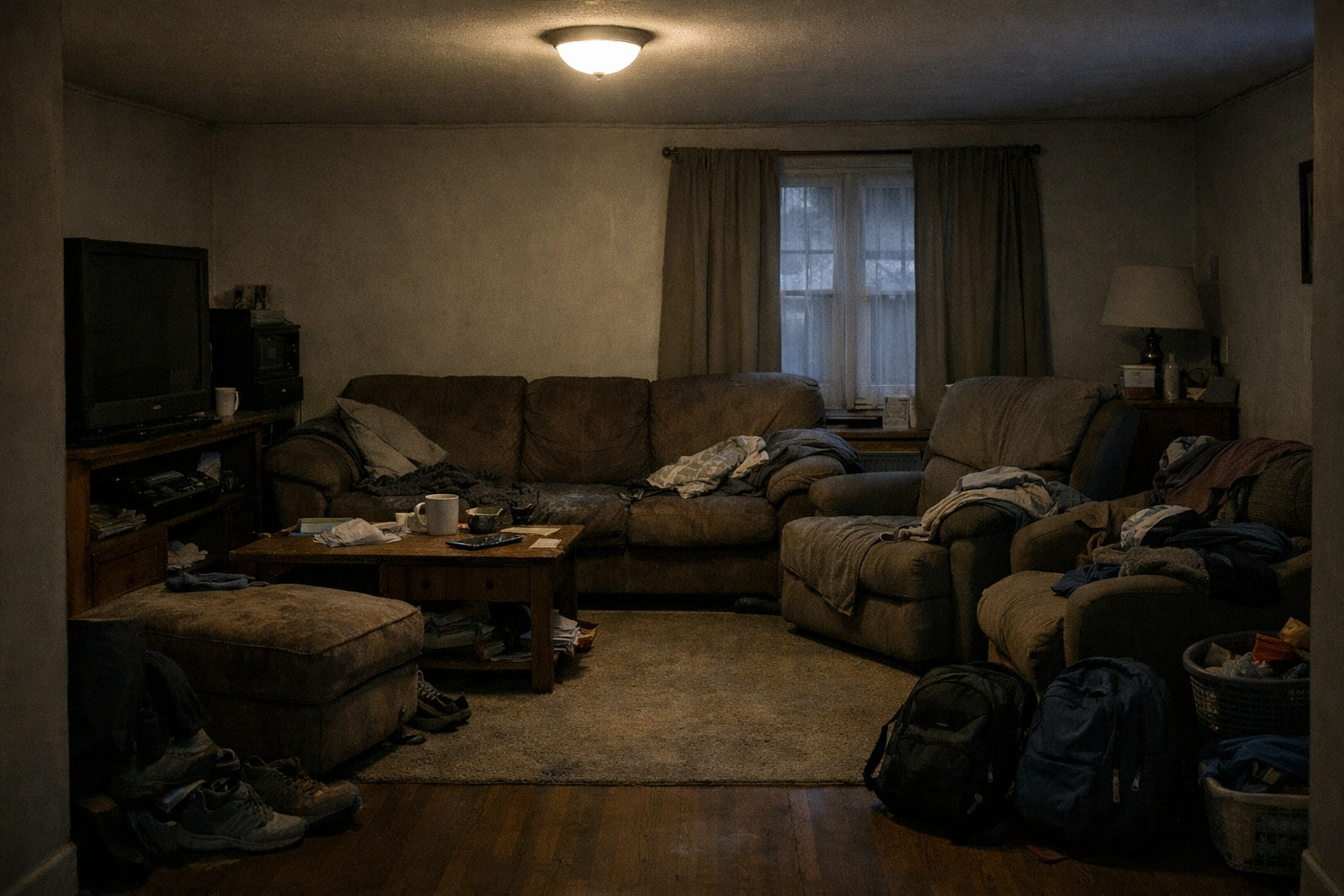
Friction point: the room that makes an addition look obvious before the diagnosis is finished.
What works
The best sunrooms do three things well: they connect cleanly to the rest of the house, they function in more than one season, and they support actual behavior instead of fantasy behavior. In New England, that means treating the room like living space, not like a screened porch with ambition.
Three moves tend to separate the smart additions from the decorative ones.
First, place the room where life already wants to drift. Off the kitchen works for obvious reasons. Off a strained family room can work even better. The room should catch existing energy, not demand that everyone invent a new routine to justify it.
Second, design for February, not June. Insulation, flooring, heating strategy, and furniture choices matter more than the romance of the windows. A room with radiant warmth underfoot and a chair someone actually wants to sit in will beat a prettier room every time.
Third, give the room more than one job. Reading room. coffee room. guest overflow. plant refuge. quiet call zone. homework spill space. The winning rooms are never single-purpose because real houses are never single-purpose.
Beauty still matters. Of course it does. But beauty that earns its keep looks different. It hides wear. It handles light well at 8 a.m. and 4 p.m. It survives a dog, a tray, a wet sleeve, and a long winter without turning precious.
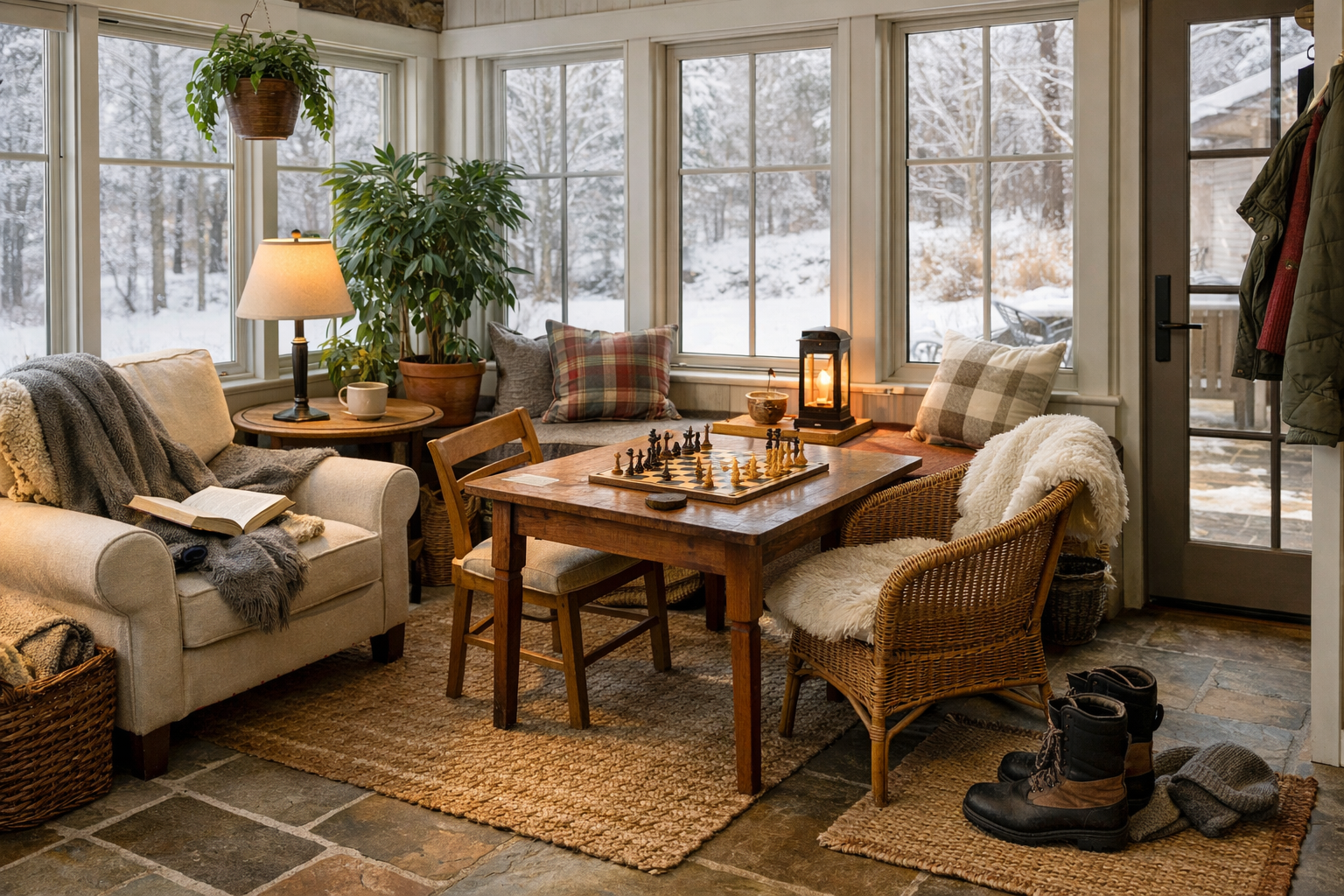
What works: a sunroom that reads as real living space, not a seasonal prop.
The home turn
A good sunroom changes more than the square footage. It changes the emotional weather of the house. That matters because homes are judged less by their best moment than by how they behave when everyone is tired.
Nobody praises the right room in real time. Nobody stops and says, this addition has transformed our domestic rhythm. They just migrate there. Someone reads. Someone exhales. The dog takes the warm corner. A guest lingers after dinner instead of drifting toward the door.
That is the shift worth paying for.
Support often looks humble. Better light at the hour people feel most depleted. One more place to be alone without leaving the family. A softer landing spot between outside weather and inside life. The room carries more than furniture. It carries relief.
Bottom line
A sunroom makes sense when it reduces friction, improves four-season living, and gives the house a better place to hold real life. If it cannot do that in Vermont conditions, skip the flattery and fix the deeper problem first.
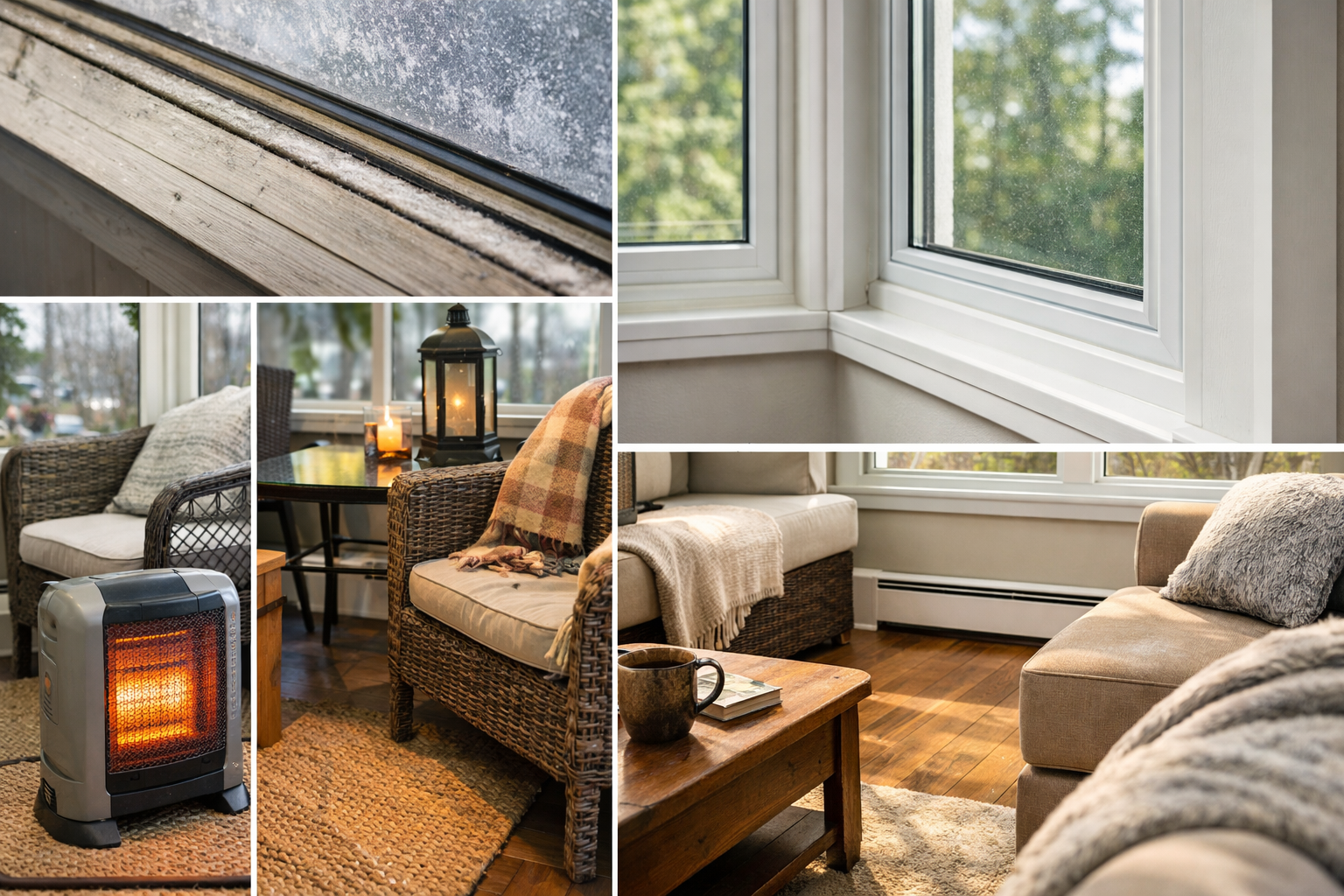
Decision detail: the difference between a charming room and a room that survives February.
Start with diagnosis, not drawings.
Ask three questions. Which hour in the house feels worst? Where does everyone go when they want light, quiet, or separation? Would this addition still make sense in mud season, stick season, and the dead center of winter?
That is the whole case.
The best rooms do not beg to be admired. They make the day go better.
Where to Go Next
Keep the next click useful. Start with the guide that matches the side of the transaction you’re on, or head back to New England Landmark Realty for current Vermont listings and market context.
For buyers
For sellers
For current listings and local insight
Talk it through before you build it
Some additions increase value. Some just increase square footage. If you want a straight answer on how a project may land with Vermont buyers, reach out to Tony Walton and New England Landmark Realty.
Office: (802) 253-4711 | Toll-Free: (866) 324-2427 | Tony's Cell: (802) 233-4107

:format(webp):quality(80)/u.realgeeks.media/rgtemplate/Market-Report-2.png)