The Numbers Guy | Vermont Real Estate Data
May 15, 2026
Inflation jumped back to 3.8% in April, driven largely by energy and shelter costs, and that changes the affordability math for Vermont buyers more than many people realize.
Jump to Key Takeaways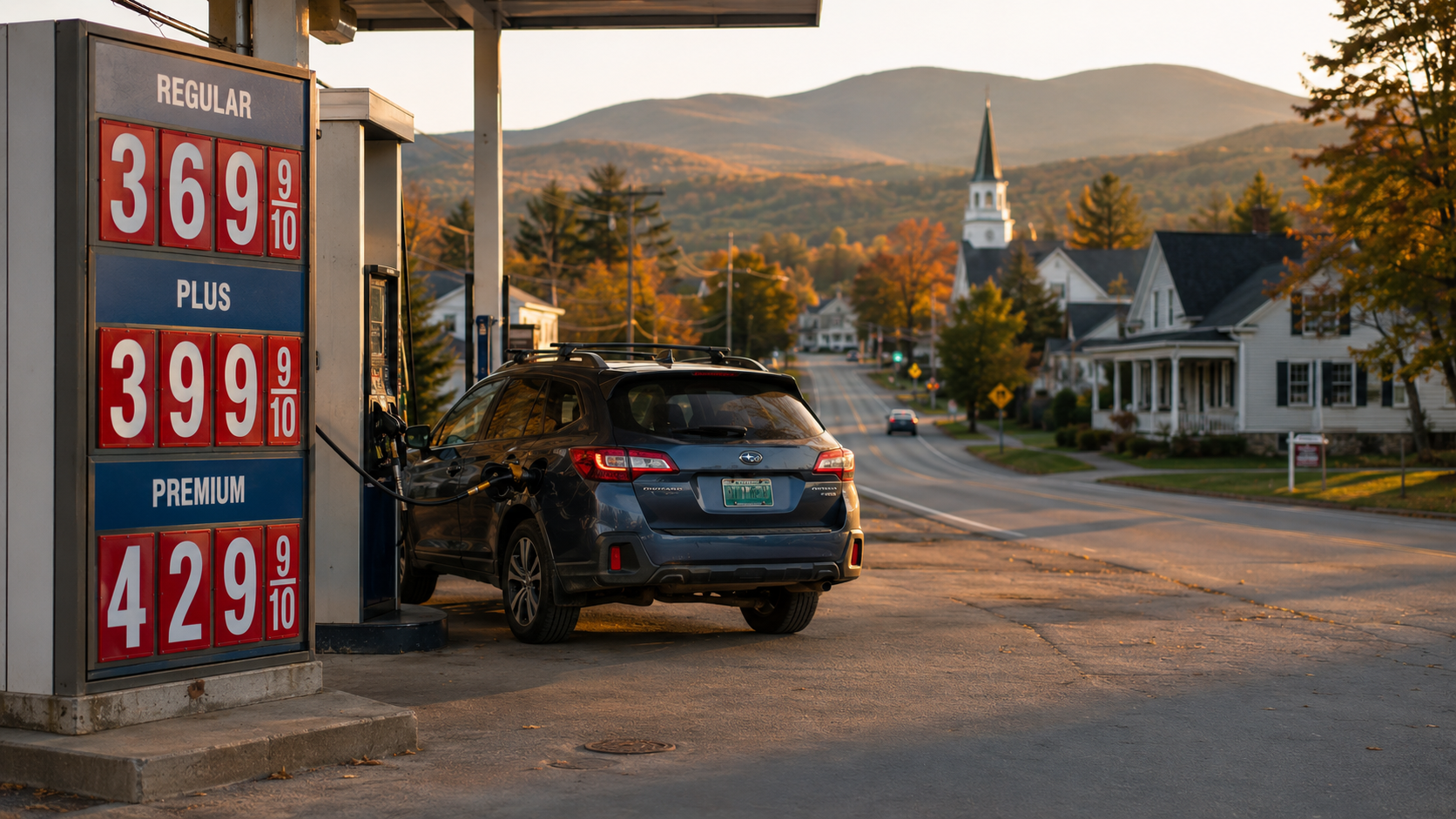
In Vermont, housing affordability is not just the mortgage. It is the mortgage, the tank, the heat, and the drive.
Two-Sentence Summary
Inflation jumped back to 3.8% in April, driven largely by energy and shelter costs, and that changes the affordability math for Vermont buyers more than many people realize. In a rural state where driving, heating, and commuting are part of daily life, buyers are starting to think less about sticker price alone and more about total monthly operating cost.
Key Takeaways
If You Only Do 3 Things
- If you’re buying, calculate fuel, commute, and heating costs alongside the mortgage payment before deciding what’s affordable.
- If you’re selling, highlight efficiency upgrades, proximity to town, and operating-cost advantages because buyers are paying attention again.
- If you own an older Vermont home, small energy improvements may now produce outsized buyer appeal relative to their cost.
Quick Facts
- April CPI rose 0.6% month over month and 3.8% year over year.
- Energy rose 17.9% year over year, with gasoline up 28.4%.
- Shelter rose 3.3% year over year and 0.6% for the month.
The Numbers Guy
What Changed?
Direct Answer: April inflation rose 3.8% year over year, with energy up 17.9% and shelter up 3.3%. For Vermont buyers, that means affordability is no longer just about purchase price or mortgage rate. The next smart move is to calculate the full cost of living in the home.
Let’s run the numbers.
The national inflation story this month is not complicated. Energy did a lot of the work. Shelter kept moving. And both matter in Vermont.
Translation: a buyer can qualify for the mortgage and still feel squeezed by the daily economics of the house.
The Data
Direct Answer: The three numbers that matter are 3.8% overall inflation, 17.9% energy inflation, and 3.3% shelter inflation. In Vermont, energy costs hit differently because many households depend on driving, heating oil, propane, and longer commutes. Buyers should compare homes by monthly operating cost, not price alone.
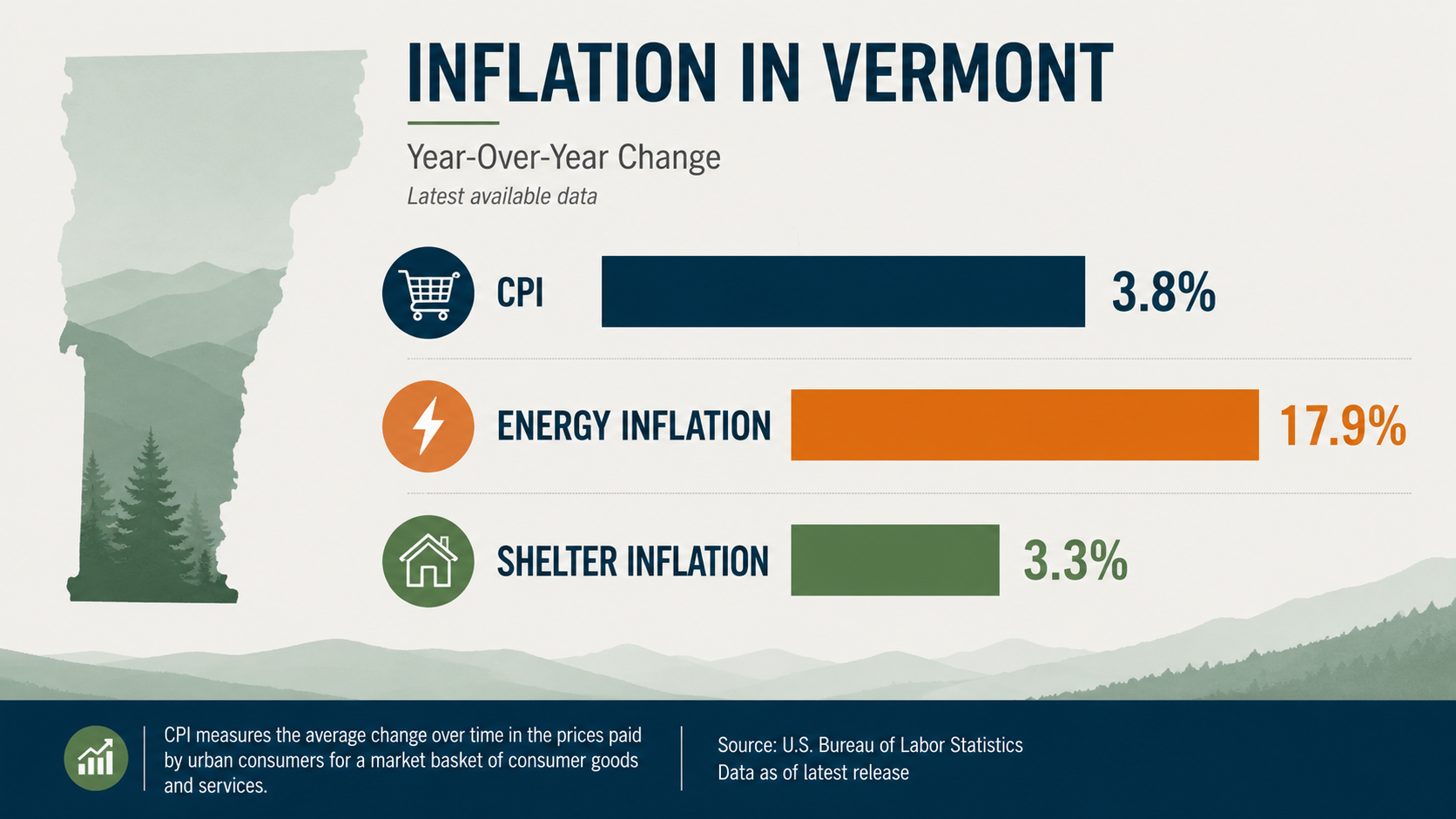
Three numbers. One practical question: what does the house really cost to live in?
CPI rose 0.6% in April and 3.8% from a year earlier, according to the U.S. Bureau of Labor Statistics. Energy rose 17.9% year over year. Shelter rose 3.3%.
Math doesn’t care whether the cost shows up in the mortgage statement, the fuel bill, or the gas pump. It still comes out of the same household budget.
So What Does That Mean for Vermont?
Direct Answer: Vermont buyers are likely to put more value on efficiency, location, and lower monthly carrying costs. A home closer to town, easier to heat, or less expensive to maintain may compete better even if the purchase price is higher. Sellers should make those advantages obvious in their marketing.
This is where Vermont gets specific.
A rural home with more land can still be a great decision. But if it comes with a longer commute, older windows, oil heat, and higher maintenance, the monthly math changes fast.
That does not mean buyers stop wanting Vermont character. They just start pricing it more carefully.
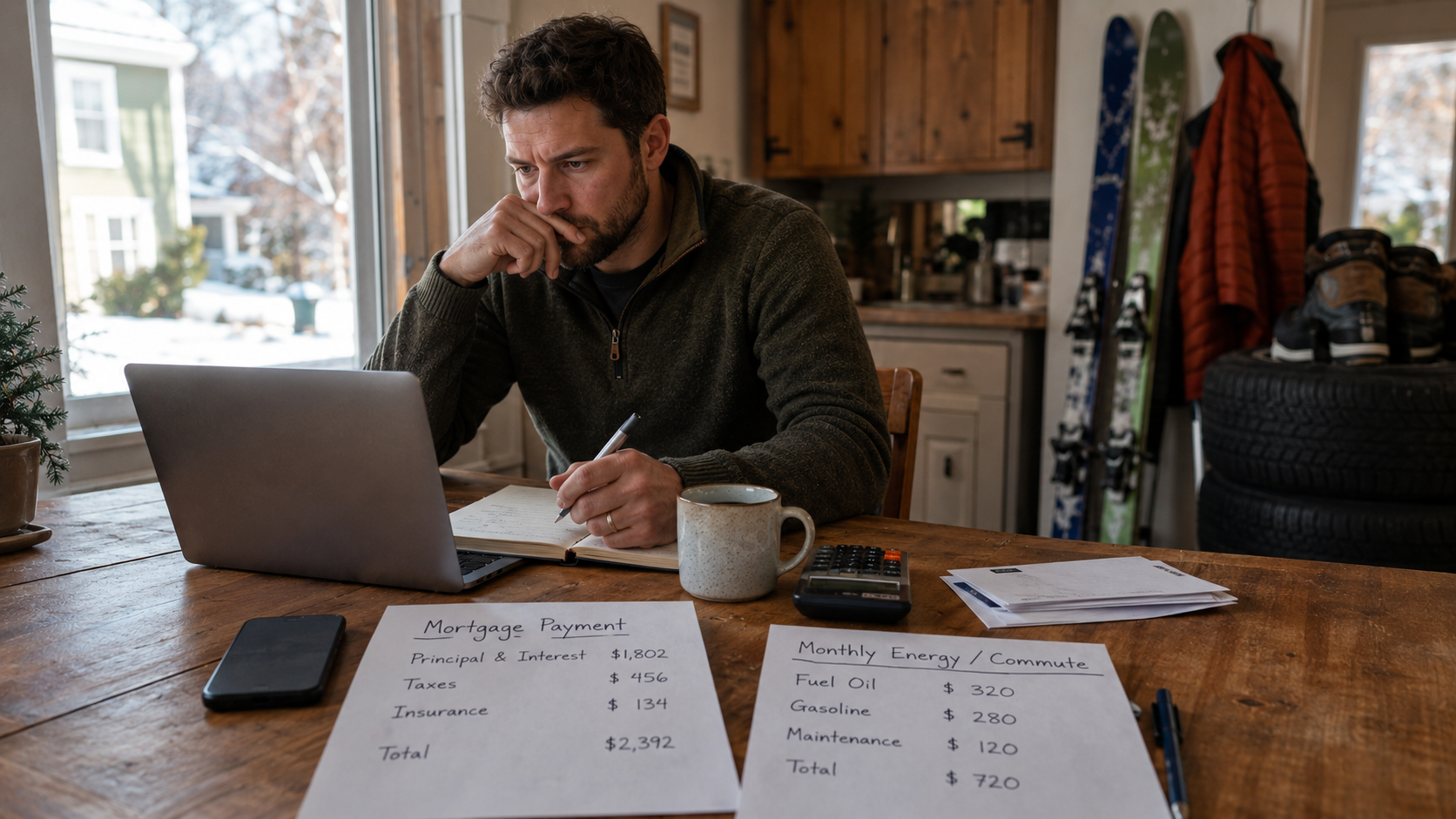
The smartest buyers are not just asking, “Can I buy it?” They are asking, “Can I comfortably live with it?”
Bottom Line
Direct Answer: Inflation does not make Vermont real estate simple, but it does make the decision clearer. Buyers should focus on total monthly cost, and sellers should frame their homes around efficiency, convenience, and livability. The opportunity is in understanding the tradeoff before the market fully prices it in.
Here’s the opportunity.
If you are buying, this is a moment to be more precise, not more fearful. A slightly more expensive home with lower operating costs may be the better long-term number.
If you are selling, this is a moment to translate your home’s practical advantages. New windows, insulation, heat pumps, village proximity, lower utility bills, and an easier commute are not side notes. They are part of the value proposition.

In a higher-cost environment, proximity has value. So does efficiency. So does simplicity.
What To Do Next
Direct Answer: Buyers should ask for utility history, commute estimates, and improvement details before writing an offer. Sellers should prepare those answers before listing. In Vermont, the homes that explain their monthly math clearly may have an edge.
Here’s the play if you’re buying: build a real monthly budget before you fall in love with the house.
Here’s the play if you’re selling: do not just market bedrooms, baths, and acreage. Market the economics of living there.
That is the expensive mistake to avoid — treating the sale price as the whole number.
Sources
- U.S. Bureau of Labor Statistics, Consumer Price Index — April 2026
https://www.bls.gov/news.release/archives/cpi_05122026.htm - U.S. Bureau of Labor Statistics, Consumer Price Index Summary
https://www.bls.gov/news.release/cpi.nr0.htm
Take the Next Step
Talk through the full cost before you make the next move.
If you’re buying, selling, or trying to understand how inflation changes the Vermont housing decision, Tony Walton and New England Landmark Realty can help you look past the headline price and get to the real number.
Where to Go Next
Useful next clicks for Vermont buyers and sellers.
Contact