Quick Answer
When you sell your main home, federal law lets you skip capital gains tax on up to $500,000 of profit if you are married ($250,000 if single). That limit was set in 1997 and has never been raised for inflation. Vermont home values have climbed a long way since then, so more longtime owners now have gains above the line. Congress is weighing bills to raise it, but nothing has passed.
Your Tax Break Was Built for a 1997 House
Most Central Vermont homeowners believe the profit on their house is tax-free. For a growing number of them, that stopped being true years ago.
The rule is simple. Sell the home you have lived in for two of the last five years, and you can exclude up to $500,000 of gain if you are married, or $250,000 if you are single. Congress wrote those numbers in 1997. It never tied them to inflation. They have not moved since.
Your house moved. Vermont home values have roughly quadrupled since then. Prices in general have about doubled. The limit has not budged.
Here is what that looks like. A couple who bought a modest place in Stowe or Waitsfield in the late 1990s, and saw nothing more than average Vermont appreciation, can already be past the line. Part of their profit is taxable. Not a crisis. Not nothing, either. (The worked example is in By the Numbers below.)
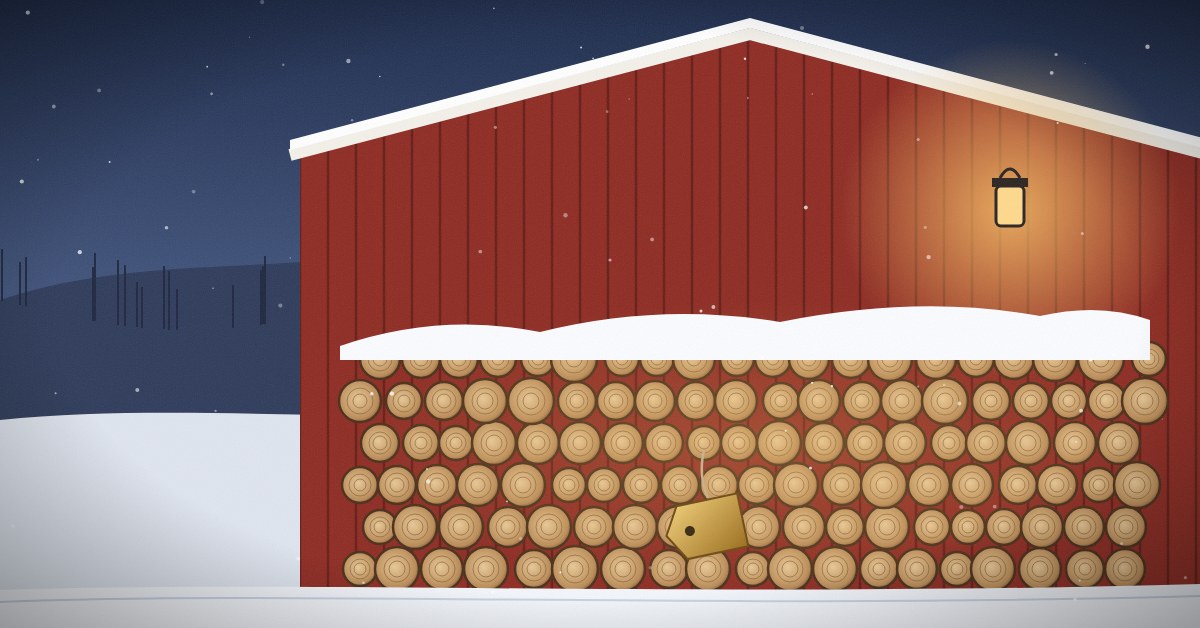
It is a woodpile stacked in 1997 and still expected to heat the house.
Congress has noticed. A bipartisan bill, the More Homes on the Market Act, would double both limits and tie them to inflation. It has wide support on paper and has not had a committee vote. I would not plan a sale around it passing.
If You Are Selling
Do the math before you list, not at tax time. Your taxable gain is the sale price, minus selling costs, minus what you paid, minus the capital improvements you made: the new roof, the addition, the septic, the heat pumps. Most longtime owners undercount improvements because the receipts went into a drawer in 2004. Find them now.
If You Are Buying
Start a folder on day one. Every improvement you make raises your cost basis and lowers the tax you might owe decades from now. The exclusion also has a timing rule: generally, you must own and live in the home for two of the five years before you sell.
If You Are Staying Put
If you are single, widowed or divorced, pay attention. The single limit is half the married one, and a surviving spouse's situation has its own rules. If you have owned for 20 years or more, an hour with a CPA is cheap insurance before you make any move.
If You Are Renting or Still Dreaming
This is one of the quieter advantages of owning: up to $250,000 or $500,000 of your gain can be tax-free when you sell. Renting builds none of it. It is a long-game benefit, and the clock starts the day you buy.
What to Do This Week
Pull your closing statement from the day you bought, list every major improvement you can document, and find out what your home would sell for today. Then hand all three to your accountant. I can help with the middle number.
By the Numbers
- Federal home sale exclusion: $250,000 single, $500,000 married filing jointly, if you owned and lived in the home at least 2 of the 5 years before the sale; usable once every 2 years (IRS Publication 523).
- Set by the Taxpayer Relief Act of 1997, for sales after May 6, 1997; never indexed for inflation.
- Inflation: CPI-U was 160.1 in May 1997 and 337.511 in October 2026, a 2.11x increase. At that rate, $500,000 in 1997 is about $1.05 million today and $250,000 is about $527,000 (my calculation from BLS data).
- Vermont home values: the FHFA House Price Index for Vermont rose from 222.63 in the second quarter of 1997 to 902.53 in the second quarter of 2026, about 4.05x (FHFA via FRED).
- Example math: $200,000 x 4.05 = about $810,000. Gain of about $610,000 before selling costs and improvements, about $110,000 over the $500,000 limit. Illustrative only; your town, house and records will differ.
- Nationally, NAR estimates about 13.1 million homeowners, roughly 15% of owner-occupied households, already have gains above the exclusion limits (as reported by Newsweek, Nov. 19, 2026).
- Pending bills: H.R. 1340 and S. 3332, the More Homes on the Market Act, would raise the limits to $500,000 single and $1 million married and index them to inflation. Both are in committee. On Nov. 18, 2026, two Republicans on the House Ways and Means Committee introduced another bill to double the exclusion for individual filers (Bloomberg Government).
- Caveat: this is general information, not tax advice. Vermont income tax may also apply to a gain. Talk to your CPA about your situation.
Find out what your home would sell for today: get your home value, or call me at 802-233-4107.
Frequently Asked Questions
How much profit on a home sale is tax-free?
If you owned and lived in the home as your main residence for at least two of the five years before the sale, you can exclude up to $250,000 of gain, or $500,000 if married filing jointly, under federal law.
Has the $500,000 home sale exclusion ever been raised?
No. The $250,000 and $500,000 limits were set by the Taxpayer Relief Act of 1997 and have not been raised or indexed for inflation since.
Is Congress raising the capital gains exclusion on home sales?
Bills have been introduced, including the More Homes on the Market Act (H.R. 1340 and S. 3332), which would double the limits and index them to inflation. As of November 2026, none has passed.
Do home improvements reduce capital gains tax when I sell?
Yes. Capital improvements such as additions, a new roof or a new septic system are added to your cost basis, which lowers your taxable gain. Keep records of what you spent.
Get Tony's Central Vermont market newsletter
Sources
- IRS Publication 523, Selling Your Home
- Bureau of Labor Statistics, Consumer Price Index, October 2026
- CPI-U, not seasonally adjusted, via FRED (May 1997)
- FHFA All-Transactions House Price Index for Vermont, via FRED
- Newsweek, Map Shows Where Home Sellers Could Get Biggest Tax Break Under New Bill (Nov. 19, 2026)
- RealtyWire, More Homes on the Market Act (Aug. 11, 2026)
- Bloomberg Government, Tax Writers Push Capital Gains Bill to Increase Housing Stock (Nov. 18, 2026)
- 24/7 Wall St., on the Taxpayer Relief Act of 1997 (Nov. 18, 2026)
Tony Walton, Principal Broker, New England Landmark Realty, Waterbury Center, Vermont. 802-233-4107.