Counter Intellegence March 2, 2026 | New England Landmark Realty
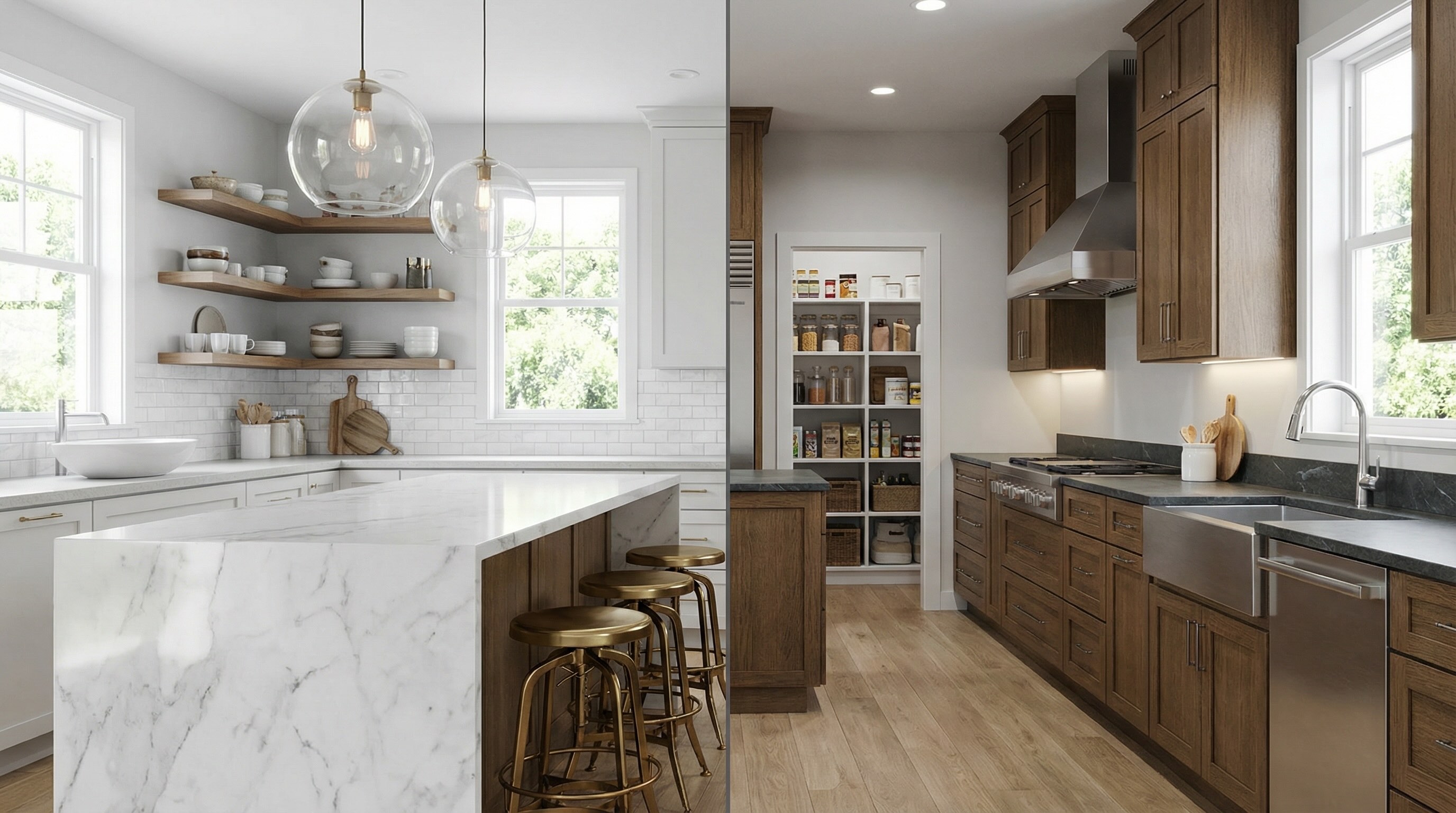
I've walked through enough kitchen renovations—as a chef and as a broker—to recognize the pattern. Homeowner spends $90,000. Designer delivers a showroom. And six months later, the homeowner is still reaching into the back of a lower cabinet on their hands and knees looking for the Dutch oven because nobody thought about pull-out drawers.
Here's the problem: most kitchen renovations are designed for the listing photos, not for the human who has to cook Thanksgiving dinner in the damn thing.
Key Takeaways
Two-Sentence Summary
Most kitchen renovations chase resale value with granite and subway tile while ignoring the design choices that actually make cooking easier—and those functional fixes often cost less than the cosmetic theater. This guide separates the upgrades that earn their keep every single day from the expensive lies that look good in listings but fail in real life.
If You Only Remember 3 Things
- Countertop material doesn't make you a better cook—counter location does. The 15 inches of landing space next to your range matters more than whether it's quartz or butcher block.
- Storage you can reach beats storage that looks good. Pull-out drawers cost more than fixed shelves but pay dividends every single time you don't have to crawl on the floor to find a pot.
- Lighting is the cheapest upgrade with the highest functional return. Under-cabinet LEDs and task lighting transform how you work—no one has ever said "this kitchen is amazing" because of the backsplash alone.
Quick Facts
- Functional upgrades like task lighting and drawer storage typically cost 15-30% less than cosmetic statement pieces like waterfall islands
- Proper range hood ventilation (600+ CFM) prevents long-term moisture damage that can cost $15,000-$40,000 to remediate in Vermont's humid climate
- Landing space geometry (18 inches on either side of cooktop, 15 inches beside the sink) is dictated by the National Kitchen & Bath Association and affects daily usability more than any finish material
Why This Matters
The renovation industrial complex wants you to believe that kitchen value lives in the material palette. Granite versus quartz. Shaker versus flat-panel. Subway tile versus zellige.
None of that matters if you can't fit a sheet pan on the counter next to the oven.
I've shown $800,000 homes with $120,000 kitchens that couldn't pass a basic workflow test. Gorgeous waterfall islands with nowhere to plug in a stand mixer. Six-burner ranges with 8 inches of counter space on one side and a wall on the other. Pendant lights that look incredible and cast shadows exactly where you're trying to chop onions.
Meanwhile, I've stood in 1970s kitchens with Formica counters and builder-grade cabinets where everything just worked. Because someone—probably the homeowner who actually cooked in it—prioritized task over trophy.
The Expensive Lies: Upgrades That Photograph Well But Work Poorly
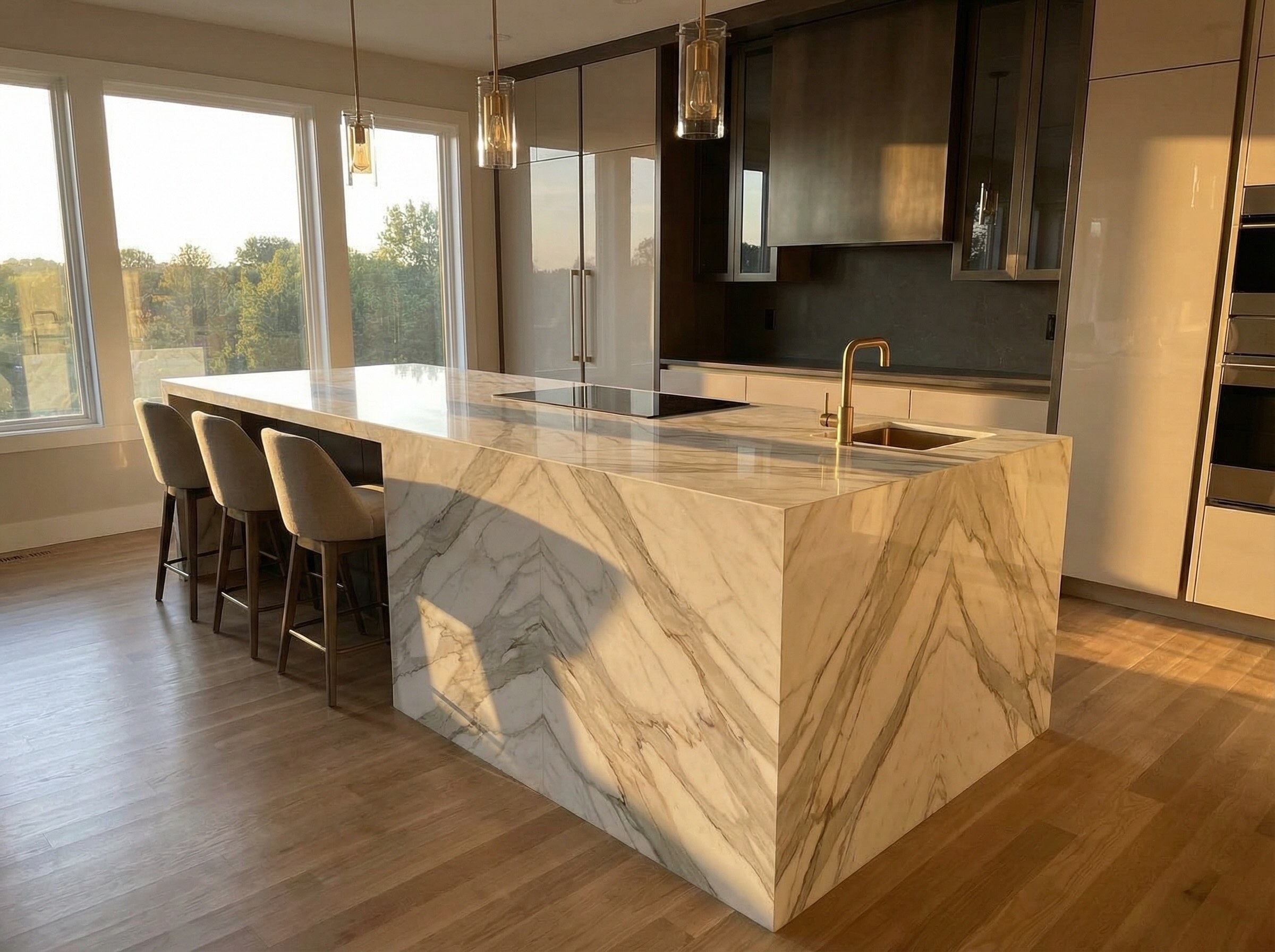
Waterfall islands. Stunning. Expensive. And almost always designed to showcase the stone rather than facilitate the work. The vertical edge eats counter depth. The statement steals budget from things that matter—like making sure you have 36 inches of clearance on the working side or enough space to pull out a chair without blocking the dishwasher. Cost: $3,000-$12,000 depending on material. Functional return: zero.
Open shelving. The Instagram aesthetic that only works if you (a) own six plates, (b) never cook anything that splatters, and (c) enjoy dusting. Vermont kitchens manage preserving season, bulk staples, and gear that doesn't see daily use. Open shelving is beautiful because it forces minimalism. Minimalism doesn't survive August when you've got 40 pounds of tomatoes to process and nowhere to put the canning supplies. Cost: often cheaper to install. Hidden cost: the storage you'll have to add later when you realize you have nowhere to put anything.
Pro-style ranges. Unless you're actually cooking for 12 people on a Tuesday night, that 48-inch, six-burner Viking is cosplay. You'll use two burners 90% of the time. What you will notice: the BTU output that demands a makeup air system (add $2,000-$5,000), the commercial depth that eats into your workflow triangle, and the cleaning regimen that makes you nostalgic for sealed burners. Cost: $8,000-$15,000 for the range alone. Better move: a 30-inch range with one high-BTU burner and the other $8,000 spent on lighting, storage, and ventilation.
Vessel sinks. Gorgeous in the showroom. A nightmare in year two when the faucet can't reach the edges, every hand-washing session sprays the counter, and you realize you can't fit a stockpot under the spout. Cost: $400-$2,000. What works instead: a deep undermount that disappears visually and handles a full sheet pan.
Wine fridges as default. If you drink wine twice a month, you don't need a 46-bottle dual-zone climate-controlled monument to aspiration. You need a drawer. Or a shelf. Or nothing. Cost: $1,200-$4,000. Opportunity cost: the base cabinet with pull-outs that you actually needed.
The Quiet Winners: Upgrades That Make You Faster, Safer, Smarter
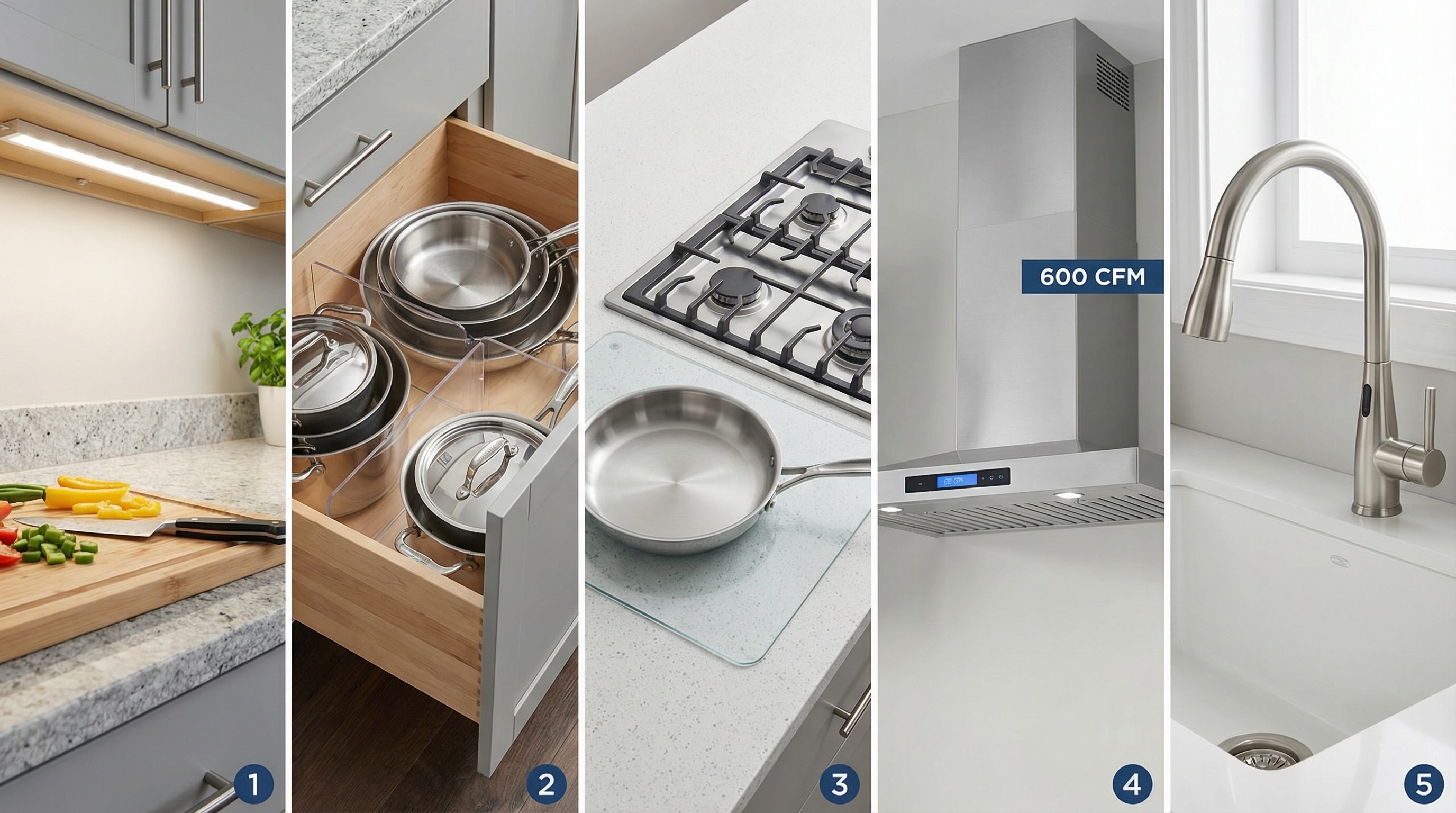
Task lighting. Under-cabinet LEDs, toe-kick lights, and pendant fixtures positioned over work zones, not over voids. This is the single cheapest upgrade with the highest daily return. You cannot dice an onion in a shadow. Cost: $400-$1,500 depending on quality and coverage. Value: every single time you cook after sunset, which in Vermont is 4:30 PM for four months of the year.
Landing space geometry. Not negotiable. Eighteen inches on either side of the cooktop. Fifteen inches beside the sink. Twelve inches beside the fridge. These aren't Instagram guidelines—they're the physics of not dropping a hot pan or a full pot on your foot. If your designer is arguing with these numbers, find a different designer. Cost: $0 if planned correctly. Cost if ignored: the $90,000 kitchen that doesn't work.
Drawer storage with full-extension glides. Fixed shelves in base cabinets are where pots go to die. You will never willingly crawl into a 24-inch-deep hole to retrieve a roasting pan. Drawers bring the back to the front. Cost: $150-$400 per drawer depending on size and hardware. ROI: measured in dignity and time saved per retrieval.
Ventilation that actually moves air. Your range hood needs to move at least 600 CFM if you have a gas range, 400 CFM minimum for electric. That's cubic feet per minute—the measure of how much smoke, grease, and moisture gets pulled out instead of settling on your cabinets and walls. In Vermont, where winter cooking happens in a sealed box, inadequate ventilation isn't just annoying. It's structural rot waiting to happen. Cost: $800-$3,000 for a hood that works. Cost of ignoring it: $15,000-$40,000 in moisture remediation five years later.
Dedicated 20-amp circuits. One for the microwave. One for the countertop appliances (mixer, blender, toaster). Your renovation electrician will know this. Your designer might not ask. If you're running a stand mixer and a kettle at the same time and tripping breakers, you skipped this. Cost: $250-$500 per circuit during renovation. Cost after the fact: $800-$1,500 plus drywall repair.
Pot filler—placed correctly. This isn't about luxury. It's about not carrying 16 pounds of water and pasta pot across the kitchen. But only if it's within arm's reach of the range and you have landing space below it. A pot filler over an island cooktop with no counter space is performance art, not infrastructure. Cost: $400-$1,200 installed. Worth it: only if the geometry supports it.
Flooring with resilience. Cork, luxury vinyl plank, or engineered hardwood with a real wear layer. Ceramic tile is beautiful and unforgiving—drop a wine glass and it's over. Drop a cast-iron skillet on tile and you've got a cracked tile and a damaged pan. Vermont floors also contend with snow melt, mud season, and the grit that comes in on boots. Cost: $6-$15 per square foot installed depending on material. The test: what happens when you drop something heavy.
The Middle Ground: Upgrades That Do Both (If You Spec Them Right)
Islands. They work if you follow the rules. Four feet of length minimum (preferably five). Fifteen inches of overhang if you want seating. Thirty-six to forty-two inches of clearance on all working sides. Electrical outlets on the ends or pop-ups in the surface, not hidden underneath where you'll never use them. An island that ignores these specs is just an expensive obstacle. Cost: $3,000-$15,000 depending on size, material, and features. Functional return: high, but only if the geometry is right.
Double ovens. If you bake bread, roast vegetables, and need to run two different temperatures simultaneously—or if Thanksgiving involves more than one oven-based dish—this is defensible. If you're buying it because it "looks professional," you're spending $4,000-$8,000 on something you'll use twice a year. The test: how many times in the last three months did you wish you had a second oven? If the answer is zero, you don't need one.
Pantry buildouts. A floor-to-ceiling cabinet with pull-out shelves or a walk-in pantry with adjustable wire racks will change your life. But only if you prioritize depth, adjustability, and capacity over looking tidy. A "butler's pantry" with glass-front cabinets and decorative tile is for people who don't cook. A working pantry has closed doors, deep shelves, and room for a 25-pound bag of flour. Cost: $2,000-$8,000 depending on configuration. ROI: every time you don't have to drive to the store because you actually have space to stock staples.
Vermont Context: What Cold, Mud, and Maple Season Do to Your Choices
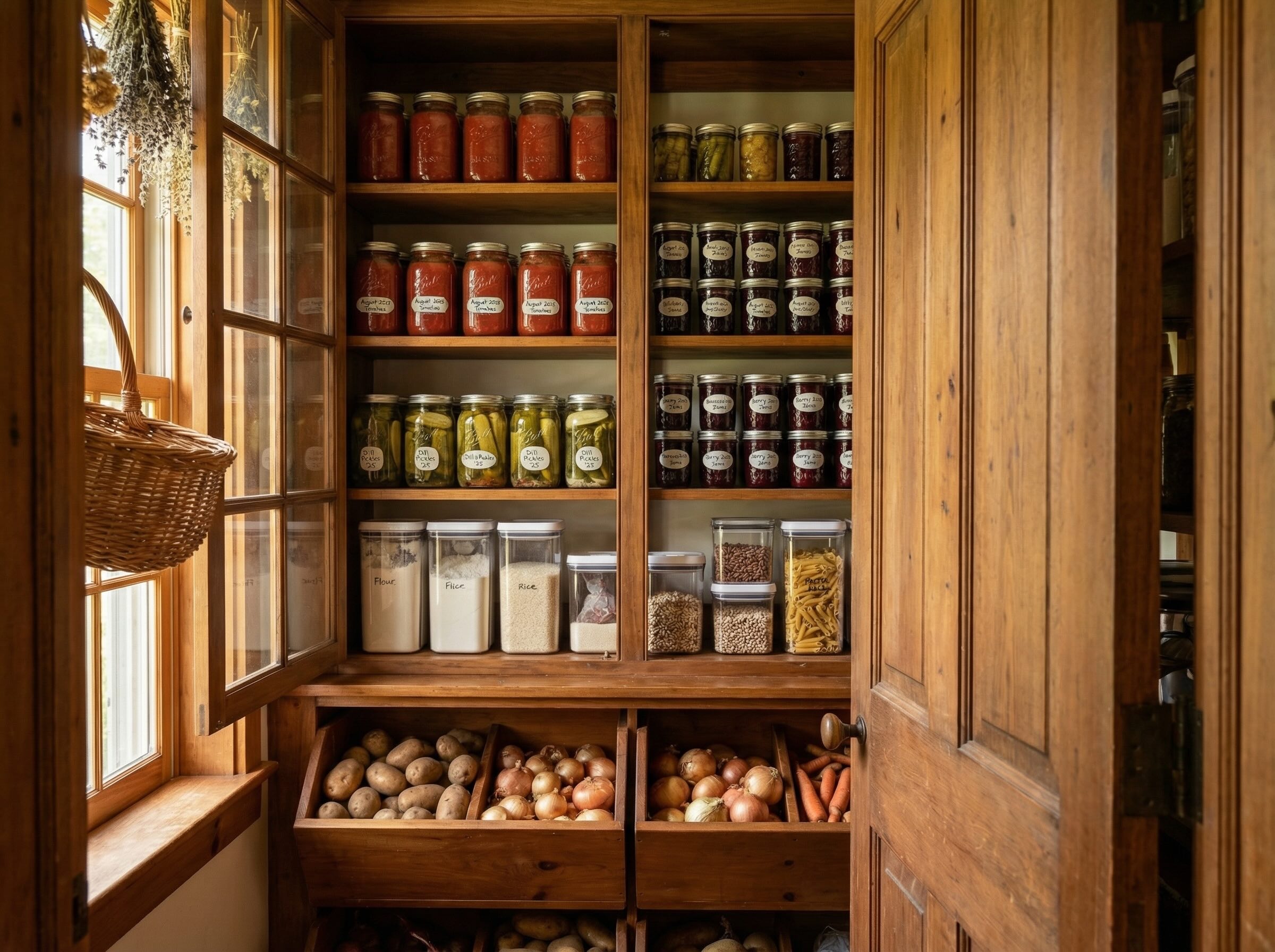
Closed storage isn't optional. Vermont has humidity. And moths. And field mice that would very much like to winter in your open-shelf pantry with the artfully arranged jars of lentils. If you cook from the garden, preserve, or buy in bulk, you need closed cabinets with actual capacity. Open shelving works in Los Angeles. It's a liability here.
Heating integration. If your kitchen is an addition or bump-out, make sure the HVAC plan accounts for it. I've seen $100,000 kitchens that are 58 degrees in January because the designer focused on the pendant lights and forgot to add a heating zone. Radiant floor heat is glorious. Forced air works if the ducts are properly sized and placed. Either way, verify the plan before the walls close up.
Mudroom threshold. Vermont kitchens need a hard boundary between "outside dirt" and "cooking space." Whether that's a dedicated mudroom, a tiled entry zone, or a boot bench with a drain tray, plan for the transition. Your beautiful hardwood floors will thank you. Cost: $500-$3,000 depending on scope. Value: the floor you don't have to replace in five years.
The Renovation Hierarchy: How to Spend $30K vs. $80K vs. $150K
$30,000 budget: Paint cabinets or reface them. Replace countertops with quartz or butcher block (skip the exotic stuff). Upgrade to a good range hood (600 CFM minimum). Add under-cabinet LED lighting. Replace the sink and faucet with workhorses (undermount sink, pull-down faucet). Install pull-out shelves in existing base cabinets. One good appliance upgrade—either the range or the refrigerator, whichever is failing. This budget doesn't buy you a showroom. It buys you a kitchen that works better than it did.
$80,000 budget: Everything above, plus new cabinets (not custom, but quality stock with soft-close hardware). Rework the layout if the footprint allows (add an island, improve the triangle, fix the landing space problems). Upgrade both the range and refrigerator. Add a pantry if you don't have one. Invest in real task lighting—not just under-cabinet strips, but strategically placed pendants and recessed cans. Solid flooring—engineered hardwood or luxury vinyl plank that'll last 20 years. At this level, you can have some visual personality (tile backsplash, cabinet details), but function still leads.
$150,000+ budget: Now you're buying space and systems. Move walls if the flow is broken. Add square footage if the kitchen is too small. Custom cabinetry with drawer organizers, pull-out spice racks, and appliance garages. Premium appliances across the board—but spec'd for how you actually cook, not for the brand badge. A proper pantry—walk-in if space allows. Stone counters if you want them (but seriously consider butcher block for work zones). High-end lighting design with dimmers and zones. And you still prioritize ventilation, electrical, and storage before you prioritize the statement tile.
What to never cheap out on: Ventilation, electrical, plumbing rough-in, structural work, and cabinet hardware (soft-close hinges and full-extension glides). These are the bones. If the bones are wrong, the skin doesn't matter.
What to defer: Exotic tile, high-end appliance packages you won't use, furniture-quality cabinetry in a basement or rental.
What to skip entirely: Anything you can't name a weekly use case for. If the answer to "when will I use this?" is "when we entertain," and you entertain twice a year, strike it from the budget.
Bottom Line: The 3-Question Test Before You Sign Anything
Question 1: Does this make a specific task easier? Which one? If the answer is vague ("it'll make the kitchen feel more open") or aesthetic ("it's a stunning focal point"), it's not a functional upgrade. Push for specifics. "This adds 18 inches of landing space next to the range so you're not balancing a hot pan on the corner of the sink" is a real answer.
Question 2: Will I use this weekly, or just show it off once? Pot filler you'll use weekly if you make pasta, stock, or soup regularly. Wine fridge you'll show off when guests visit twice a year. Be honest about the cadence. Weekly use justifies cost. Annual use does not.
Question 3: What's the Vermont failure mode? Open shelving fails in humidity and dust. Inadequate ventilation fails in moisture damage. Poor heating design fails in frozen pipes. Exotic tile fails when you drop a cast-iron pan. If your designer can't name the climate-specific risk and the mitigation strategy, they're not designing for Vermont. They're designing for a magazine.
Planning a Kitchen Renovation—Or Evaluating One?
I've walked through hundreds of Central Vermont kitchens as a chef and as a broker. I know what works, what fails, what costs too much, and what pays back. Whether you're planning a remodel or trying to figure out if the kitchen in that listing is worth the asking price, let's talk.
Contact Tony Walton
Principal Broker, New England Landmark Realty
Cell: (802) 233-4107
Office: (802) 253-4711 or (866) 324-2427
www.nelandmark.com
Helpful Resources:
Vermont Home Buying Guide | Selling Your Vermont Home
Where to Go Next
- Vermont Home Buying Guide – What to look for when evaluating kitchens during your home search
- Selling Your Vermont Home – Which kitchen upgrades pay back and which ones don't
- Central Vermont Market Reports – Current data on pricing and inventory in Washington, Lamoille, and Chittenden Counties
- National Kitchen & Bath Association Planning Guidelines – The geometry and clearance standards every functional kitchen must meet

:format(webp):quality(80)/u.realgeeks.media/rgtemplate/Market-Report-2.png)