counter intelligence
A kitchen can look expensive and still fail the daily test. In Vermont, spring is when the room stops performing for the listing photos and starts telling the truth.
Jump to Key Takeaways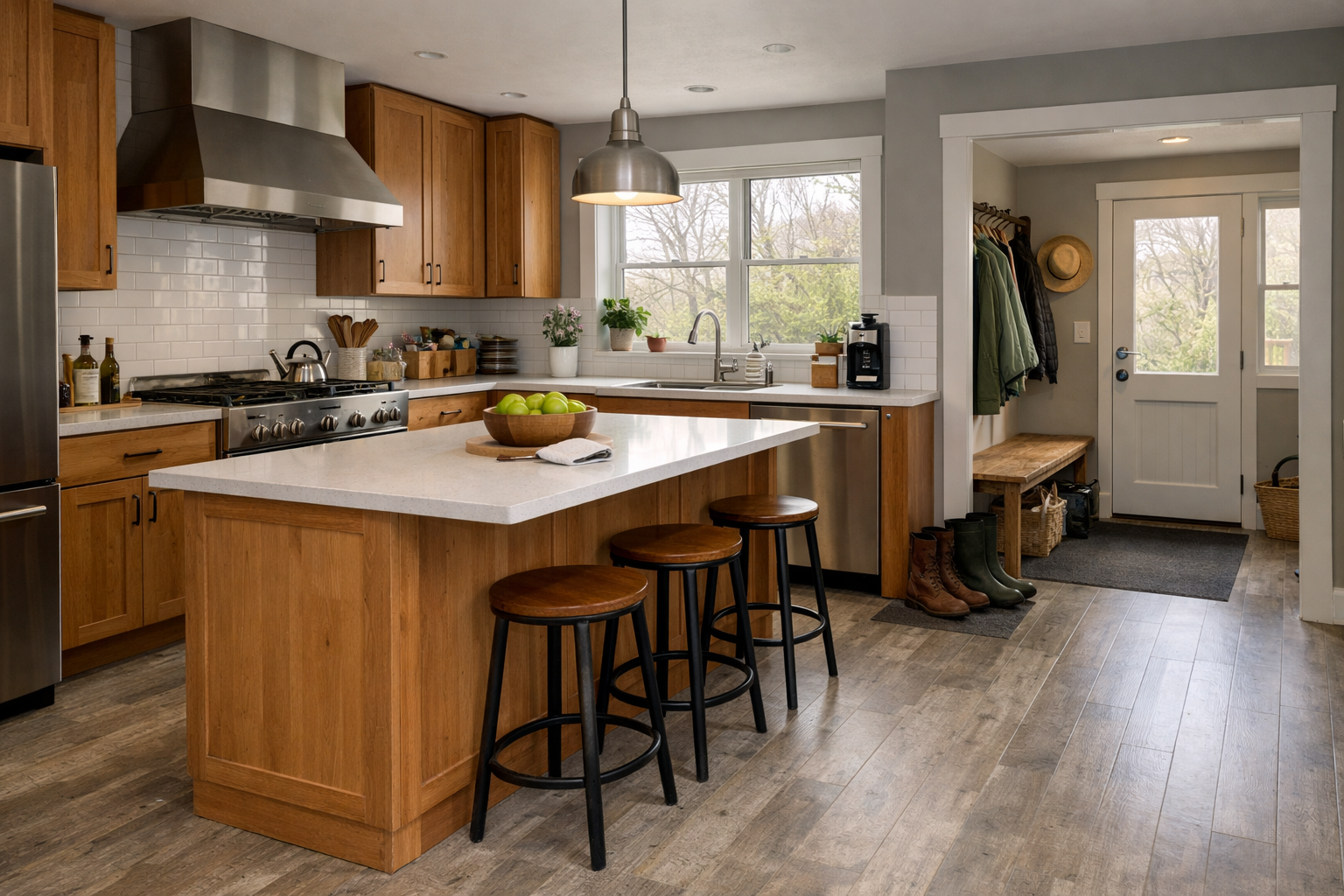
Granite gets the glory because granite can be photographed. Function gets ignored because nobody puts a trash pull-out, landing space, or a properly ducted hood on Instagram.
Spring is when Vermont kitchens stop lying. Snowmelt, mud, humidity, and open-house traffic expose the difference between a room that looks finished and a room that actually works, which is why buyers should judge kitchens like operators and sellers should improve them like adults.
Key Takeaways
Two-Sentence Summary: This article is for Vermont home buyers, sellers, and renovation-minded homeowners who want to evaluate a kitchen by how it works, not by how it photographs. It helps readers spot the difference between functional value and cosmetic theater before they overpay, overspend, or miss the room’s real liabilities during spring showings and inspections.
If You Only Remember 3 Things:
- A pretty kitchen can still fail the daily test if it lacks landing space, storage logic, ventilation, and cleanup flow.
- Spring is the best time to catch a kitchen telling the truth, because moisture, mud, odors, and drainage issues stop hiding.
- Buyers should price kitchens by replacement pain and workflow risk, not by stone counters and trendy hardware.
Quick Facts
- Vermont mud season usually begins in late March or early April and can run into early June. Source
- A general home inspection in Vermont typically runs about $400 to $700, with specialized add-ons costing extra. Source
- The National Kitchen & Bath Association recommends real landing space at the cooktop, because decorative drama does not prevent burns or broken workflow. Source
Why This Matters
Direct answer: The kitchen still drives emotional reactions faster than almost any room in the house. That matters because buyers routinely mistake finish for function, and in Vermont the cost of that mistake rises fast once mud season, older housing stock, and real cooking enter the frame.
A buyer can forgive a dated paint color. A buyer cannot easily forgive a kitchen that forces every grocery bag, roasting pan, and coffee mug through one bottleneck while the hood recirculates fish smell back into the room. The problem is that cosmetics are loud and workflow is quiet, at least until you live there.
Sellers make the same mistake from the other side. They spend money where the camera can see it and ignore the friction buyers can feel in five minutes if they know what to look for. That is not staging. That is expensive camouflage.
The Countertops Are Not the Kitchen
Direct answer: Materials get attention because they are easy to notice. Function gets ignored because you only discover the failure after you have nowhere to land a hot pan, nowhere to hide the recycling, and nowhere for steam to go except into the house.
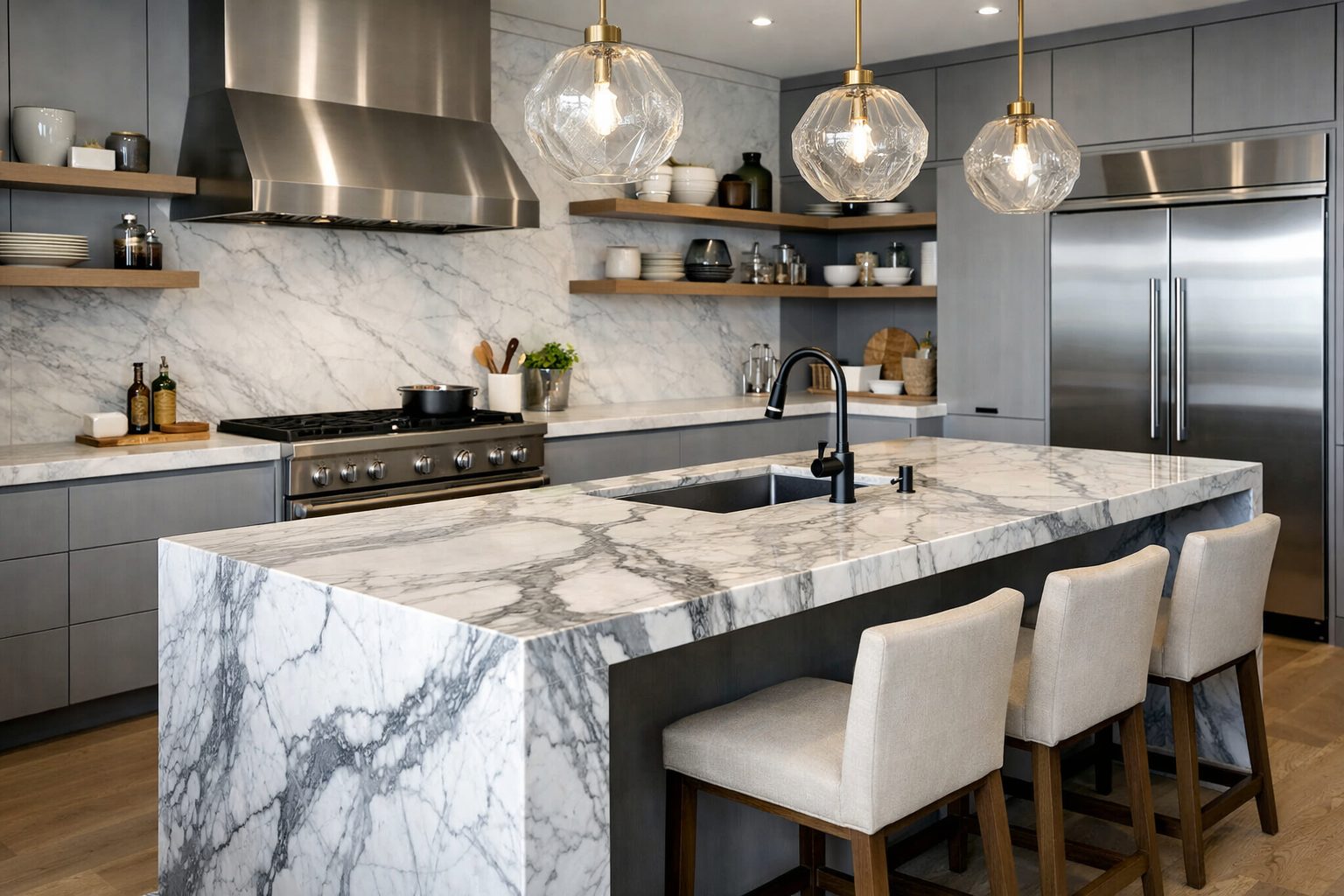
A slab of quartz is not a kitchen strategy. Neither is a waterfall island, a brass pot filler hung like jewelry, or open shelving loaded with bowls that will spend the first Vermont winter collecting grease and dust.
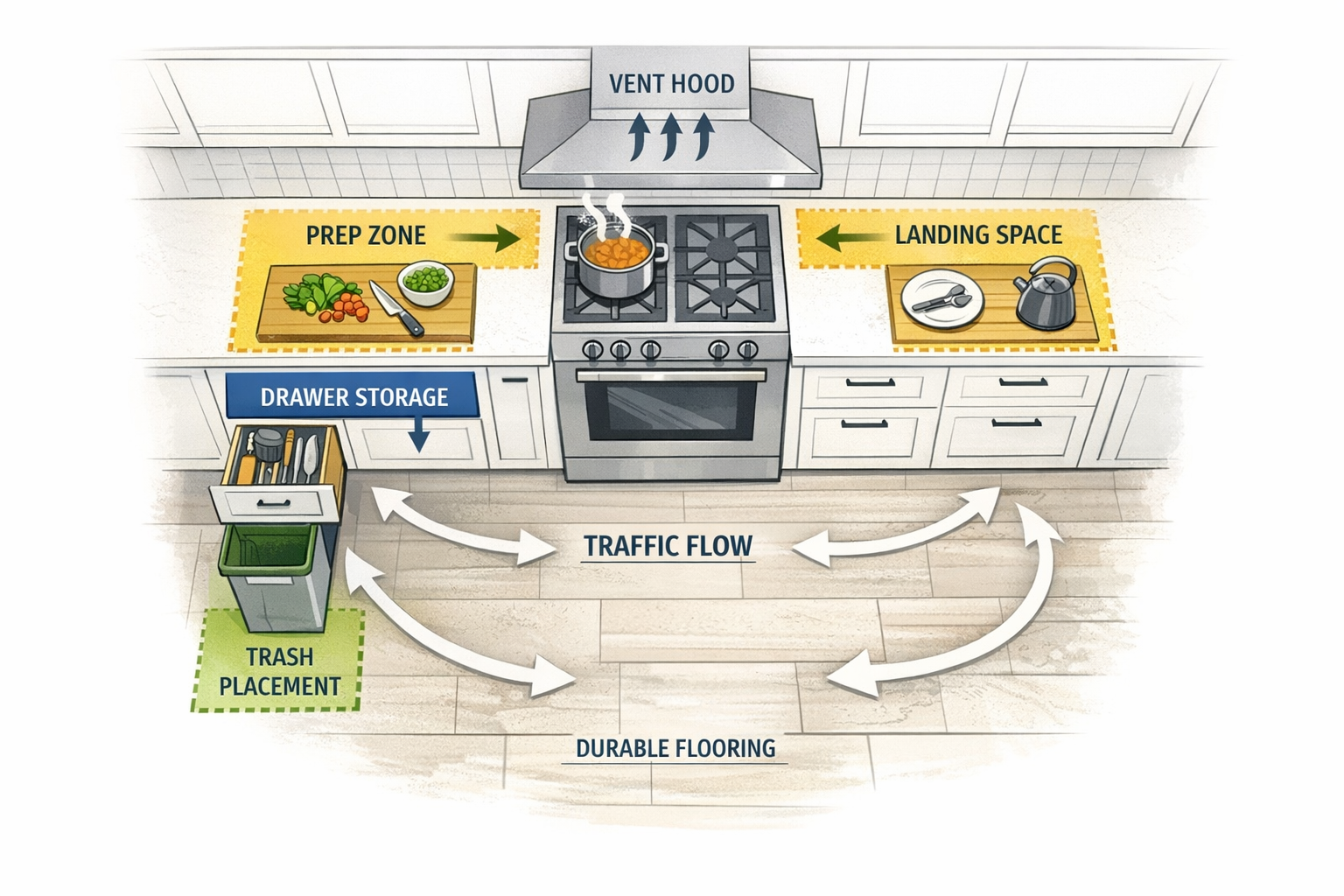
What matters is uglier and therefore more valuable: landing space beside the cooktop, drawer storage instead of cave-style lower cabinets, lighting that hits the work zone instead of your forehead, and ventilation that actually leaves the building. The NKBA recommends at least 12 inches of landing space on one side of a cooking surface and 15 on the other, which is less glamorous than stone selection and far more useful.
What Buyers Should Check in a Five-Minute Showing
Direct answer: You do not need a design degree to read a kitchen. You need five disciplined minutes, the nerve to open cabinets, and the imagination to picture a wet April Thursday in Vermont instead of a staged Sunday afternoon with lemons in a bowl.
- Look for landing space. Can you set groceries near the refrigerator, plates near the sink, and a hot sheet pan near the stove without playing Twister? If not, the room is working against you.
- Check the hood. A big hood that only recirculates is costume jewelry. Ask whether it vents outside, because moisture and cooking grease do not disappear just because the appliance is stainless.
- Open the lower cabinets. If everything is a deep cave with one shelf, you are buying future aggravation. Full-extension drawers beat kneeling on old flooring like a medieval penitent.
- Find the trash and recycling. If there is no logical home for them, daily life gets stupid fast. Good kitchens let garbage disappear close to prep and cleanup zones.
- Read the floor and traffic path. In Vermont, the route from exterior door to kitchen matters. Mud, dogs, boots, ski gear, and spring moisture will punish a weak layout and delicate finish.
Then do one more thing buyers forget: treat the kitchen as part of due diligence, not just seduction. New England Landmark Realty’s own buying guidance already pushes buyers toward inspections, radon testing, septic review, and a serious walkthrough of systems. Kitchens live inside that same logic.
What Sellers and Renovators Should Fix Before Spending Big
Direct answer: The highest-return kitchen improvements are usually boring. That is good news, because boring tends to cost less than performative luxury and does more to improve buyer confidence, daily function, and the feeling that the room has been intelligently maintained.
- Add task lighting. Under-cabinet lighting or better overhead placement usually runs about $300 to $1,500, often takes half a day to one day, and carries low risk. Buyers feel good lighting immediately, even if they cannot name why.
- Fix ventilation honestly. A proper ducted correction can run roughly $800 to $3,500+ depending on the route, takes one to two days, and carries medium risk if walls or roof penetrations are involved. It is still a better use of money than another designer faucet.
- Improve storage logic. Drawer retrofits, trash pull-outs, and pantry clean-up often run $250 to $2,500, take half a day to a weekend, and usually carry low to medium risk. This is where kitchens quietly start acting richer than they look.
If you are selling, resist the urge to cosplay renovation. Clean hard. Declutter hard. Use neutral presentation, modern fixtures where needed, and let the room breathe. Good staging is a confidence move, not a magic trick.
Local Context: Mud Season, Old Houses, and Real-Life Kitchen Use
Direct answer: A Vermont kitchen is not just a cooking room. It is a checkpoint between weather and shelter, often attached to boots, dogs, groceries, garden produce, and old-house infrastructure that was never designed for modern electrical loads, storage expectations, or traffic patterns.
This is why national kitchen advice can feel like a postcard from another planet. Vermont brings thaw cycles, damp entries, preserving season, heavy outerwear, and a lot of housing stock where the kitchen was expanded by addition, improvisation, or wishful thinking.
So if you are buying in Waterbury, Stowe, Montpelier, or anywhere else in Central Vermont, pay attention to adjacency. Where do the boots land? Where does the wet dog shake off? Where does the farm share box go when the counters are already full? The answers tell you more about the room than the countertops ever will.

Bottom Line
Direct answer: The best kitchen is not the one that makes strangers say “wow.” It is the one that makes breakfast easier, cleanup faster, resale cleaner, and future renovation decisions more rational. In Vermont, function is not the compromise. It is the feature.
If you are buying, score the room for workflow before you score it for style. If you are selling, remove friction before you swap finishes. If you are renovating, put money where the room earns its keep every single day.
Where to Go Next
Direct answer: Good decisions need a next step, not just a clever opinion. If this column helped you read the room better, these guides will help you turn that instinct into a cleaner search, a smarter prep plan, or a less painful inspection process.
- Vermont Home Buying Guide
- Seller’s Guide
- Timeline for Buying a Home in Vermont
- Vermont Home Inspection Guide
- Staging Tips for Selling Your Vermont Home
For broader technical planning standards on layout and clearances, the National Kitchen & Bath Association guidelines are worth a look.
Evaluating a Kitchen During Your Search? Or Figuring Out What Yours Could Become?
Let’s talk. I have walked through hundreds of Central Vermont kitchens as a chef and as a broker, and those are not the same skill set until they suddenly are.
Tony Walton
Principal Broker, New England Landmark Realty
Cell: (802) 233-4107
Office: (802) 253-4711 or (866) 324-2427
Website: www.nelandmark.com

:format(webp):quality(80)/u.realgeeks.media/rgtemplate/Market-Report-2.png)