Two-Sentence Summary
Most Vermont sellers stage their living room and primary bedroom beautifully, then leave secondary bedrooms, dining rooms, and entries looking bare or neglected—and buyers mentally dock the price by thousands without ever telling you why. Cohesive whole-home staging in 2026 isn't optional; it's the difference between your asking price and a low offer you can't explain.
If You Only Do 3 Things
- Stage every room a buyer will open a door to—not just the "hero" spaces; secondary bedrooms, dining rooms, home offices, and entries must look intentional, not abandoned.
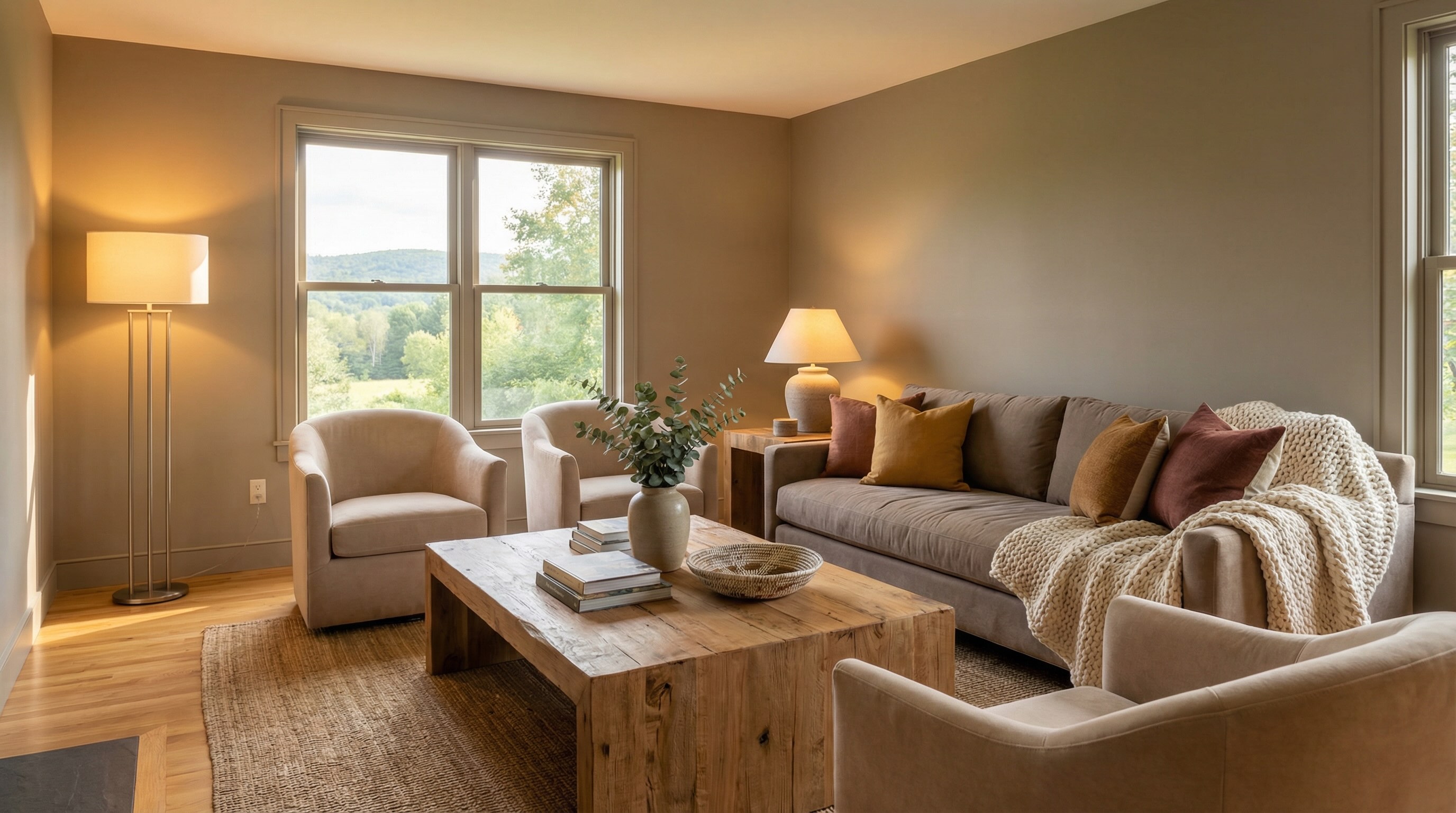
- Add warm, layered textiles and lighting throughout—a single throw pillow on a gray couch in the living room doesn't create warmth if the rest of the house feels cold and sparse.
- Create "lifestyle moments" in every space—a coffee setup on the kitchen counter, books on the nightstand, a coat hook with a scarf in the entry; buyers need to see themselves living there, room by room.
The Moment Buyers Decide
You won't hear about it in the feedback. The buyer's agent will say something polite like "they're still considering options" or "they want to see a few more homes." What they won't say: your incomplete staging made the house feel half-committed, and buyers don't pay full price for half-effort.
Here's the quiet problem. You think staging is about making the living room look good for photos. It's not. Staging is about maintaining buyer confidence as they move through every single space. The second they open a door and feel doubt—whether it's a cluttered office, a sad dining room with no table, or an entry that screams "we gave up here"—they start negotiating in their head.
The Quiet Problem (What's Actually Turning People Off)
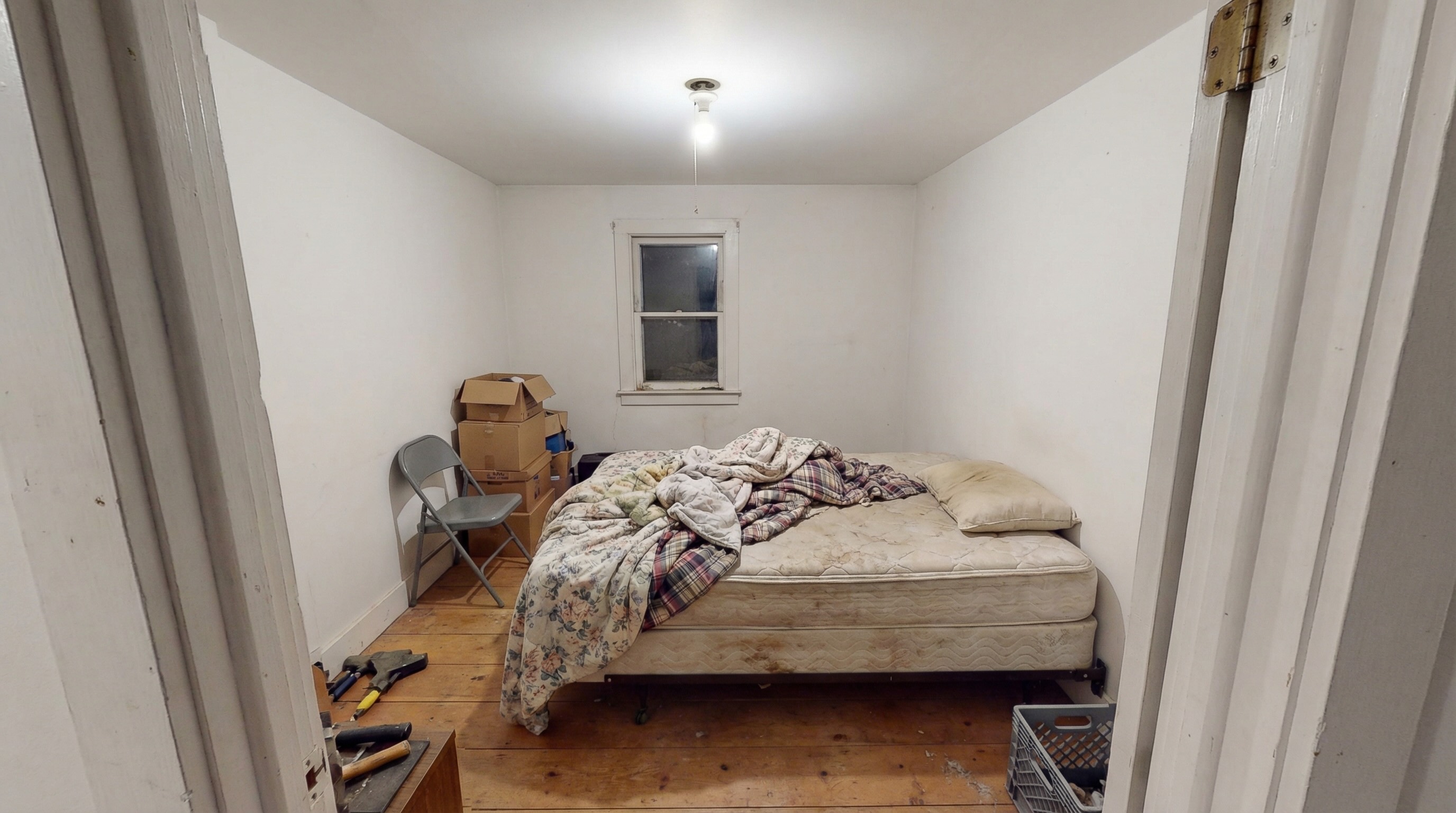
This isn't about taste. It's about perception. Buyers don't consciously think "this unstaged bedroom is worth $15,000 less." They just feel uneasy. The house starts to feel like a project instead of a home. And projects get discounted.
The math is cruel but simple. If a buyer walks through five homes in a weekend and four of them have cohesive staging throughout, yours is the one that feels incomplete. Even if your bones are better. Even if your kitchen is newer. The emotional gap is what they remember.
Buyers don't say it. They just leave.
The Fix (Three Budget Options)
Budget Fix: Under $500, One Week
What to do: Borrow furniture from family or move existing pieces to fill gaps in secondary bedrooms and dining rooms. Add inexpensive neutral bedding ($80–$120 per bed at Target or HomeGoods), a pair of matching nightstands with lamps ($150–$200), and area rugs ($60–$100 each) to secondary bedrooms. Stage the dining table with simple white place settings and a centerpiece (greenery or candles, $40–$60). Add a coat hook, basket, and small bench or chair to the entry ($80–$120).
Time investment: One weekend of shopping and arranging.
Payoff: Photos now show complete, lived-in spaces instead of empty or neglected rooms. Buyers stay emotionally engaged through the full walkthrough. You protect your asking price by eliminating the "project feel."
Mid Fix: $1,500–$3,000, 1–2 Weeks
What to do: Rent furniture for unfurnished rooms (approximately $300–$600/month for bedroom sets and dining furniture). Hire a professional stager for a full-home consultation (typically $400–$800 in Central Vermont; they'll audit every space and provide a room-by-room plan). Invest in warm textiles throughout—throws, pillows in rust/ochre/warm grays, curtains that frame windows without blocking light ($500–$800). Do cohesive paint touch-ups in rooms that feel dated or cold (greige, warm whites; $300–$600 in materials and labor for 2–3 rooms).
Time investment: 1–2 weeks to coordinate rentals, staging consult, and minor updates.
Payoff: The house now reads as cohesive and complete in every photo and every showing. Buyers don't mentally dock the price. You're competing at the same level as other well-staged homes in your price range. This typically protects $15,000–$25,000 in negotiating position.
Do It Right: $4,000–$6,000, 2–3 Weeks
What to do: Hire a professional stager for whole-home staging—not just a consultation. They'll bring furniture, art, layered textiles, greenery, and accessories to create "lifestyle moments" in every room (coffee setup on the counter, books and reading glasses on the nightstand, throws draped just right, Vermont-appropriate touches like a vintage snowshoe or ski decor that feels intentional, not cluttered). Include cohesive styling in entries, home offices, flex spaces, and even laundry rooms if they're visible. Budget for 4–8 weeks of rental if needed.
Time investment: 2–3 weeks for full staging coordination, installation, and photography.
Payoff: Your listing becomes the one buyers remember. Photos are scroll-stopping. Showings convert to offers at a higher rate. You're not just protecting your asking price—you're often creating competitive tension that pushes final sale price above list. In Vermont's 2026 balanced market, this is the difference between "nice house" and "the one we want."
Vermont Context (Why This Matters Even More Here)
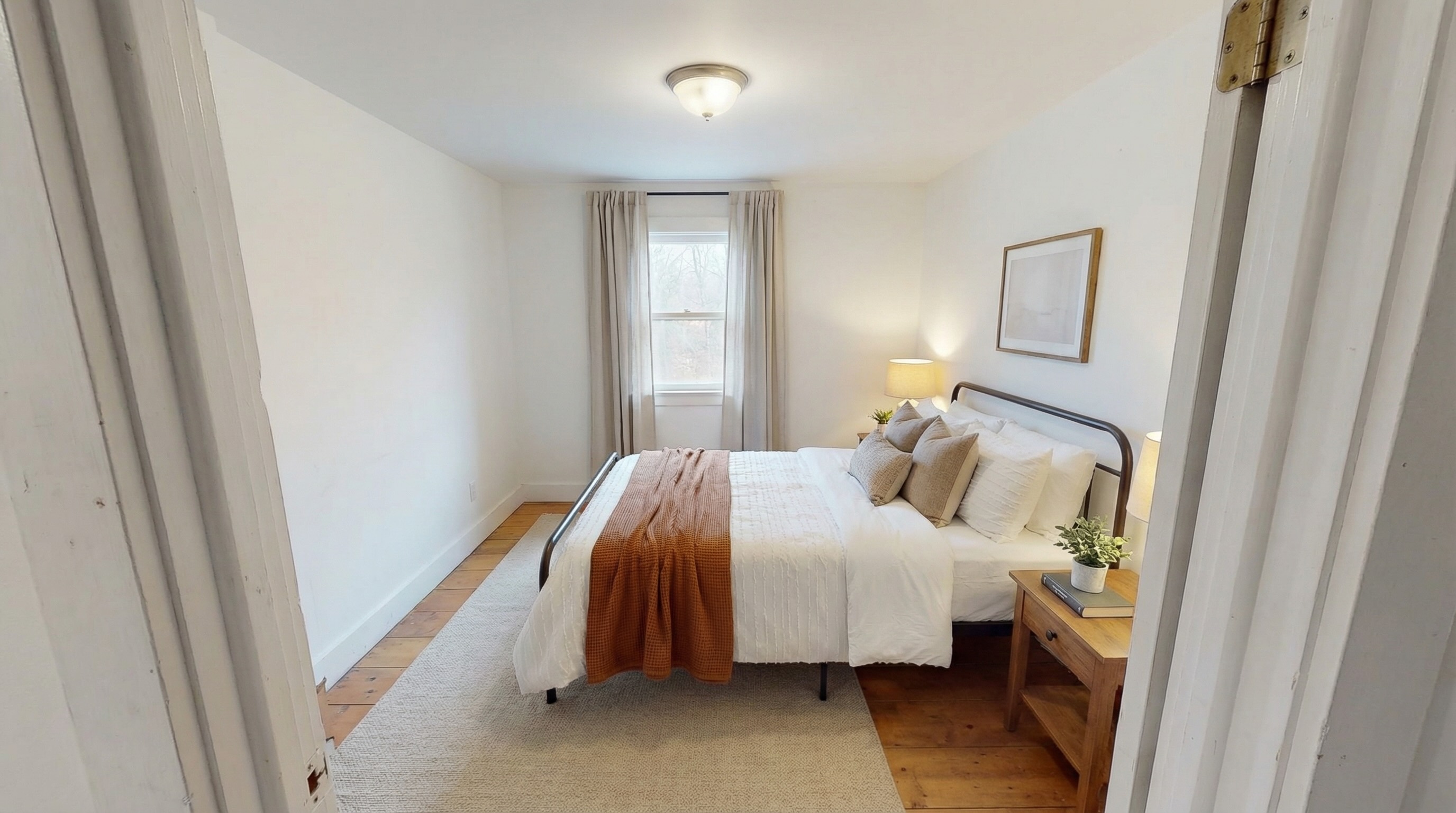
Vermont homes weren't built with open-concept staging in mind. You've got small dining rooms, secondary bedrooms that are actually 10x10, mudrooms that double as laundry rooms, and offices carved out of former sewing rooms. Buyers know this. They're fine with it. What they're not fine with is feeling like you didn't try.
When a buyer tours a 1920s Waterbury farmhouse, they're already managing mental questions: "Is that second bedroom big enough for a queen bed and dressers?" "Can we actually use the dining room or is it just a pass-through?" If those rooms are bare or styled like an afterthought, the answer becomes "probably not"—even if the room is perfectly functional.
And in winter, this problem gets worse. Vermont's January light is flat and gray. An unstaged room doesn't just look empty—it looks cold, dark, uninviting. The buyer's brain registers it as a space they'll never want to spend time in. Staging with warm textiles, layered lighting, and intentional furniture placement overrides that reptile-brain response.
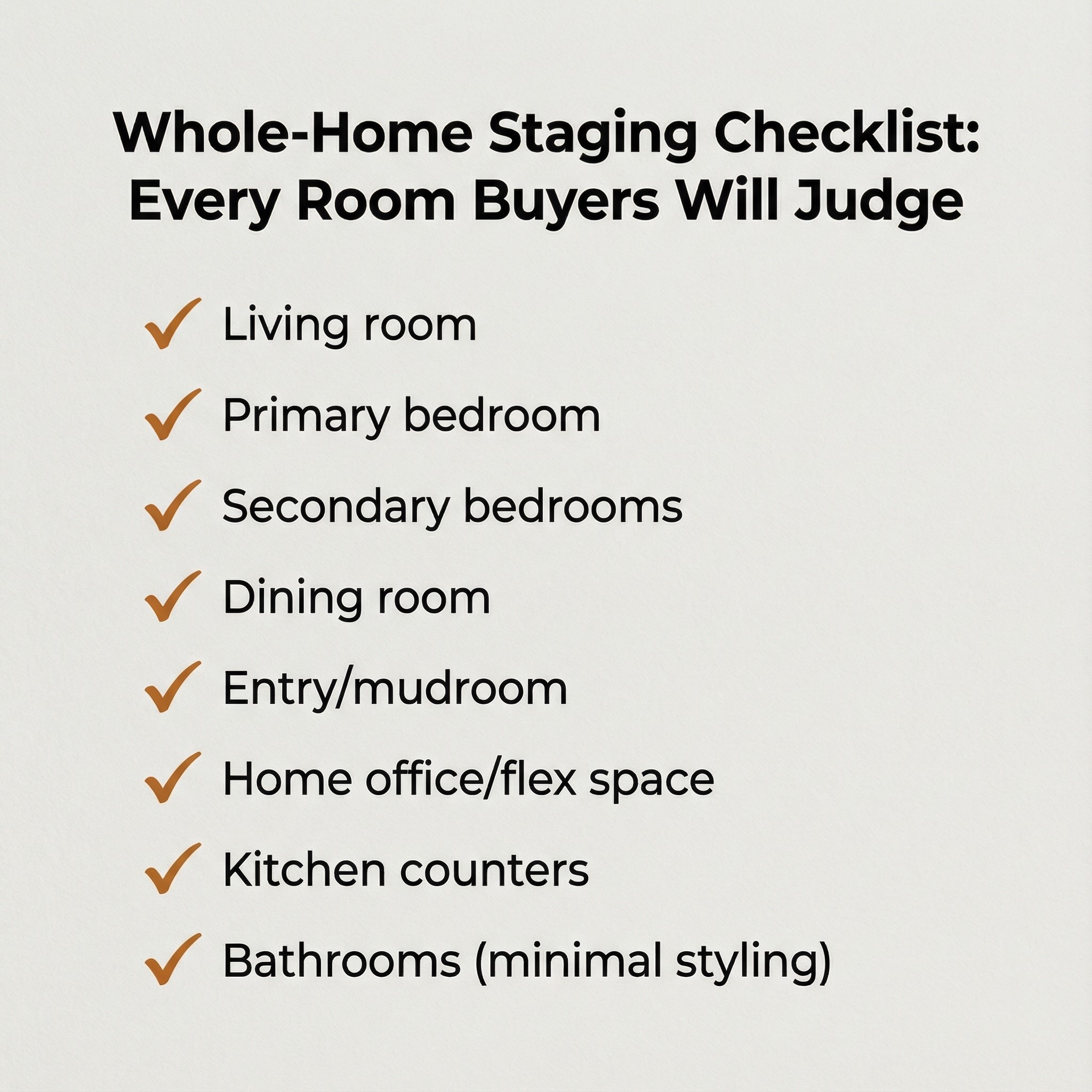
Here's what buyers aren't telling you: when they walk through a Vermont home in winter and every room feels considered—even the small ones, even the weird ones—they relax. They stop problem-solving and start imagining. That shift is worth $15,000 in your pocket.
Bottom Line
You spent years living in this house. You know the guest bedroom is charming once there's a bed and a lamp. You know the dining room works beautifully when there's a table in it. But buyers don't know that. And in the 90 seconds they spend deciding whether to make an offer, they're not giving you the benefit of the doubt.
Let's make it easy for them to say yes.
Let's Talk Before You List
If you're thinking about selling this winter or spring, send me your current listing photos (or a walk-through video). I'll tell you exactly which rooms need attention and give you a realistic one-weekend plan to close the staging gaps—before you spend money on the wrong things or take a discount you didn't need to take.
Tony Walton, Principal Broker
New England Landmark Realty (NELR)
Office: (802) 253-4711 or (866) 324-2427
Cell: (802) 233-4107
nelandmark.com
Where to Go Next
- Complete Vermont Seller's Guide – Room-by-room prep strategies, pricing insights, and timeline planning
- Vermont Home Buying Guide – What buyers are actually looking for in 2026 (useful if you're selling and buying)
- Kore's Design Eye Archive – Past articles on lighting, paint, buyer psychology, and Vermont-specific staging
- Schedule a Pre-Listing Consultation – We'll walk your home and prioritize what actually moves the needle
- Central Vermont Market Update – Current inventory, pricing trends, and buyer behavior data

:format(webp):quality(80)/u.realgeeks.media/rgtemplate/Market-Report-2.png)