By Kore's Design Eye | New England Landmark Realty
What This Article Is About
Who this is for: Vermont home sellers preparing winter listings—and buyers wondering why so many homes feel cramped online but spacious in person.
What you'll learn: Why the 2026 staging trend ("add warmth and personality") backfires in Vermont's smaller, darker homes—and the 40% subtraction rule that helps sellers get more showings, better photos, and higher offers.
If You Only Remember 3 Things:
- The 2026 staging trend ("add warmth and personality") works in theory—but in Vermont's smaller, darker homes, it's backfiring. Buyers want space to imagine their own lives, not navigate yours.
- The fix is subtraction: Remove about 40% of your furniture, pack personal photos and collections, and edit surfaces to 1–2 intentional objects per room. Rooms photograph ~30% larger, and buyers see the bones—not the clutter.
- Three staging tiers: Weekend Purge ($0–$200, 2 days), One-Week Upgrade ($200–$800, 5 days), or Full Send ($800–$2,500, 2 weeks). Even the free option can add 5–10% to your sale price and cut days on market by 30–50%.
Quick Facts: Vermont Housing Context
- Median Central Vermont home: 1,400–1,800 sq ft (vs. 2,200+ nationally)
- Typical ceilings: 7.5–8 feet (vs. 9–10 in newer builds)
- February daylight in Vermont: ~10 hours (best listing photos: 10 a.m.–2 p.m.)
- North-facing windows are common—winter light is blue-toned and unforgiving
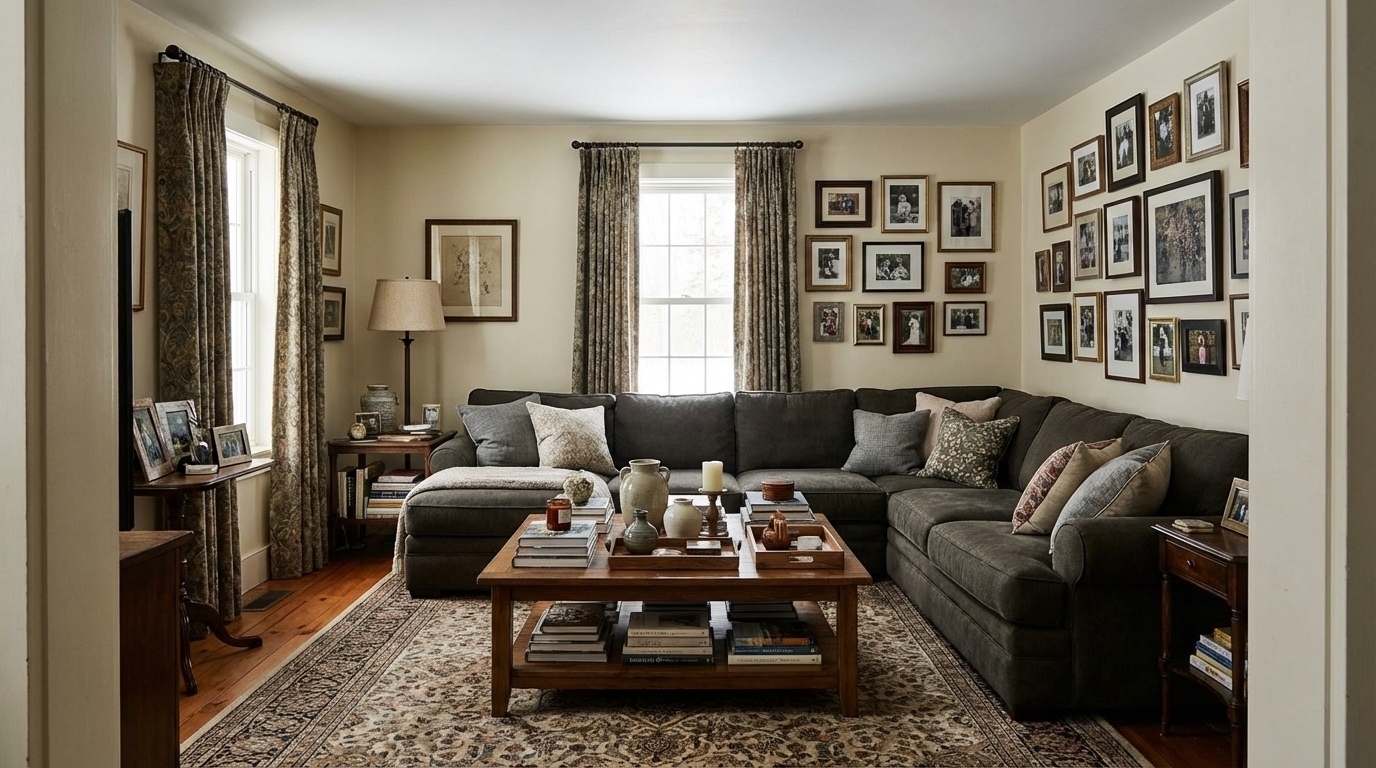
The Problem: When "Warm" Becomes "Whoa"
Here's the thing about 2026 staging advice: it's not wrong—it's just written for homes that don't exist in Vermont.
You've seen the headlines: "Buyers want warmth! Add personal touches! Show how you live!" And sure, in a 2,400-square-foot suburban colonial with vaulted ceilings and wall-to-wall southern light, that works.
But in a 1,600-square-foot Vermont farmhouse with 7.5-foot ceilings, three small bedrooms, and windows that face north? That advice is a liability.
Buyers scrolling Zillow at 11 p.m. don't want to see your life. They want to imagine theirs.
And right now? Your staging is getting in the way.
Key Takeaways: What's Actually Turning Buyers Off
The Problem:
Sellers are adding more—more throw pillows, more gallery walls, more "cozy touches"—because that's what the staging blogs say to do. But in Vermont's smaller, darker homes, "cozy" reads as "cramped." Buyers can't see the hardwood floors. They can't imagine their couch in that corner. They're clicking to the next listing before they finish scrolling your photos.
The Fix:
Subtract. A lot.
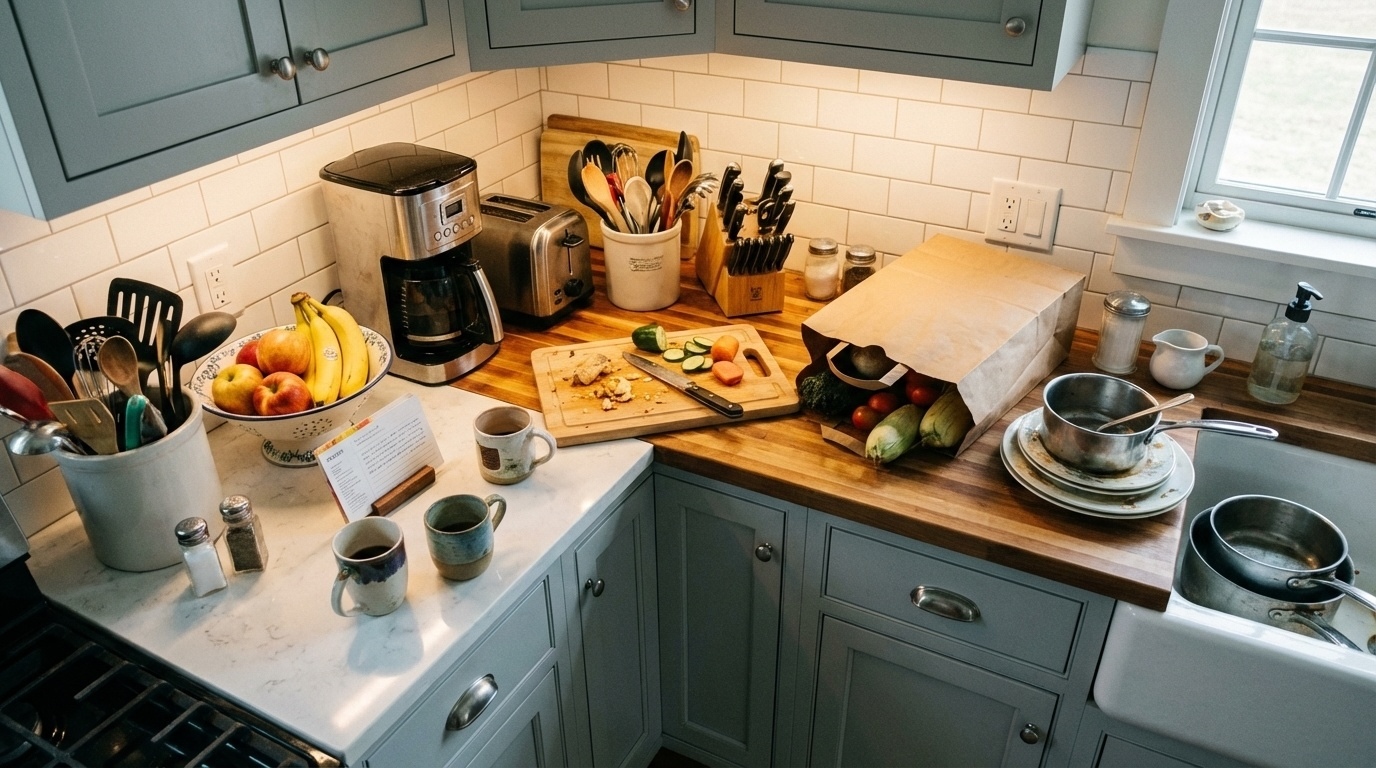
Remove about 40% of your furniture. Box up every family photo, every personal collection, every "conversation piece." Edit every surface—kitchen counters, coffee tables, nightstands—to 1–2 intentional objects. Max.
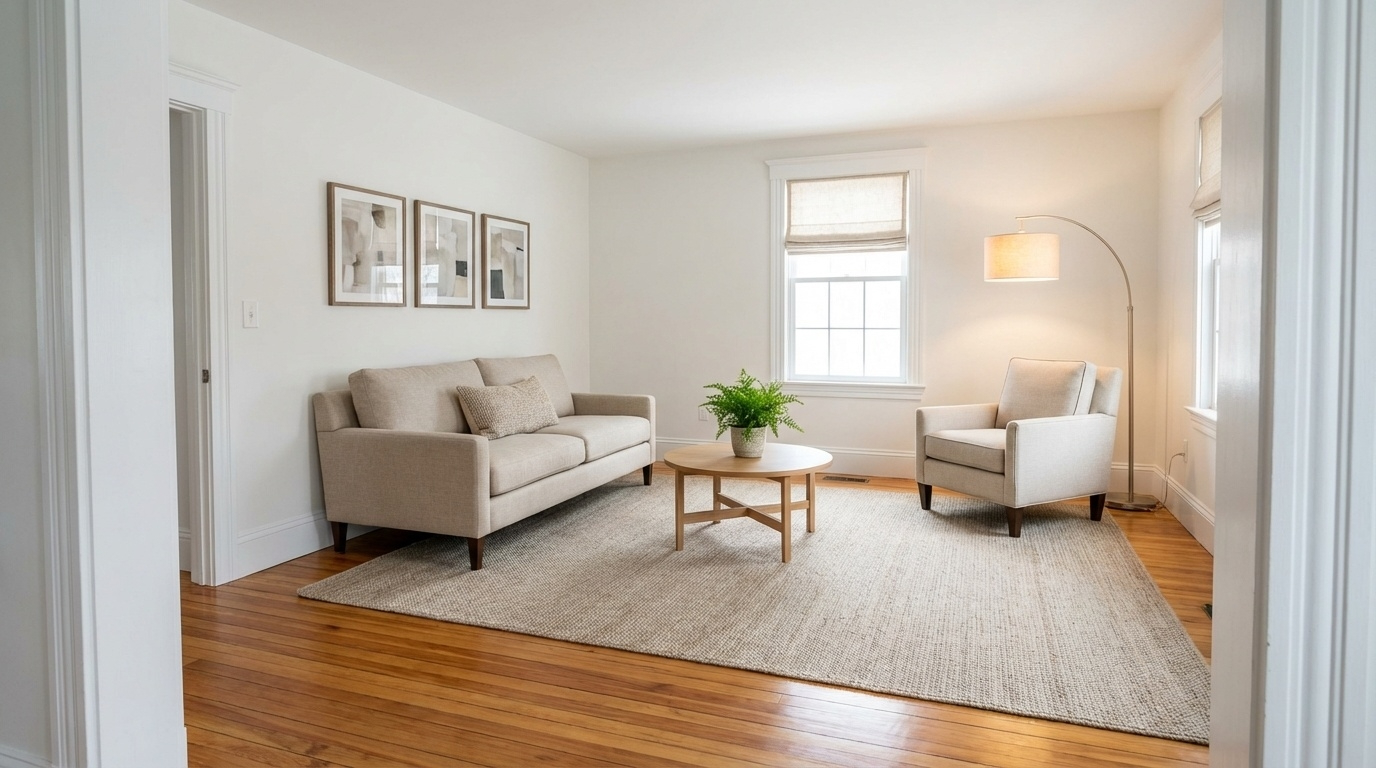
Let the bones of your home do the work: the wide pine floors, the original trim, the light (however limited) coming through those north-facing windows.
Why It Works:
Rooms photograph ~30% larger when you remove excess furniture. Light penetrates deeper. Buyers see potential, not inventory. And in Vermont's winter market—where every listing competes with shorter days and buyers' Seasonal Affective Disorder—space and light win every time.
Three Ways to Fix It (Budget + Timeline)
You don't need a $10,000 staging budget. You need a weekend, some muscle, and the discipline to subtract.
Option 1: The Weekend Purge
Cost: $0–$200
Time: 1 weekend
What You're Doing: Removing ~40% of furniture, boxing all personal items, clearing all surfaces to 1–2 objects per room, storing everything in the basement/garage/a friend's barn.
ROI: Rooms look ~30% bigger in photos. Light hits walls instead of clutter. Buyers stop scrolling past your listing.
Option 2: The One-Week Upgrade
Cost: $200–$800
Time: ~5 days
What You're Adding: After the purge, add 2–3 pieces of neutral abstract art, swap out old lampshades for linen or light-filtering neutrals, add one or two task lamps (warm 2700K–3000K bulbs), and hang simple linen or light-filtering window treatments.
ROI: Buyers see warmth and space. Your listing photos look intentional, not empty.
Option 3: The Full Send
Cost: $800–$2,500
Time: ~2 weeks
What You're Getting: Professional staging consult, rental furniture (if needed), fresh neutral paint, updated light fixtures, minor flooring refresh (if necessary), and photos that look like they belong in a design blog.
ROI: Staged homes sell for 5–10% more and spend 30–50% less time on market. In Central Vermont's median price range ($450K–$650K), that's $22K–$65K in your pocket—and 30–60 fewer days of carrying costs.
Why This Matters in Vermont Specifically
Let's talk numbers:
- Median Central Vermont home: 1,400–1,800 sq ft (national average: 2,200+)
- Typical ceilings: 7.5–8 feet (newer builds: 9–10 feet)
- Common window orientation: North-facing (translation: minimal direct sunlight, especially in winter)
- February daylight: ~10 hours total (prime listing photo window: 10 a.m.–2 p.m.)
Small rooms + low ceilings + limited light = every piece of clutter is amplified.
A sectional sofa that works fine in a 16×18 living room in Raleigh will eat a 12×14 Vermont farmhouse living room. A gallery wall of 12 family photos that feels "homey" in your daily life will read as "I can't see the walls" in your listing photos.
Buyers aren't rejecting your taste. They're rejecting the feeling that there's no room for them.
The Bottom Line
Show the space, not your life.
In Vermont's smaller, darker homes, subtraction is the strategy. Remove 40% of your furniture. Box the personal items. Edit every surface to 1–2 objects. Schedule your listing photos between 10 a.m. and 2 p.m. when the winter light is at its best.
And if you're not sure where to start? I'm happy to walk through your home and flag the stuff that's costing you showings.
Where to Go Next:
- Complete Vermont Seller's Guide — Pricing, timing, staging, and negotiation strategies for Central Vermont's market
- Vermont Home Buying Guide — What buyers are actually looking for in 2026 (spoiler: space and light)
- Browse Current Central Vermont Listings — See how your competition is staging (and where they're making the same mistakes)
Let's Talk Staging
Tony Walton
Principal Broker, New England Landmark Realty
📞 (802) 253-4711 (Office) | (866) 324-2427 (Toll-Free)
📱 (802) 233-4107 (Cell)
✉️ tony@nelandmark.com
Kore's Design Eye is a regular feature from New England Landmark Realty, translating Vermont home design, staging, and buyer psychology into ROI-driven strategies for sellers and smart buyers.

:format(webp):quality(80)/u.realgeeks.media/rgtemplate/Market-Report-2.png)