By New England Landmark Realty LTD
There's a particular optimism that strikes homeowners in spring. The snow melts. The earth softens. Suddenly, the yard feels full of possibility. You envision a landscape that whispers rather than shouts—something that fits Vermont's aesthetic without requiring you to become a horticulturist by June. Then reality arrives with the same force as mud season.
The problem isn't ambition. It's the gap between what looks good on Instagram and what actually survives a Vermont winter while staying manageable. That gap has killed more landscaping dreams than poor drainage and overwatering combined.
The Plant Problem: Choosing Beauty Over Biology
Here's the uncomfortable truth: the plants that look most appealing at the garden center often have no business in Central Vermont. They're seductive liars—beautiful in July, dead by February, expensive either way.
One of the most frequent mistakes homeowners make is selecting plants that don't fit the local climate. That ornamental cherry? Stunning for six weeks, then vulnerable to our late spring freezes and summer humidity. The dwarf boxwood from the fancy nursery? It'll sulk in our winters, demanding extra mulch, extra care, extra faith. They may look inviting at first, but they require extra water, constant vigilance, and eventual replacement when conditions turn against them.
Plants that naturally thrive in Vermont—native maples, serviceberry, hydrangeas built for cold climates, ornamental grasses that actually earn their place—are easier to maintain and more reliable over time. They're not as Instagram-friendly. That's their greatest strength.
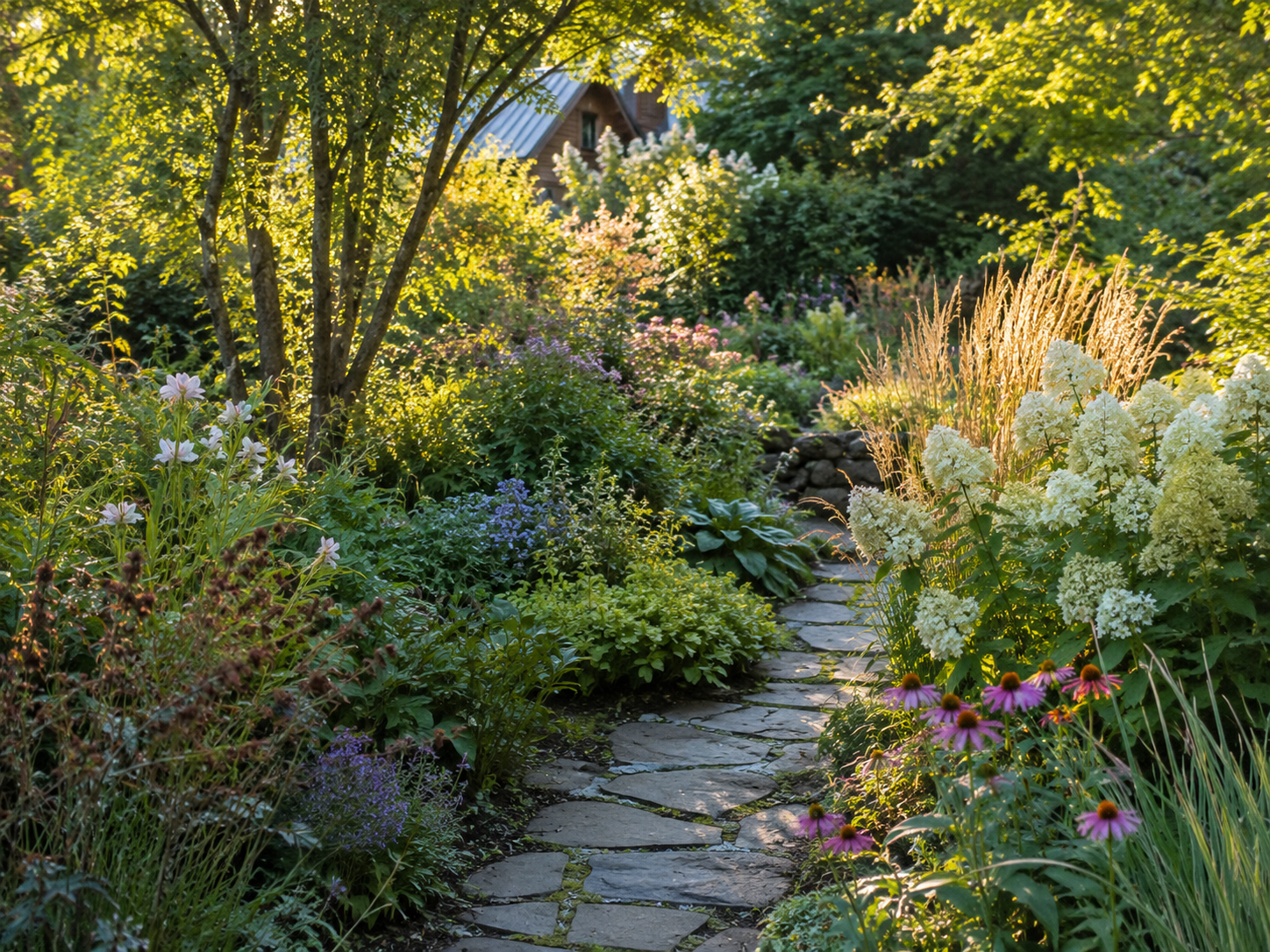
The math is simple: choose plants suited to your zone, and maintenance drops dramatically. Ignore local conditions, and you're paying a premium in time, money, and frustration for the next decade.
The Spacing Trap: Impatience as Expensive Habit
Every landscaper has seen this: a homeowner wants instant gratification. They plant densely, imagining a full, finished look on day one. What they get instead is a matted, overcrowded mess by year three.
Overplanting in the beginning is seductive because it promises immediate visual payoff. But as everything grows in—and in Vermont's growing season, things grow aggressively—you're stuck either watching your plants suffocate each other or spending weekends removing specimens you paid good money to install. It's landscaping's cruelest irony: success creates the problem.
Giving plants enough space from the start allows them to mature properly and reduces the need for constant trimming or removal later. A sparse-looking garden in year one feels like failure. A thriving, well-spaced garden in year five proves patience was the smarter investment. Nobody wants to hear that, but everyone regrets ignoring it.
The Maintenance Reckoning: Time as Your Most Limited Resource
This is where good intentions collide with reality. Some landscaping features look simple but demand relentless attention. Formal lawns require weekly mowing, edging, and fertilizing. Certain shrubs need annual pruning. Decorative stone pathways shift with frost heave and require constant maintenance. Water features need cleaning. Perennial beds need deadheading and division.
Most homeowners underestimate long-term maintenance because they don't think in those terms. They think in summers, not decades. The question isn't "How will this look when it's new?" It's "How will I feel about this task on a rainy Tuesday in August, seven years from now?"
Thinking realistically about how much time you want to spend on upkeep—and being honest about that number—can help guide better decisions. A low-maintenance yard isn't lazy design. It's honest design. It's acknowledging that your life includes more than lawn care, and your landscaping should reflect that.
The Drainage Disaster: Invisible Consequences
Water movement is not always top of mind when designing a yard, but it plays a major role in how the space functions. Poor drainage is the silent killer of Vermont landscaping. Standing water in spring leads to root rot. Erosion washes away topsoil and exposes foundation issues. Ice dams form in unexpected places. Plants that should thrive suddenly wilt because their feet are perpetually wet.
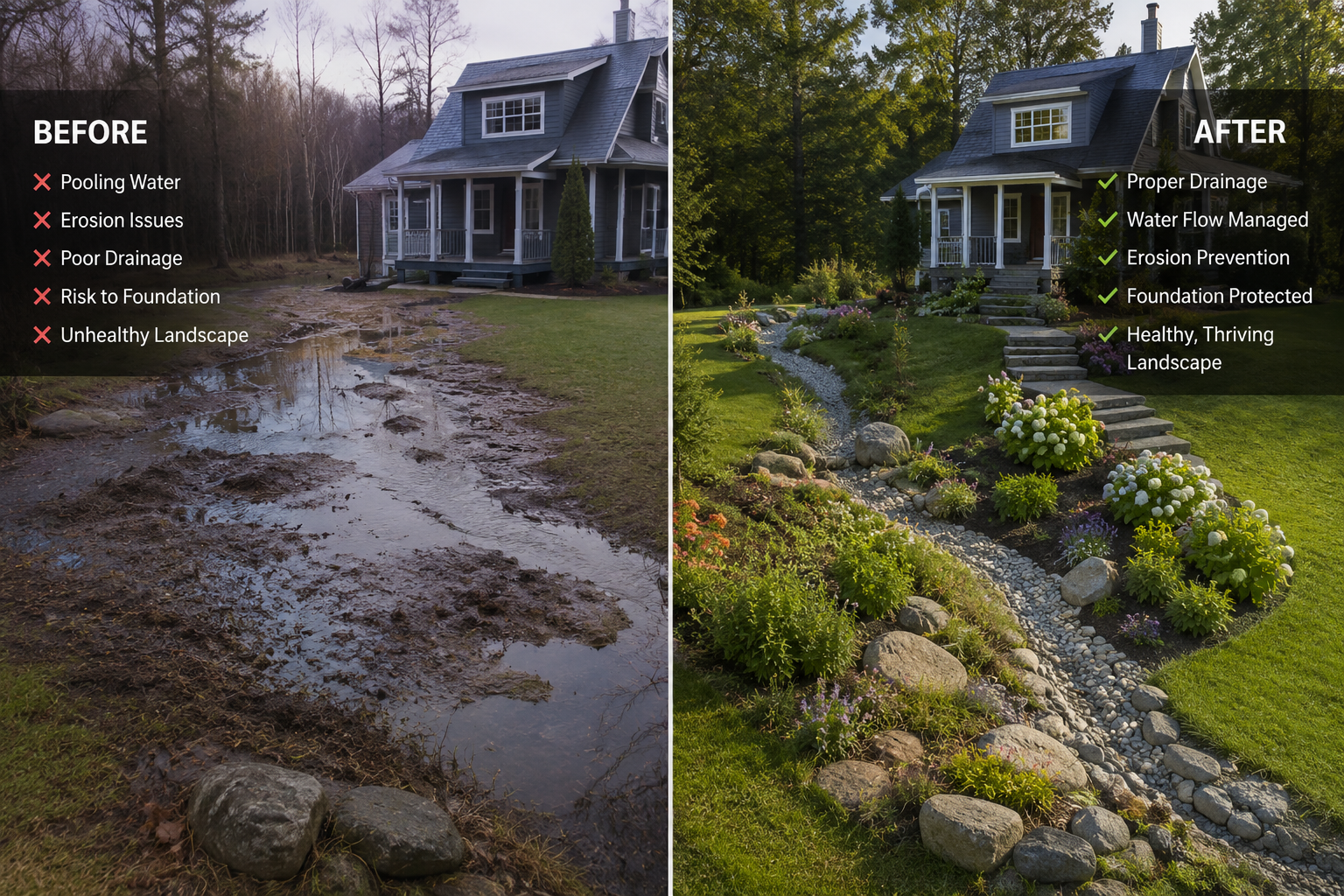
Most homeowners skip proper drainage planning because they can't see the problem until it manifests. By then, you're digging up mature plants, installing French drains, and wondering why you didn't think about water flow in year one. Planning for how water flows through your yard—particularly in Vermont, where we get snow melt, spring rains, and occasional deluges—prevents these costly cascades.
The Aesthetic Chaos: When More Becomes Less
Too many homeowners treat their yard like a design catalogue. A little cottage style here. Some contemporary minimalism there. A dash of ornamental Japanese aesthetic. It sounds sophisticated until you're standing in a space that feels like aesthetic whiplash—disconnected, chaotic, and exhausting to maintain.
Mixing too many styles at once leads to a yard that's harder to maintain and less cohesive. You need different materials, different plant palettes, different maintenance protocols. Every design choice adds complexity. Simplicity, by contrast, is elegant and manageable. A cohesive design—whether it's all native plantings, or a clean contemporary aesthetic, or a traditional New England cottage garden—allows you to maintain the space with intention rather than exhaustion.
The Use Case Problem: Beauty Without Function
A yard that looks good but doesn't match how it's actually used becomes a source of daily frustration. Large planting beds that make movement awkward. Decorative features that don't serve any purpose except to be maintained. Paths that lead nowhere. Layouts that force you to negotiate your own space rather than move through it naturally.
Designing with function in mind—thinking about how you actually use the space, where people naturally walk, what serves your lifestyle rather than a designer's vision—ensures the space works as well as it looks.
The Vermont Approach: Intention Over Impulse
Landscaping decisions don't need to be complicated to be effective. But they do need to be honest. Choose plants that thrive in your zone. Space them properly. Accept that maintenance requires time and plan accordingly. Think about water flow before you have a problem. Keep your design simple and cohesive. Build the yard around how you actually live, not how you imagine you'll live.
By avoiding a few common mistakes and planning with the long term in mind—which in Vermont means thinking in terms of frost heaves, mud season, and the realities of year-round weather—you can create an outdoor space that feels intentional, manageable, and genuinely enjoyable year after year.
The best Vermont landscapes aren't the ones that look perfect in spring. They're the ones you still love tending in October.
Ready to Invest in Your Vermont Property?
A beautiful landscape increases your home's value and your quality of life. Whether you're planning improvements before selling or designing for long-term enjoyment, we're here to help you make smart decisions about your property.
Schedule Your Property Consultation
:format(webp):quality(80)/u.realgeeks.media/rgtemplate/Market-Report-2.png)