The Numbers Guy — Vermont Real Estate Data
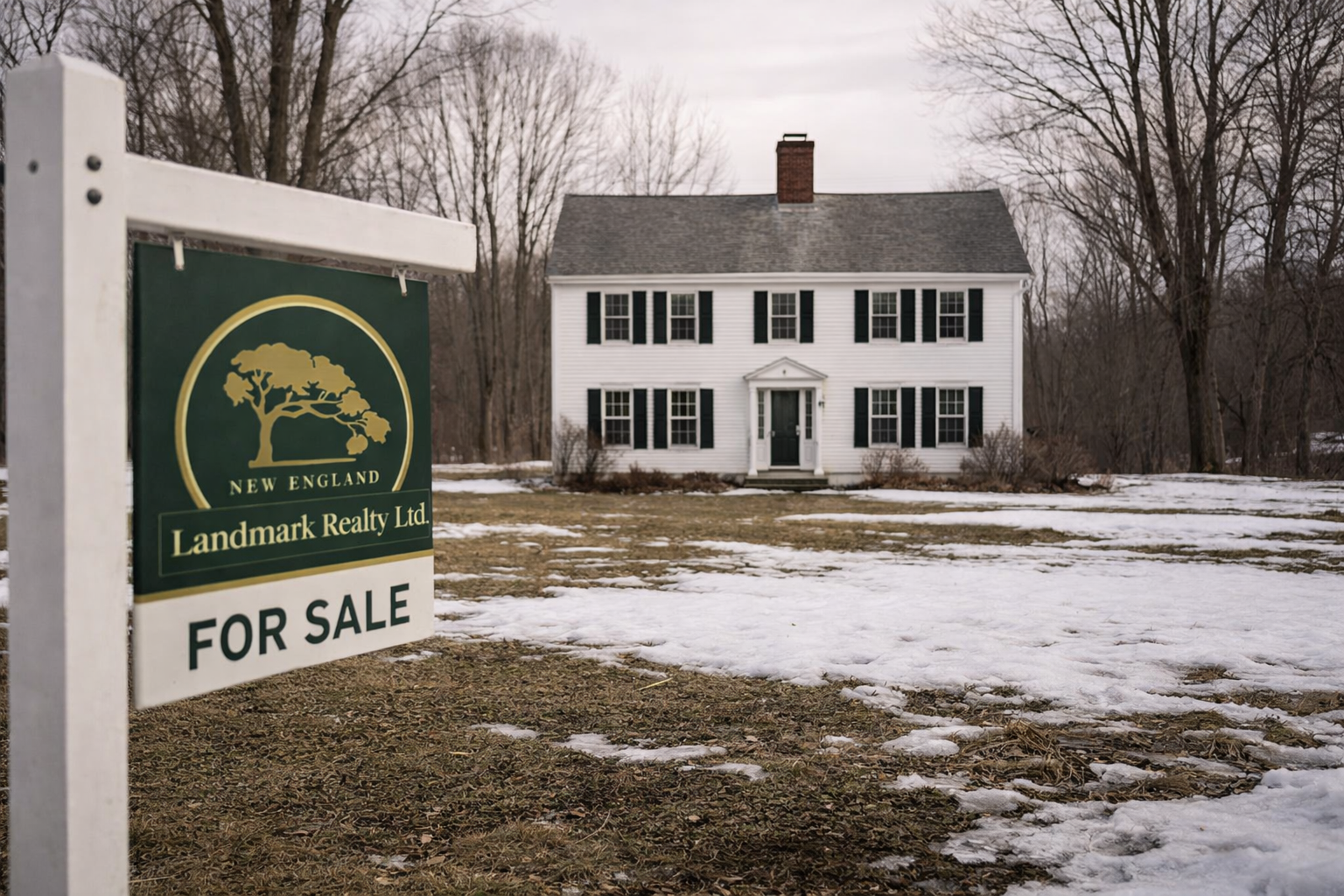
Vermont homes are averaging 83 days on the market — and by the industry's own definition, anything over 70 days is a buyer's market. Sellers who price like it's 2022 are getting a lesson from the data, one slow week at a time.
If you only do 3 things:
- Sellers: Price accurately on day one. Overpriced listings in this market don't get a second look — they get a stigma.
- Buyers: You have more negotiating room than you've had in years. Use it thoughtfully — quality homes are still moving.
- Either way: Read local data, not national headlines. Vermont has its own math right now.
What Changed — and the One Number That Matters
Here's the standard read on days on market (DOM): under 45 days signals a seller's market, 45–70 days is balanced, and over 70 days favors buyers. Vermont is sitting at 83. That's not a rounding error. That's a clear signal that the market has shifted.
What it doesn't mean: collapse. Vermont's median sale price is still around $428,300, essentially flat year over year. Homes aren't losing value. They're just not flying off the shelf anymore — and that distinction matters a great deal depending on which side of the transaction you're on.
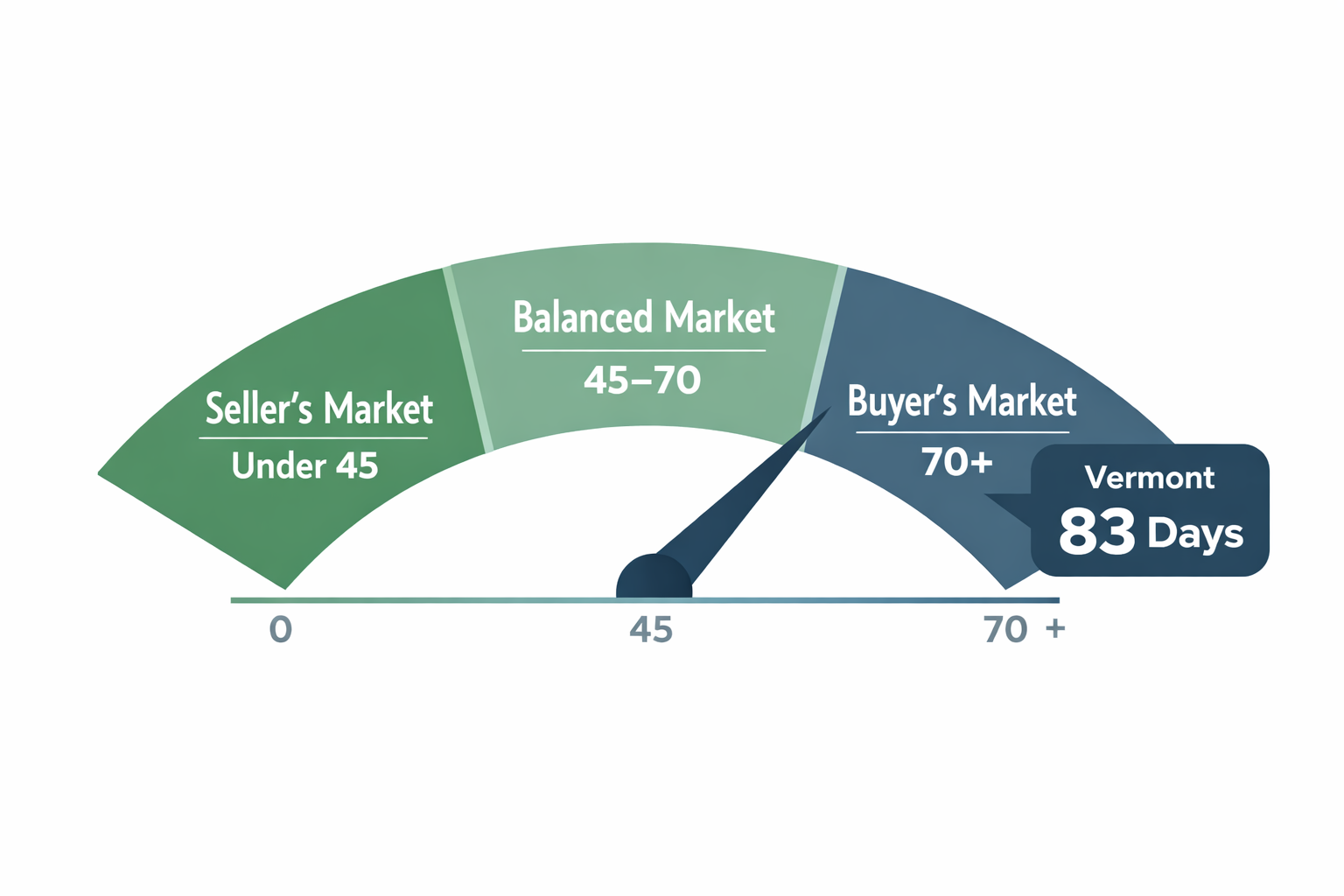
83 Average days on market, Vermont — 2026 (Houzeo / MLS data)
The Data — What the Numbers Are Actually Saying
Let's run the numbers. Statewide inventory sits around 3 months of supply. A balanced market runs 4–6 months. So Vermont is not a buyer's market by the supply metric alone — but 83 DOM tells you buyers are taking their time. They're comparing. They're negotiating. That's a behavioral shift, even if supply hasn't fully caught up to confirm it.
Translation: the market is technically still undersupplied, but buyers have stopped acting like it. That's what DOM captures that inventory numbers miss.

So What Does That Mean for Vermont?
Here's what the data tells us about spring 2026 in Vermont: more inventory is coming to market. New listings are trending up statewide, and the "lock-in effect" — owners frozen by their 3% pandemic-era mortgages — is fading as life changes force decisions. More supply plus a buyer base that is already taking its time equals a longer runway for each listing.
The towns that are still moving quickly? Properties in the $300K–$500K range that show well, are priced to the current market, and hit MLS clean. Everything else is contributing to that 83-day average. Math doesn't care about what the neighbor's house sold for in 2022.
Bottom Line — Here's the Play
If you're selling: The listing price you set on day one is your most powerful tool — and your biggest risk. An overpriced home in an 83-day market doesn't just sit. It signals to every buyer's agent in the MLS that something is off. By the time you cut the price, the best buyers have already moved on. Price it right. Once.
If you're buying: You have more room to breathe than you've had since before the pandemic. Inventory is up, sellers are more realistic, and 83 days on market means you're not the only offer on the table — or you don't have to be. The expensive mistake here is waiting for a crash that isn't coming. The smarter move is finding a well-priced property and negotiating from the real data.
Ready to Make the Numbers Work for You?
Tony Walton and the team at New England Landmark Realty have been reading Vermont's market data — town by town, price point by price point — for years. If this article changed how you're thinking about your next move, the next step is a conversation with people who know what the numbers look like on your specific street.
Whether you're pricing a home to sell, trying to figure out your buying window, or just want a straight read on what your property is worth in this market — Tony's team is the call to make.
📞 Office: (802) 253-4711 | (866) 324-2427
📱 Tony Walton, Principal Broker: (802) 233-4107
Where to Go Next
Days on market and inventory data: Houzeo Vermont Market Data, 2026 | Vermont 2025 market performance: Hickok & Boardman Vermont Market Report, Early 2026 | DOM benchmark definitions: industry-standard real estate market classification (NAR / MLS convention). Median price figures are approximate and reflect MLS-reported statewide data. Central Vermont figures vary by town and price point. The Numbers Guy is a market analysis column produced by New England Landmark Realty (NELR). Tony Walton, Principal Broker.

:format(webp):quality(80)/u.realgeeks.media/rgtemplate/Market-Report-2.png)