By Tony Walton — Principal Broker, New England Landmark Realty —
Jump to Key Takeaways
Tony Walton — Full Article
Every serious buyer eventually asks the same question about Vermont:
Why is it so hard to build here?
The answer is Act 250. And the follow-up question — the one most buyers never think to ask — is whether that’s actually a problem.
Key Takeaways
Who This Is For
For buyers evaluating Vermont property as a long-term asset, regulatory friction is not a cost to minimize — it is a feature to seek. This guide helps sophisticated buyers distinguish between lifestyle purchases and wealth preservation instruments in the Vermont market.
If You Only Remember 3 Things
- Vermont home prices declined roughly half the national rate during the 2008 housing bust — not despite Act 250, but because of the supply ceiling it enforces.
- Act 181 (2024) leaves over 97% of Vermont’s land in restricted or newly-strengthened development tiers. The moat is being deepened, not drained.
- The strongest Vermont acquisitions share one trait: they acquire structural scarcity — the market’s legal and geographic inability to replicate itself quickly.
Quick Facts
- During the 2008 bust, Vermont home prices fell ~15% (inflation-adjusted) vs. ~30% nationally — FHFA data via UVM economist Art Woolf, Burlington Free Press.
- Vermont’s statewide inventory fell to 1–2 months of supply during the pandemic, against a healthy market’s six — Vermont Public Radio, March 2021.
- Only ~2–2.5% of Vermont’s land qualifies for relaxed Act 250 review under Act 181’s Tier 1 — Vermont Public, February 2026.
It isn’t. It’s a structural advantage. And understanding why is the difference between buying a lifestyle property and buying a wealth preservation asset.
What Act 250 Actually Does
Enacted in 1970, Act 250 requires environmental and land use review for most significant development in Vermont — subdivisions, commercial projects, anything over ten acres. Critics have argued for decades that it restricts housing supply and inflates prices.
They’re right. Both of those things are true.
What they miss is the implication for buyers on the other side of that equation.
When a state makes it genuinely difficult to build — not just expensive, not just slow, but structurally difficult through law — it creates a supply ceiling that the market cannot easily punch through. Demand can rise. Rates can shift. Economic cycles can turn. But the number of quality properties in Vermont cannot expand rapidly, because the regulatory environment won’t allow it.
That’s not a flaw in the Vermont market. That’s a moat built by statute.
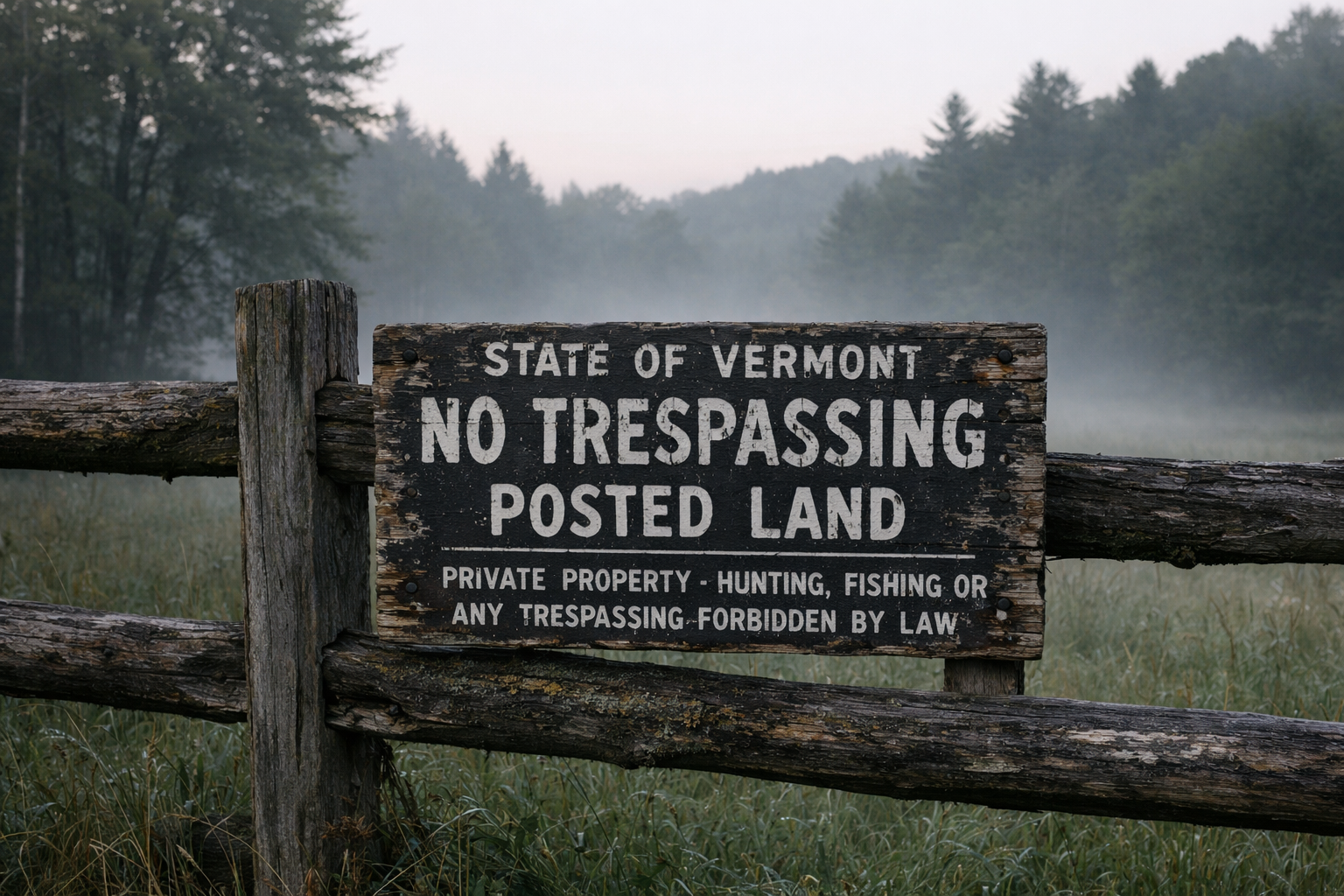
That moat was just deepened. In 2024, the Legislature passed Act 181 — over the Governor’s veto — overhauling Act 250 with a new tiered map system. The political story being told is that it eases development in downtowns to address the housing shortage. The investment story is different: only an estimated 2 to 2.5 percent of Vermont’s land area will fall into the zones where development gets lighter scrutiny. The remaining 97-plus percent stays restricted — and a new class of “critical resource” land, Tier 3, will soon trigger automatic state review regardless of project size. The road rule alone, requiring Act 250 review for any new private road over 800 feet, closes the last clean path around the law. This is not a regulatory system being dismantled. It’s one being made more precise — and more permanent.
Here’s what that moat looks like in the language of actual dollars lost — or rather, not lost. During the 2008 housing bust, inflation-adjusted Vermont home prices fell approximately 15 percent. Nationally, they fell twice that. While the rest of the country was repricing its optimism at roughly 30 cents on the dollar of peak value, Vermont gave back half as much. Art Woolf, economist at the University of Vermont, attributed this outperformance directly to the state’s constrained supply environment — the same regulatory friction buyers routinely complain about.
Now look at the other end of the cycle.
In Phoenix, in Austin, in virtually every Sun Belt market that surged during the pandemic, developers responded to demand by building. Supply followed demand, and prices corrected accordingly. Vermont didn’t have that problem — not because demand was weaker, but because the supply response was legally constrained. When pandemic-era demand flooded into the state, Vermont’s statewide inventory sat at one to two months of supply across every county — Chittenden, Washington, Lamoille, all of them — against a historically balanced market’s six. The market couldn’t supply its way out. Prices rose 19 percent between 2019 and 2021.
That’s not coincidence. That’s the moat doing its job — holding in a downturn, compressing in an upturn. The pattern repeats because the constraint is structural, not sentimental.
Boring markets don’t boom the way those markets do. They also don’t correct the way those markets do.
The Mistake Most Sophisticated Buyers Make
Here’s where things get uncomfortable.
A well-credentialed buyer walks into a Stowe or Mad River Valley transaction and does everything right — they hire good counsel, they negotiate competently, they get a fair price. But they’ve already made the critical error before any of that: they bought lifestyle value and called it asset value.
These are not the same thing. And confusing them is expensive.
Lifestyle value is what you feel when you stand on the deck in October and the hills are on fire with color. It’s the ski access, the quiet, the sense of having found a place the rest of the country hasn’t fully discovered yet. It’s real. It’s worth paying for. It is not, by itself, a wealth preservation thesis.
Asset value is the answer to a colder question: Would this property hold its value if I never came back?
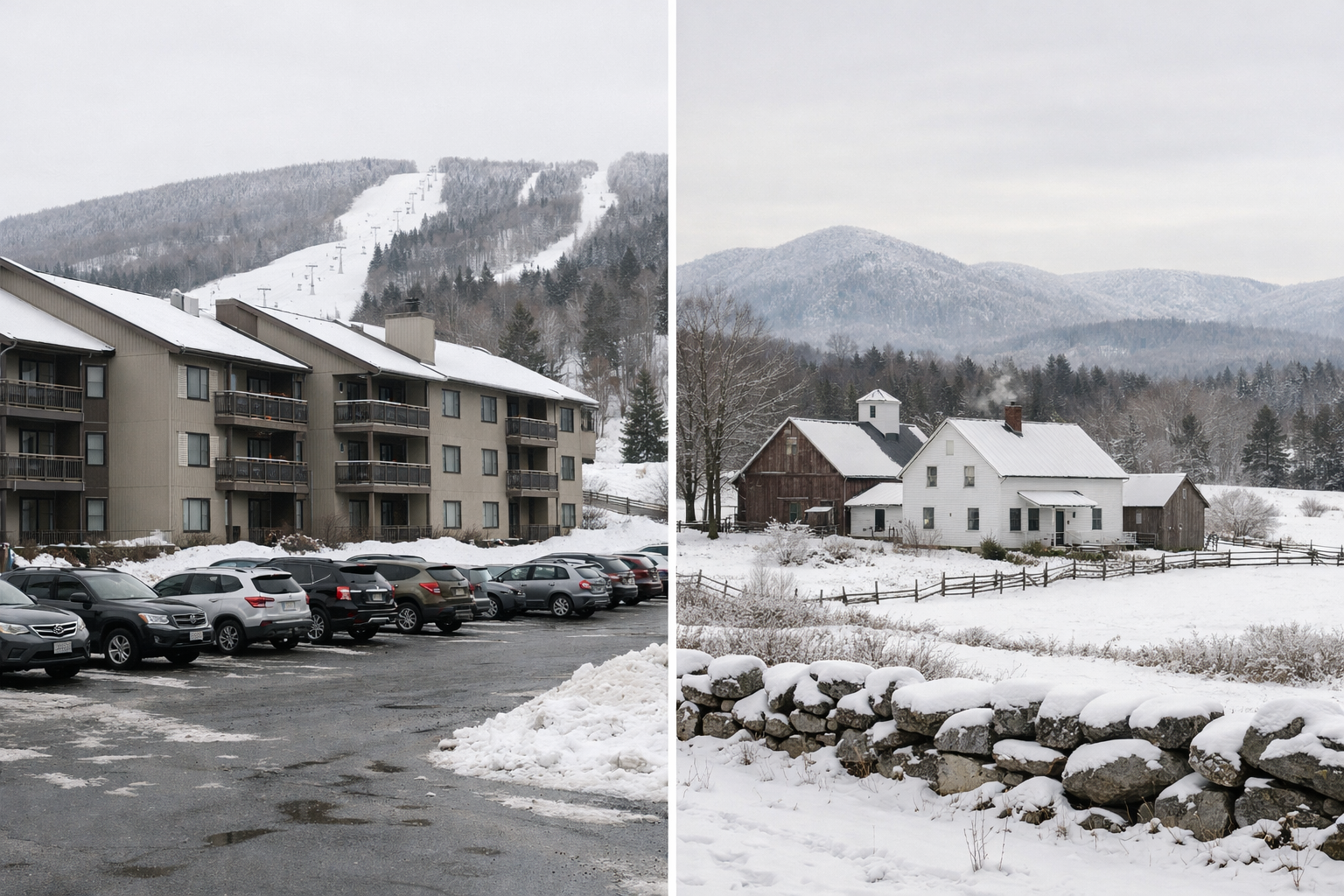
A ski condo in a resort complex — high HOA fees, seasonal demand, no land, no structural scarcity — is primarily a lifestyle purchase. It may appreciate. It may not. Its fate is tied to the fortunes of that resort, that operator, that market segment. Act 250 doesn’t protect it the way it protects a property with land attached to it, because the condo sits within an already-permitted and already-built structure. The moat doesn’t extend to it.
A property with acreage, year-round utility, and location within a town that cannot easily absorb new development? That’s a different instrument entirely.
The Test Worth Applying

Before any Vermont acquisition, ask three questions the lifestyle framing won’t prompt:
First: Is the supply constrained by something permanent? Act 250 is law; it doesn’t go away in a down cycle. Topography — ridgelines, rivers, wetlands — doesn’t go away either. Zoning can change. Popularity can fade. Look for constraints that exist independent of sentiment.
Second: Does this property have year-round utility? Seasonal assets attract seasonal demand. Seasonal demand is more volatile. A property that earns income in summer, draws buyers in fall, is usable in winter, and is desirable in spring has four demand seasons working for it. That breadth is an underrated stabilizer.
Third: What is this worth to someone who doesn’t share my lifestyle preferences? The strongest assets are ones that appeal across buyer profiles — not just to people who ski, not just to buyers from one metro area, not just to people in a specific tax bracket. Width of appeal is a form of liquidity protection.
What the Best Vermont Buyers Are Actually Buying

The sophisticated transaction I’ve watched play out correctly in this market shares a common thread: the buyer understood they were acquiring scarcity.
Not a view. Scarcity.
Not ski access. Scarcity.
Not the Vermont brand. The structural inability of this market to replicate itself quickly — enforced by law, reinforced by geography, and quietly overlooked by buyers who came here for the foliage.
When the economic weather turns, and it always eventually does, that scarcity is what holds. The lifestyle is a bonus. The asset is the point.
Vermont’s regulatory friction isn’t the price of admission to this market.
It’s the reason the admission is worth paying.
Sources
- Art Woolf, UVM Department of Economics — Vermont vs. national home price performance, 2008 housing bust. Federal Housing Finance Agency (FHFA) data. Burlington Free Press, August 2016
- Leigh Horton, Leigh Horton Properties — Vermont housing inventory at 1–2 months of supply statewide during the pandemic. Vermont Public Radio, March 2021
- Vermont median home prices rose 19% between 2019 and 2021. Burlington Free Press, February 2022
- Act 181 (2024) — Overview of Vermont’s new tiered land use review framework, including Tier 1, Tier 2, Tier 3, and the road rule. Act 250.Vermont.gov
- Tier 1 land area estimate (~2–2.5% of Vermont’s total land) and Act 181 mapping progress. Vermont Public, February 2026
Ready to Acquire Vermont’s Scarcity?
New England Landmark Realty has served Washington, Lamoille, and Chittenden Counties since 2007. If you’re evaluating a Vermont acquisition as a long-term asset — not just a lifestyle purchase — we’d like to talk.
- Office: (802) 253-4711
- Toll-Free: (866) 324-2427
- Tony Walton, Principal Broker: (802) 233-4107
- Vermont Buyer’s Guide
- Vermont Seller’s Guide
- New England Landmark Realty
Where to Go Next