New England Landmark Realty covers the Vermont real estate market 

from the inside — market data, buyer strategy, seller timing, land 

use regulation, and the policy decisions shaping what homes cost and 

who can afford them.


Tony Walton has been working Vermont real estate since 1978. 

The analysis here reflects that depth.


Browse by topic below, or use the search to find what you need.

Dec. 20, 2022

Lower mortgage rates stabilize the housing market

Posted in
Dec. 20, 2022

Mortgage rates are down, but not enough for most borrowers


December 8, 2022, 2:12 pm By 

Mortgage rates continued the downward trend this week amid signs that the U.S. economy is cooling down due to the tightening monetary policy. The recent declines, however, have not been enough to convince borrowers to take out a home loan. 

“This week, labor cost data provided a ray of hope as it showed that hourly compensation was lower than previously reported in the second and third quarters for all sectors except manufacturing,” Danielle Hale, Realtor.com’s chief economist, said in a statement.

Hale added, “Anyone paying attention to the price at the pump would also have noted a decline. Next week’s Consumer Price Index data will confirm whether these trends are pervasive across the variety of goods and services consumers buy.” 

All eyes on the Fed 

Inflation and labor market are slowing down, which means that the Federal Reserve does not need to increase the federal funds rate as aggressively as it did with the 75 basis point hikes from the last four meetings. Most investors expect that in its meeting next week, the Fed will hike rates by 50 bps instead. 

That’s why the average 30-year fixed-rate mortgage rate decreased to 6.33% this week, down 16 basis points compared to the previous week, according to the latest Freddie Mac survey. The same loan rates averaged 3.10% one year ago.  

At Mortgage News Daily, rates were even lower, at 6.29% on Thursday afternoon. 

“Mortgage rates decreased for the fourth consecutive week due to increasing concerns over lackluster economic growth,” said Sam Khater, Freddie Mac’s chief executive, in a statement. 

“Over the last four weeks, mortgage rates have declined three-quarters of a point, the largest decline since 2008. While the decline in rates has been large, homebuyer sentiment remains low, with no major positive reaction in purchase demand to these lower rates.” 

According to Hale, the reason is crystal clear. Recent declines in rates have brought the cost of purchasing a home down by an average of $185 per month, relative to the recent peak in rates. Still, borrowers are paying $880 per month more on average than last year. The analysis considers a buyer of a median-price home for sale today making a 10% down payment. 

Hale said that setting a home purchase budget has been “incredibly difficult for home shoppers who have watched their purchasing power swing up and down as rates fluctuate.”  

Flat and falling home prices

According to data from the Mortgage Bankers Association (MBA), mortgage applications fell 1.9% this week compared to the Thanksgiving holiday-adjusted results from the previous week. 

“Prospective homebuyers continue to delay decisions to purchase homes, even as home prices flatten or fall,” said Bob Broeksmit, MBA’s president and CEO, in a statement. “The average loan size for a purchase application last week was at its lowest level in nearly two years, another indication that home prices are cooling.”

However, some analysts see some limitations to home price correction. The credit analysis agency Moody’s expects home prices to decline 12.2% in 2022, but by a 4.1% drop in 2023. 

“The market maintains fundamental strengths, including favorable demographic trends, supply constraints after a decade of underbuilding, and generally solid mortgage underwriting and structures, in the form of mainly 30-year fixed loans,” Moody’s analysts wrote in a report. 

They added that the risks vary across metropolitan areas and different market segments, with potential house price declines of 15%-25% or more in some areas. Still, home values in these areas generally will remain well above pre-pandemic levels, Moody’s analysts said. 

“The extent of recent booms, current construction levels, and changes in migration patterns (e.g., as remote work and environmental issues evolve) will drive local prices,” the analysts wrote. 

Posted in
Dec. 20, 2022

Three trends to watch in 2023

Posted in
Dec. 3, 2022

Five Economic Reasons to be Thankful

Posted in
Nov. 24, 2022

Opinion: Mortgage rates have a smaller impact on housing than you think; here’s proof

Posted in
Nov. 15, 2022

The standoff between homebuyers and sellers

by Logan Mohtashami


When I came up with the “savagely unhealthy housing market” label in February of this year, it was based on the premise that the housing inflation story that we have had to deal with since 2020 was a historical event. It facilitated a very unhealthy housing market in 2020-2021 that became savage in 2022. The biggest cause was a lack of choices for American homebuyers.

Inventory, which has been falling for years, broke to all-time lows in 2020. We didn’t have a seasonal push in inventory in 2020, and things worsened in 2021. To top it all off, we started 2022 at all-time lows, forcing bidding action everywhere until mortgage rates rose. And we aren’t talking about your grandfather’s mortgage rates rising; we went from 2.5% to over 7% in a very short period of time.

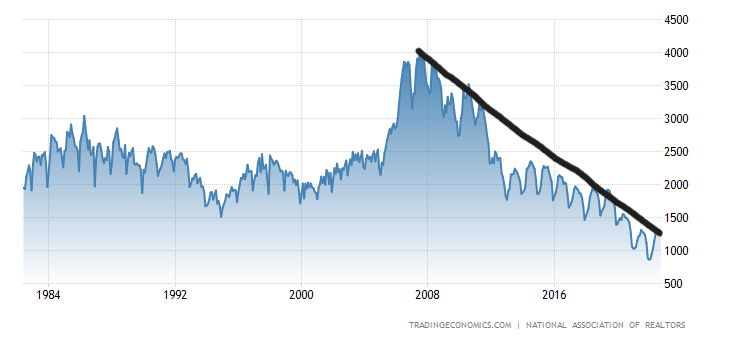
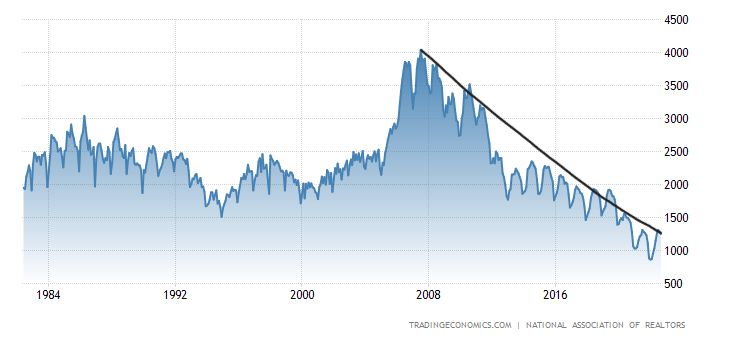
Of course, this has brought back some inventory, as demand weakness always creates inventory through accumulation. However, as we can see below, we are not back to the historical norms of 2-2.5 million active listings, but at just 1.28 million today. 


This doesn’t mean homebuyers don’t have something of an edge now: As inventory has increased and buying power has faded, the buyers who are available are dealing with a lot less competition as the bidding wars are ending.

From NAR:
 

One of the essential variables I added to my work during 2020-2024 was to put an effective price-growth model for this period to know when the housing market would get into price inflation trouble. My model was 23% total cumulative price growth from 2020-2024 — if we only grew at 23% for five years, we would be ok with where wage growth was going.

Well, that got destroyed in only two years.

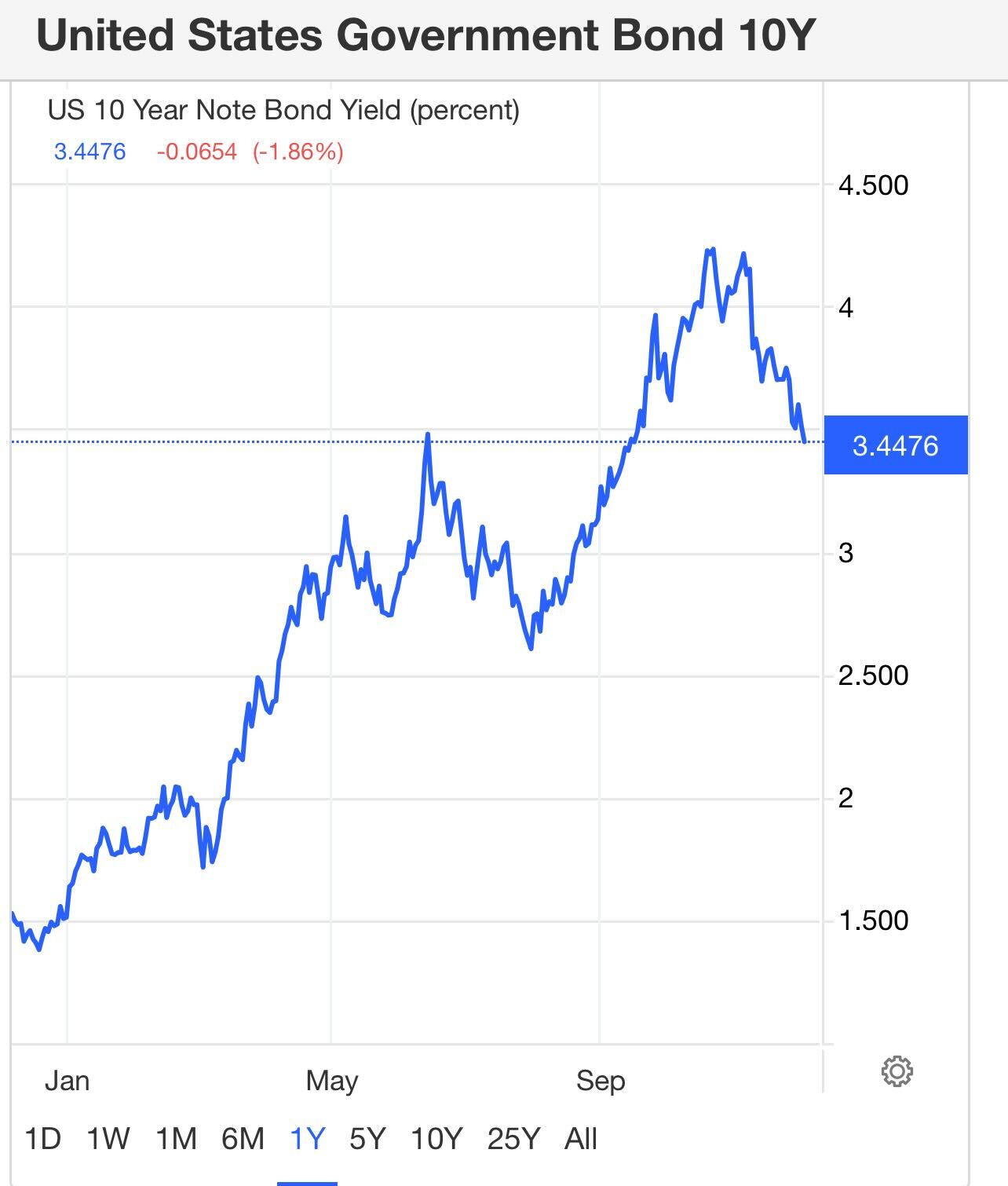
In the summer of 2020, I talked about what could change the housing market and it was based on the premise that the 10-year yield needed to get above 1.94%, which would mean mortgage rates would climb above 4%. It wasn’t part of my forecast in 2020 or 2021. However, for 2022, part of the forecast was that if global bond yields rose, especially in Germany and Japan, we could break the 1.94%.

Of course, a lot more drama happened after March of this year and the 10-year yield got to 4%, something I wasn’t looking for. However, with price growth and mortgage rates skyrocketing, the hit to affordability is historic.

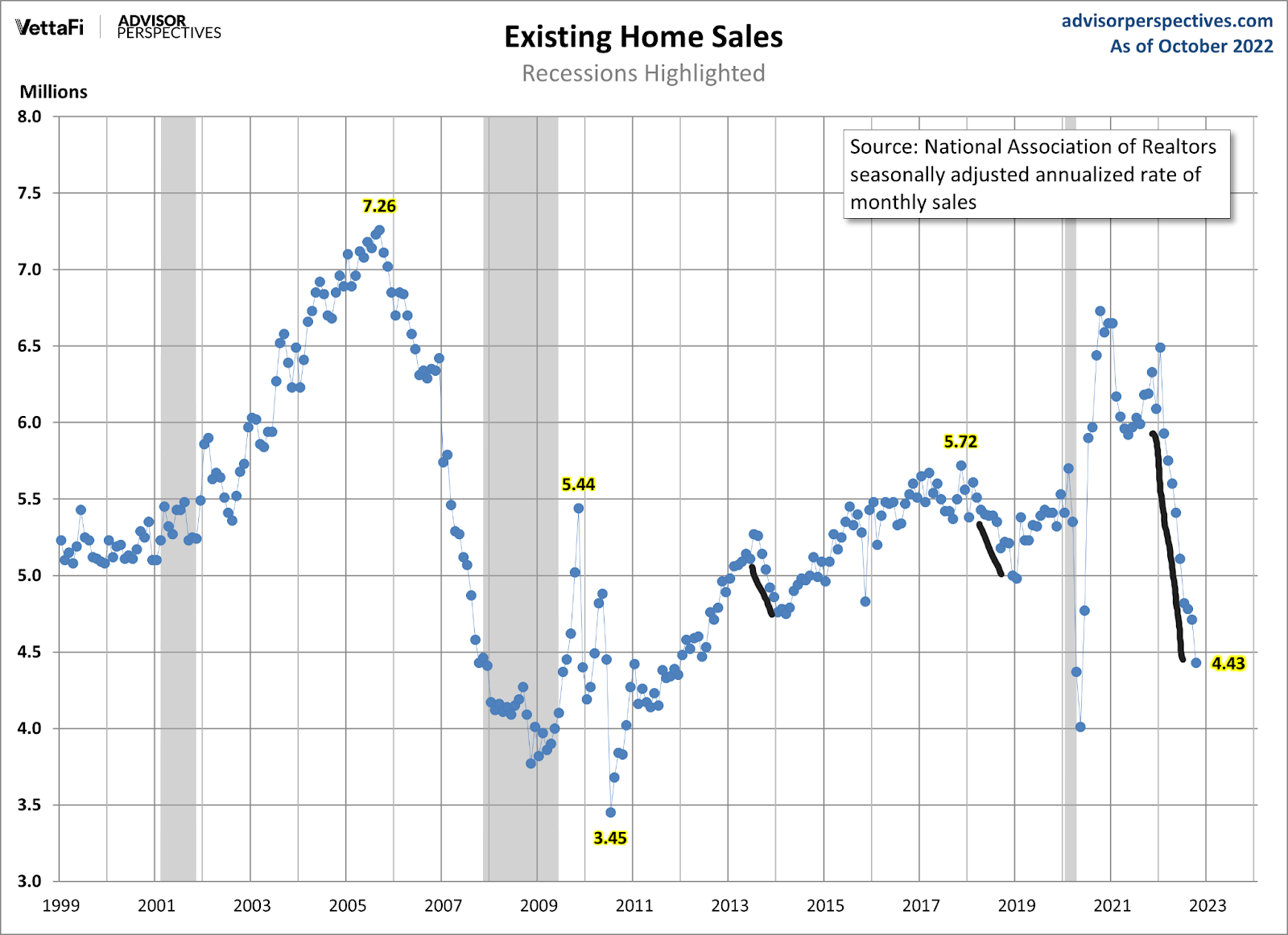
Affordability matters, regardless of inventory data, and it isn’t a healthy aspect when even the monthly supply of inventory is below four months. I talk about four months of supply a lot because I believe a balanced marketplace is four months, not six months. It’s very rare to get six months of supply in America for the existing home sales marketplace since 1996.

The only time this happened was 2006-2011 — the housing bust years. That had a lot of forced selling into a weaker demand period as credit got tighter in relationship to the demand curve. This means the housing boom period of 2002-2005 had major credit tightening, which won’t happen this time around when the next recession hits.


Currently, we are at 3.2 months supply, which historically isn’t a lot, but that’s up from the recent lows and we are dealing with major affordability issues.


I talk about 2019 inventory levels a lot because in 2019 real home prices briefly went negative, showing that you don’t need to have six months plus of inventory to have pricing cool down. In fact, at a 2019 conference, I was so happy about this that I labeled the chart below as Great News! Not sure if the audience agreed with my take.


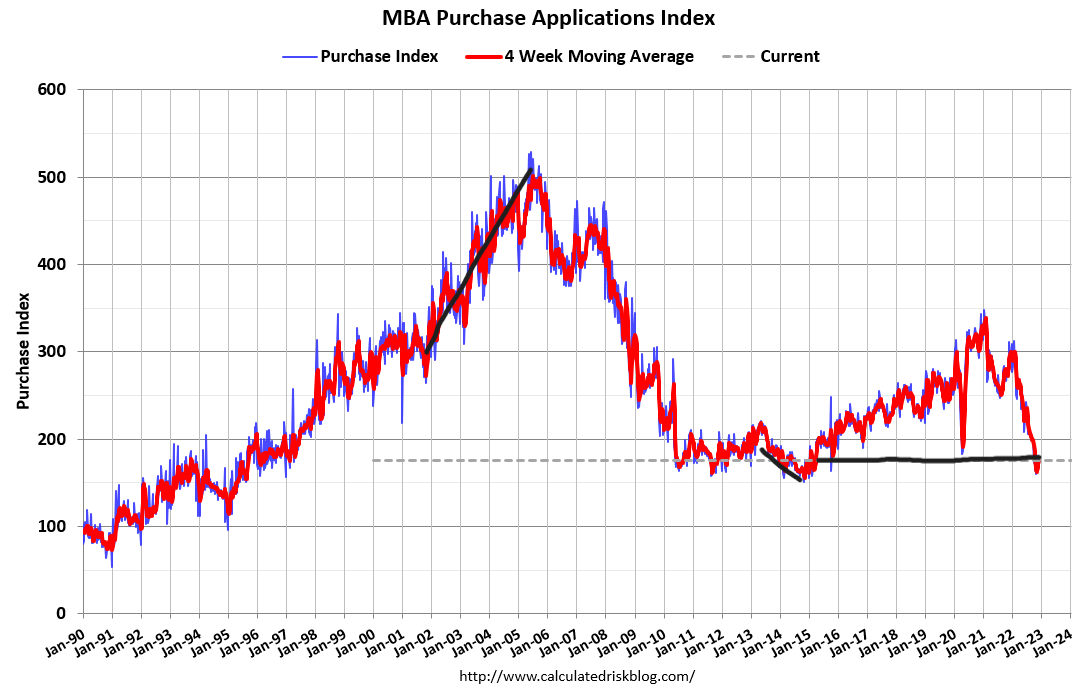
Mortgage rates went up to 5% in 2018, cooling down the housing market but nothing too dramatic for the existing home sales market. Purchase application data was only negative three weeks out of the year. Home prices ebb and flow, pricing was working in the sense that sellers met homebuyers to a degree.

Now fast forward to 2022. We’ve seen a massive price and payment inflation event with pricing still rising and the biggest mortgage rate increase in a single year in recent modern-day history. Unlike 2018-2019 when purchase application data didn’t budge much, we have had a trend of well over 20% year-over-year declines on the four-week moving average on this index.

In the last three months of the year we can expect some weeks to show year-over-year negative prints of 35%-45% as comps are getting harder. This is a real hit to demand. 

In 2018-2019 the affordability metrics weren’t as bad as people thought. This isn’t the case anymore. This is why I was so vocal about price escalation starting toward the end of 2020 and into this year. Even my 2022 price forecast shows a big deceleration of price growth from 20% to as low as 5.2%. My forecast was too low as total inventory data early in the year was too low and rates didn’t move higher until April.

 
Now with mortgage rates above 7% and pricing not being negative this year, homebuyers — at least those who can afford to buy a home — have an advantage in certain markets where inventory is at 2019 levels because the supply of homes of 2019 to me is a functional marketplace. This is how you should look at housing now.

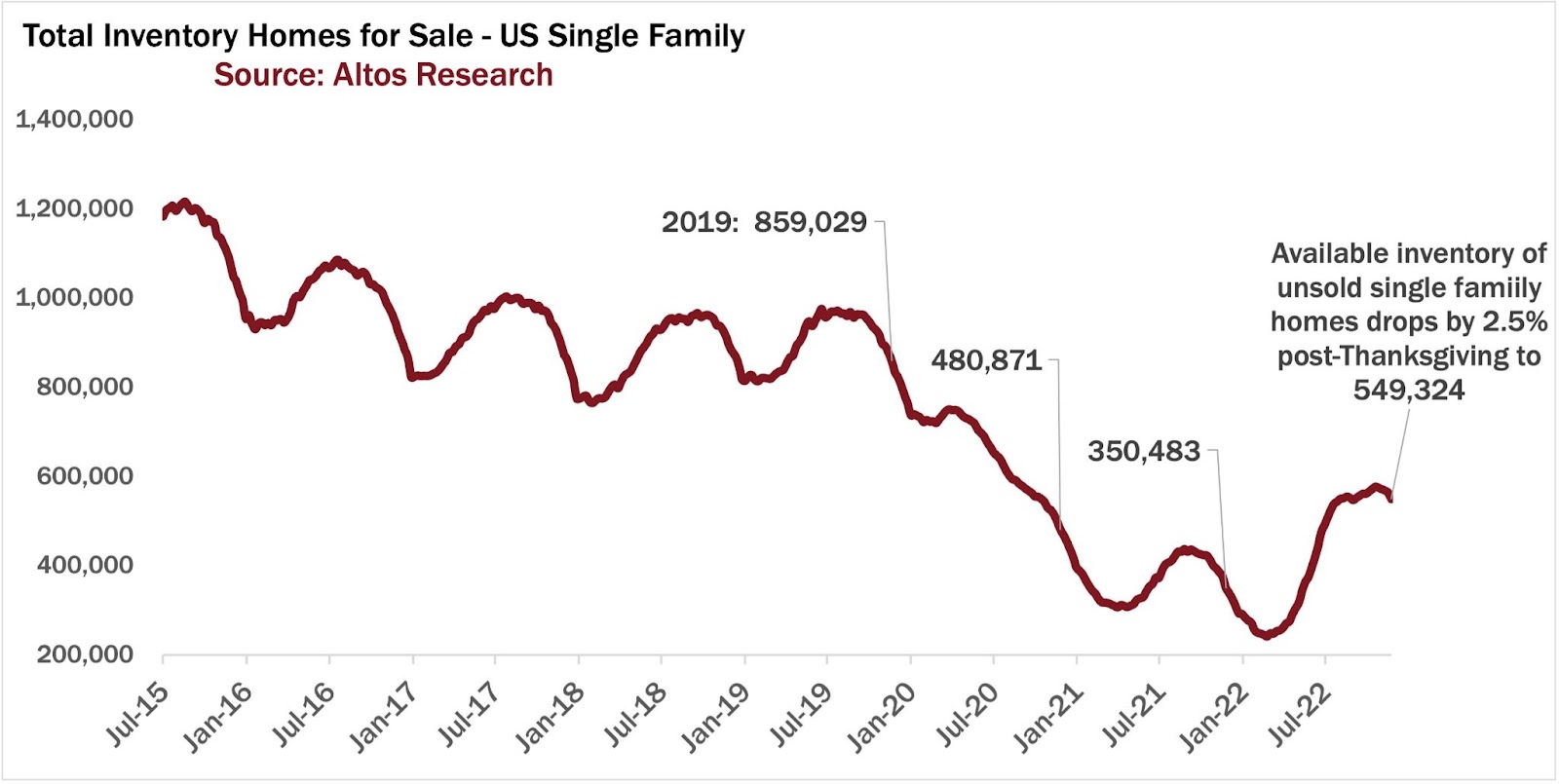
When mortgage rates were below 4%, the market pricing power was too strong with inventory at all-time lows. This isn’t the case anymore. Even though total inventory is near all-time lows and we are going to start 2023 with historically low inventory, it doesn’t mean that pricing doesn’t matter.

From Altos Research:


So my big takeaway from the savagely unhealthy housing market of 2022 is that 4%-5% mortgage rates didn’t do the damage I thought they would and I believe this is why my price growth forecast of 5.2%-6.7% for 2022 is going to be wrong and too low.

However, 5%-6% mortgage rates did change the marketplace and now 6%-7% mortgage rates are changing behavior so that we see new listing data declining even more as sellers are calling it quits on their plan to list. Homebuyers who can qualify for a house now are in a much better spot than the previous few years, but hey, you have to deal with a massive hit to the total payment of your home. For some homebuyers, it’s not a big deal, but for others, it stings.

From Realtor.com:


Homes that are priced right, especially in areas below 2019 inventory levels, are selling quickly, and those homes that aren’t priced right to the marketplace are taking longer to sell. Sixteen days to sell is still too low for my taste; this reflects how most of the country isn’t back to 2019 levels.


In a few weeks, inventory will start to be affected by seasonality; the question is, will those homes that are taking longer to sell call it quits for the year? Inventory traditionally falls in the fall in winter and rises in the spring and summer. However, with weakness in demand, inventory can accumulate.

The last time total inventory grew was in 2014 because we had weak demand. Purchase application data was down on average 20% year over year, and adjusting to the population was the lowest level in the index ever. In 2014 we still had the seasonal dive in inventory in the fall and winter, so time will tell if that will be the case again with the increase in inventory this year.
 

My premise earlier in the year of total inventory data getting back to 2019 levels in 2023 is hitting a snag with the decrease in new listings, so that is something we don’t want to see for the spring of 2023. To have a balanced housing market, we need active listings to rise yearly, which they typically do; 2020 was an anomaly. We shall see what the next few months bring for housing; however, as we close the books for 2022, we can agree it was a savagely unhealthy housing market.

What we don’t want to be in 2023 is stuck with low total inventory — sellers not wanting to sell, homebuyers and sellers fighting over price, and sellers being stubborn about it. With more inventory, sellers have to be less stingy; this is why I am a fan of getting total inventory data back to 2019 levels.

Posted in
Nov. 15, 2022

Home Prices Would Need To Fall This Much for Buyers To Get a Break

Posted in
Nov. 7, 2022

Where’s the bottom for new home sales?

Posted in
Oct. 28, 2022

The case for mortgage rates to fall in 2023

Posted in
Oct. 16, 2022

11 Twitter accounts to help you stay up-to-date on the housing market

October 14, 2022, 4:54 pm By 

Twitter has become somewhat ubiquitous in today’s social media landscape, with more than 200 million users worldwide.

The timeline moves about as quickly as the news does, which is why it can be such a valuable resource for those trying to keep up with current events. Mortgage professionals are no exception – whether you find yourself tweeting for work or in your free time, you may also want to follow accounts for people and organizations that are relevant to the industry in order to stay up-to-date on the latest news about the housing market.

We’ve curated a list of 11 Twitter accounts you should follow to gain the latest insights and analysis of the housing market and economy. 

Retweet-worthy individuals to follow for housing market updates

Logan Mohtashami: (@​​LoganMohtashami) Logan Mohtashami is a housing data analyst, financial writer and blogger who covers the U.S. economy and specializes in the housing market. He is also our lead analyst and “chart guy” at HousingWire. Now retired, Mohtashami has years of direct lending experience and his astute analysis of economic data allows him to present a unique, informed and unbiased perspective on the financial markets. His Twitter includes links to his analyses and podcast appearances. 

Dr. Jessica Lautz(@JessicaLautz) Dr. Jessica Lautz is the vice president of Demographics and Behavioral Insights for the National Association of Realtors’ Research group. Dr. Lautz’ research focuses on analyzing trends for both NAR members and housing consumers. She regularly speaks at events and her work is often cited in media outlets. She was also named a 2021 HousingWire Woman of Influence. Dr. Lautz regularly tweets about her speaking engagements and articles she’s consulted on, as well as provides commentary on NAR reporting. 

Len Kiefer(@lenkiefer) Len Kiefer is the deputy chief economist at Freddie Mac. Kiefer has expertise in forecasting/predictive modeling, mortgage markets and housing. His work focuses on helping Freddie Mac develop its economic outlook, including forecasts of trends in the economy and housing markets. He also conducts research and analysis around economic trends, providing commentary and analysis. On his account, Kiefer shares charts and insights about the housing economy.

Bill McBride(@calculatedrisk) Bill McBride is the author of the Calculated Risk economics blog and writes a real estate newsletter. He has a background in management, finance and economics, and holds an MBA from the University of California, Irvine. Calculated Risk has been cited by a variety of publications in lists of must-follow economic and financial blogs. In addition to linking to his blog for commentary on housing numbers, McBride also tweets about other economic reports. 

Odeta Kushi: (@odetakushi) Odeta Kushi is the deputy chief economist for First American Financial Corporation and is responsible for analysis, commentary and forecasting trends in the real estate and mortgage markets. Her research has been published by outlets such as the Wall Street Journal and Business Insider and she is regularly featured on CNBC and Bloomberg. Kushi also co-hosts the REconomy Podcast, which discusses economic issues that impact real estate, housing and affordability. On Twitter, Kushi breaks down housing data in informative threads that include useful charts for data visualization.

John Burns(@johnburnsjbrec) John Burns founded John Burns Real Estate Consulting, a leading U.S. real estate research firm, in 2001. The John Burns Real Estate Consulting research and consulting team collects and analyzes as much housing industry information as possible in order to help its clients make informed investment decisions. Burns specializes in real estate market research, housing analysis, strategic planning, financial analysis and valuation. His account includes data from a variety of sources, including JBREC. 

Educational organizations and institutions that keep you in the know

Realtor.com Economics(@RDC_Economics) Realtor.com offers a comprehensive list of for-sale properties and the information and tools needed to make informed decisions about real estate. Realtor.com Economic Research combines proprietary metrics with the latest economic data and other industry statistics to produce a timely view of the market. On Twitter, the Realtor.com economics team provides expert insights on housing, the economy and real estate, including a Weekly Housing Trends View. 

NAR Research(@NAR_Research) The National Association of Realtors is the country’s largest trade association, with more than 1.5 million members, involved in all aspects of the residential and commercial real estate industries. NAR aims to position Realtors as consumers’ best source of information on the real estate transaction. The association produces housing statistics on the national, regional and metro-market level where data is available, including reports such as its Housing Affordability Index. NAR’s research Twitter account shares insights from the association’s experts about the economy and housing market. 

Mortgage Bankers Association(@MBAMortgage) The Mortgage Bankers Association (MBA) is the national association representing the real estate finance industry, as well as its leading advocate. The association represents all segments of the real estate finance industry, uniting the interests of a variety of stakeholders. The MBA supports its members’ success in part with its news and research, which include critical industry economic data. The association shares these reports and insights on its Twitter account. 

Fannie Mae and Freddie Mac(@FannieMae, @FreddieMac) Fannie Mae and Freddie Mac are the two government-sponsored enterprises of the housing industry. Fannie Mae was chartered to provide a reliable source of affordable mortgage financing across the country, and Freddie Mac was chartered to support the housing finance system and to help ensure a reliable and affordable supply of mortgage funds across the country. Both GSEs provide market intelligence and expertise to help clarify changes and trends in the housing and economic environment, including forecasts, analyses and expert perspectives. By following the two on Twitter, you can be sure to keep up with the latest insights and outlooks. 

Quick tip: If you find that your housing-specific follows are getting lost among the rest of your timeline, you can use the Lists feature on Twitter to create a curated list of accounts that you can check separately from your main timeline. 

Do you have more recommendations for must-follows? Let us know in the comments below, and be sure to follow HousingWire for even more news and analysis on the housing market! 

Posted in