New England Landmark Realty covers the Vermont real estate market 

from the inside — market data, buyer strategy, seller timing, land 

use regulation, and the policy decisions shaping what homes cost and 

who can afford them.


Tony Walton has been working Vermont real estate since 1978. 

The analysis here reflects that depth.


Browse by topic below, or use the search to find what you need.

April 7, 2017

Homes with High Standards

Green building practices and Energy Star ratings are growing in importance among home buyers and home builders, alike. Paul Arnot, of Arnot Development Group in Waterbury, is a respected builder who understands the importance of green design and technology. Arnot is well known for his Waterbury Commons village community, which meets the Energy Star criteria. It is a close-knit neighborhood that embodies the term "community."

"The Blue Energy Star on a new home means it was designed and built to standards well above most other homes on the market today. When Energy Star's rigorous requirements are applied to new home construction the result is a home built better from the ground up, delivering better durability, better comfort, and reduced utility and maintenance costs," according to Energy Star.

Not only do Waterbury Common homes earn the Energy Star rating, but other aspects of the community fit nicely in the sustainability category of being in close proximity to public transit, and walkable to many village amenities like shopping, restaurants, library, schools and recreational venues.

For more information on Waterbury Commons, visit waterburycommonsvt.com

Posted in
March 8, 2017

Expectations for Your First Year in a New Home

  •  

Jaymi Naciri, of Realty Times, is here to prepare you for the inevitable. Your first year in a home is going to be great, but it's also going to challenge you. Naciri has created a list of some things you might want to keep in mind while getting settled in your new place so, when something comes up, you can handle it with ease.

Moving can be exciting, and it can also be scary. It can be smooth sailing or so wrought with silly (or serious) issues that your cat peeing in the box of towels because you haven't unpacked his cat dish yet sends you into the kind of rolling-on-the-ground, slapping-your-leg, crying-big-fat-tears laughter that makes your family wonder if you need medical intervention. And that's just the beginning of the adventure.

In the first year in a new home, you'll likely experience the full spectrum of human emotions, sometimes in the span of a few minutes. And while you can't know everything that's going to happen, you can prepare yourself for some of the inevitabilities, of both the good and not-so-good variety.

Something's going to break

It could just be a sprinkler head or it could be your air conditioning unit in the heat of summer, but knowing that something will eventually break in the house is the best reason of all to be proactive. Being able to quickly deal with a leaking water heater or a roof that's been damaged in a hail storm is key to minimizing the damage to your finances, and your sanity.

There are four main keys to being prepared:

  • Saving your money -"Owning a house doesn't change the rule of thumb that it's wise to have approximately six months' worth of income in a rainy day fund, and more experts are now recommending that you build up nine months to a year," said Zacks Investment Research. "What changes is the amount of your monthly expenses that will be consumed if you need to tap into the fund. If your mortgage, tax, insurance, utilities and other payments rise with a new mortgage, you could use your savings up more quickly. With this in mind, if you were saving less than the guideline, intending to tighten your belt, the increased bills that come with homeownership makes skimping on your rainy day fund a dangerous business."
  • Knowing where everything is located - You don't want to get caught in an emergency situation and be scrambling around trying to figure out how to shut off your gas.
  • Finding a trustworthy handyman - Unless someone in the house is handy, and actually does the stuff they say they are going to do in a timely manner, you'll want to find a handyman. Having someone you can call in a pinch to repair the doggy door or the garage door opener or add a ceiling fan to a room that stays five degrees warmer than the rest of the house is clutch. Next Door is a great place to find a handyman, as well as a babysitter, dog walker, and lost cat.
  • Getting a warranty - In many cases, you can buy a home warranty after you've purchased your home. If you have an older home, are someone who could be sunk by a broken air conditioning unit that costs several thousands of dollars to repair or replace, or just want to make sure you're covered for all those things that could bust, a warranty might be a good thing to consider. "A home warranty is a contract between a homeowner and a home warranty company that provides for discounted repair and replacement service on a home's major components, such as the furnace, air conditioning, plumbing and electrical system," said Investopedia. "A home warranty may also cover major appliances such as washers and dryers, refrigerators and swimming pools. Most plans have a basic component that provides all homeowners who purchase a policy with certain coverages. Homeowners can also purchase one or more optional components that provide additional coverage at additional cost."

Junk mail city

Expect to see a full mailbox for months after you move. A lot of it will be junk, but there will also be some valuable stuff in there, like coupons from local stores that can save you money on furniture and housewares. Don't forget to also take advantage of the coupons that are part of the U.S. Postal Services change of address package.

You'll probably also get some refinancing offers. If your home happens to gain equity during the first year and rates dip, you might be able to refi and lower your payment.

You're going to make friends

Unless you're a total hermit who never exits the house even to take a walk, get the mail, or water the flowers, you're bound to make some new friends in your new neighborhood. Maybe even lifelong friends. But, if anyone in the household is nervous about this aspect of moving, there are ways to increase the friendship-making quotient for kids, and adults.

The updates you knew you needed when you moved in will become a priority

That ugly floor and those outdated countertops are just staring at you, taunting you, even. When you just can't take it one more minute, consider this: You don't have to shell out a bunch of cash for them. Use interest-free credit at Home Depot or Lowe's and you can break up the spend into manageable monthly payments over a period of time. Just make sure to make your payments by the due date every month. Missing one, being late, or not paying the minimum due for even one month will void your agreement and add a whole bunch of interest to your total.

Need furniture or electronics more than you need floors? Lots of stores like Rooms To Go and Best Buy offer the same type of interest-free deal.

You're going to have big dreams and big reality checks

Unless you've bought a brand-new home, there are a few things you're going to want to change, beyond furniture and furnishings. It may just be carpet in the bedrooms and a splash of new paint, or it might be ripping out your entire kitchen.

Budget concerns will probably keep the renovations in check for many people. But you'll also want to assess the return on investment for the renovations you have in mind. Even if you're not planning to turn around and sell your home in a year or two, knowing that the updates you make are valuable and will be a good investment is always important. Remodeling Magazine's Cost vs. Value Report is a great guide to see which items pay you back.

It's going to cost more than you thought

This ties back to the saving your money thing, because there will always be stuff that needs to be fixed and updated. But there will undoubtedly also be surprising costs. For instance, if you're going up in square footage, you may not have considered the extra heating and cooling costs.

There are tactics you can use to address some of these costs:

  • Do an energy audit -"A home energy audit, also known as a home energy assessment, is the first step to assess how much energy your home consumes and to evaluate what measures you can take to make your home more energy efficient. An assessment will show you problems that may, when corrected, save you significant amounts of money over time," said Energy.gov. "Items shown here include checking for leaks, examining insulation, inspecting the furnace and ductwork, performing a blower door test and using an infrared camera."
  • Research utility options - In many cities, you have options for your energy providers, and some may cost significantly less than the traditional providers you've gone with in the past. Be sure to check out solar options, too, especially if you're interested in green living. The newest advancements in solar energy for residential homes make it possible to use the sun's energy without having to purchase expensive systems and pay thousands of dollars upfront.
  • Check out alternative credit cards - If you're looking for creative ways to save money, check that junk mail again. There may be some valuable credit card offers in there with lower interest rates or an interest-free balance transfer option.

You might have to do some things you never thought of

You probably weren't thinking about cleaning out your ducts when you were envisioning your new life in your new home. But you probably won't know how long it's been since the last cleaning, and dirty ducks can cost you money if you're HVAC system isn't running efficiently. Thet can also be dangerous because of the accumulation of dust and dirt inside. Poor indoor air quality can worsen allergies and asthma.

A clogged dryer vent can also cost you money because it makes your dryer work harder. But, more importantly, it can be dangerous and even deadly. "Lint is highly flammable and can pose a severe fire hazard when dryer vents are not cleaned regularly and properly," said Barineau Heating and Air Conditioning. "According to the U.S. Fire Administration's National Fire Data Center, clothes dryers are responsible for more than 15,000 structure fires around the country each year, and 80 percent of those fires start with clogged dryer vents."

You'll get woken up in the middle of the night by a fire alarm

Because batteries only die at 3am. Every. Single. Time. You can avoid this nuisance and keep your family safe by changing your batteries when you first move in. While you're at it, change your filters, which will help your HVAC to work more efficiently.

To read the original article click here.

Posted in
March 2, 2017

Ideas to Improve Your Small Front Yard

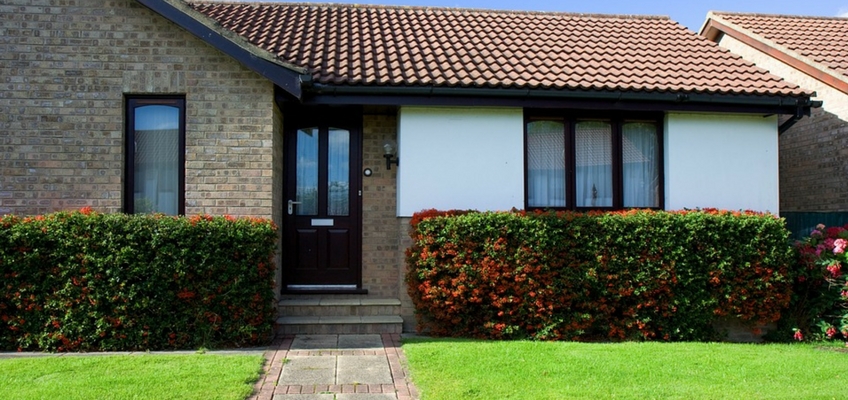
We realize it's still snowing, but before long we're going to have spring flowers popping out of the ground. If you live in a more rural area of Vermont chances are you've got a lot of yard to work with, but that's not everyone. If you've got a home in town or live on a bustling street, it can be hard to make your small front yard seem comfortable and appealing. Whether you're looking to sell or simply upgrade your own digs these tips, from Andrea Davis at Realty Times, could give you some ideas to work with. 

There are many ways to improve your small front yard without uprooting your driveway or dialing back your front porch. In fact, with the right touches, small front yards can be just as appealing as large ones. Here are some ideas to make your small yard more appealing year round:

#1 Take a symmetrical approach.

One way to make your small front yard more appealing is to use symmetry. Balancing the elements of your yard on either side of your sidewalk -- grass, fencing, flowers, shrubs -- will make it look grand and inviting; it will also cost less than it would in a larger yard because you have less acreage to cover. You can also find a local landscaper to map out and implement a symmetrical yard plan for you.

#2 Make a seamless transition from yard to house.

Use materials like box planters, stone steps or retaining walls to blend your home and yard together. Potted plants on your front porch or patio will also extend the yard without cluttering it. Make sure you choose plants that complement one another, so you don't have a lot of overgrowth.

#3 Use a hint of color.

If you want to wow people in your small front yard, pick a brightly colored flower, shrub or tree that stands out either on the porch or in the yard itself. Then use neutral colors around to make it stand out. This will be the eye-catching piece in your small yard that people will never miss.


#4 Hang basket flowers.

Hang flower baskets around your front porch or patio. They add fresh color and a natural element to your home without cluttering the porch area itself. You can change them every season or every year, depending on the flowers or shrubs you choose.

#5 Light it up.

Your front yard might be less appealing if people see it at night. That's why you should add plenty of lighting. One option is to install standing, solar-powered lamps along the walkway; another is to hang lamps on your front porch to illuminate the plants there. It just depends on how much money and time you want to invest.

#6 Refresh your front door.

While not a traditional part of the "yard", your front porch is still important to the beauty of the area as a whole. This means your front door needs to be appealing as well. Fix any cracks, scratches or other damage to the door. Also, think about revitalizing it with a new coat of paint. Choose a color that complements the exterior landscape.

Conclusion

These are only a few tips to help you improve your small front yard. You want to make it seem bigger, if not at least more comfortable. Adding a fence might be another option to consider, though you'll want to lean towards an open design pattern like picket or chain link. Just keep your budget in mind and try not to clutter your yard while trying to redesign it. 

To read the original article click here.

Posted in
Feb. 20, 2017

It's Snow Time!


We're smack dab in the middle of ski season and there are so many fun races, parties, and events at all the local mountains. Check out everything from a Retro 80's weekend in Stowe to an Island Weekend bash at Sugarbush Resort. Whether you ski, board, or fat bike, there is a race here for you. Check out the links below for detailed information on these events and registration for races. These are only a few of the many events in the area so make sure you check out each resort's calendar of events.

February 26th: Stowe Derby at Stowe Mountain Resort

March 4th: Castlerock Extreme at Sugarbush Resort

March 5th: High Fives Fat Ski-A-Thon at Sugarbush

March 8th: Bolton Valley Rail Jam

March 10th - 12th: Retro 80's Weekend at Stowe Mountain Resort

March 18th: Ski and Ride New England Party at Bolton Valley

March 19th: Sugarbush Mountaineering Race

March 25th: Island Weekend at Sugarbush 

Posted in
Feb. 9, 2017

Home Renovations on a Budget

It seems like every time you look around your house there's something else that could be improved. The windows might be drafty in the winter, your bathroom hasn't been remodeled since the 70's, and the rug in your living room is not the same color it used to be. These can seem like huge problems if taken on all at once but just making a few adjustments around the house can wildly improve its atmosphere. The staff at Realty Times points out some important places, in your house, you might want to consider looking at and how to fix them without draining your bank account.

If you’re looking to get the best return on your investment or just improve your property to attract high-quality tenants, a kitchen remodel is one of the highest value projects. The most recent cost vs. value report, released in January 2014, shows that property owners will recoup 82.7 percent of the cost on a minor kitchen remodel, an increase of more than five percent over 2013.

The good news is that high-value renovations like these don’t have to break the bank. There are a number of options for making improvements to your property that can significantly better its appearance without spending an arm and a leg.

Kitchen

The first thing people look at when buying a house is the kitchen and bathrooms, according to the director of the remodeling futures program at the Joint Center for Housing Studies at Harvard University. It’s no different for potential renters, and Rental.Us.com reports these two rooms are considered the best investments for property owners.

Minor improvements such as replacing the kitchen faucet and adding new cabinet door handles can make a big difference in the look of your kitchen. Consider switching out old fluorescent lights for new track lighting or adding a new countertop; laminate isn’t too expensive and can really help update the room. If the appliances don’t match and you can’t afford to replace them with new ones, a less pricey option is to replace their doors or face panels with matching colors which can generally be ordered direct from the manufacturer.

Bathrooms

As bathrooms are also a high priority for home buyers and renters, don’t leave them out when sprucing up your property. Consider changing out old towel bars, toilet seats and sink faucets. If your tiling is old and outdated, it should also be replaced. Re-grouting the tile around the shower and bath is also an easy and inexpensive update.

Flooring

Floors are another important factor that can make or break a home’s appearance. If you can afford it, consider replacing wall-to-wall carpeting with wood laminate flooring. It is cheaper than other hardwoods but can potentially save you thousands of dollars over the years in maintenance costs. For landlords, this makes a lot of sense as it’s much easier to clean between tenants. At a minimum, you should have the carpets professionally cleaned.

The Front Door

Entry door replacement was on the top of the list when it comes to high-value renovations, according to the 2014 cost vs. value report. This is one of the first things potential renters and buyers will notice. If replacing the door is not in your budget, consider repainting it to add curb appeal and changing out the handle-and-lock to help suggest that it’s a solid, sturdy home.

The Exterior

Of course, an attractive home exterior is a must, enticing prospective buyers or renters to want to take a closer look. If the outside looks shabby there is a good chance that it will be passed by.

General cleaning and maintenance of the exterior can greatly improve curb appeal. Remove any items that are left sitting unused, including old, rusty patio furniture or broken garden tools and equipment. These things generally can’t be picked up by your local garbage company and you may need to find a rental dumpster service so that you can tidy up your yard and easily dispose of those unwanted items. Additionally, make sure that walkways are swept and the lawn is well-manicured.

To read the original article click here.

Posted in
Feb. 2, 2017

Reclaim Wasted Space

Connie Adair, of Realty Times, wrote this insightful article, entitled "Reclaim Wasted Space and Create a Fun and Functional Space," on all the ways you can make better use of a space that's just been waiting to be used. Whether you have guests over every other weekend or would love to have your own studio or gym, you can make your space work for you.

Real estate is valuable so it pays to reclaim wasted space by clearing out a room or basement that has become a dumping ground. Get creative and make a new fun or functional room.

There are endless possibilities for your reclaimed space. Remember that rooms don't have to be used for what they were originally intended. For example, if your seldom-used dining room is gathering dust and junk, turn it into a play room, family room or games room instead.

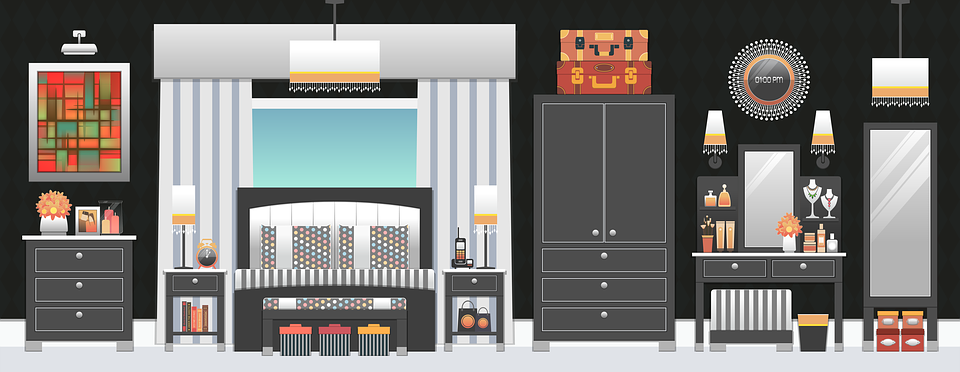
If you have family and friends who like to come and stay, a guest room is the obvious option for a spare bedroom. Create a comfortable hotel-like room that in addition to the obvious bed, bedside tables, dresser and hanging space for clothes, has extras such as an arm chair, a coffee station, a supply of plush towels and a basket of toiletries. You may want to add a television and a supply of DVDs.

However, if you only have overnight guests occasionally, you may want the room to do double duty so it will not go unused between stays. Try using a Murphy bed instead of a regular bed so it can be lifted out of the way when it's not needed. Add bookshelves and a desk so the room can be used as a home office.

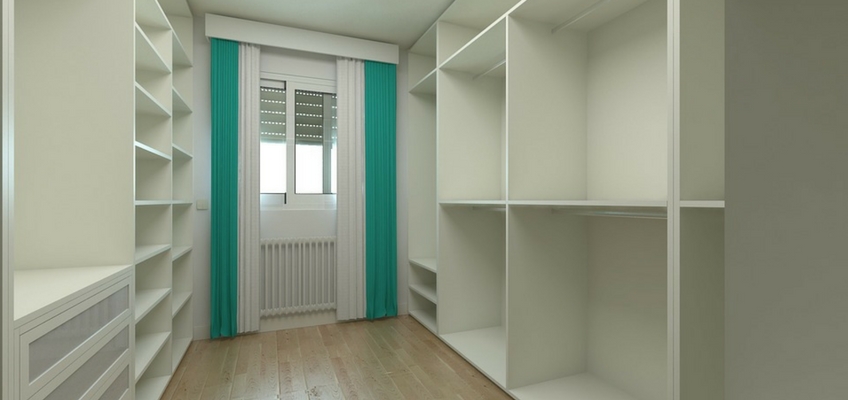
For fashionistas, a walk-in closet is the dream. It can be as easy as adding shelves, hanging rods (either freestanding or inside a closet system) and putting two low dressers back to back to offer storage and create an island.

Turn unused space into a library/reading room by adding a couple of comfy chairs and some bookshelves. Larger rooms can double as music rooms, or the room can be devoted to instruments and space for the band to gather.

Move exercise equipment out of bedrooms and put it together in one room to create a home gym. Add a mirrored wall, a television and sound system. Sans exercise equipment, the space can be used as a yoga room or a dance studio.

A room that offers lots of natural light also makes the perfect art studio, meditation space, craft/hobby room, play room for the kids or a place for teens to hang out.

Extra space in the basement can be soundproofed and turned into a home theatre. For a lower-budget option, move in comfortable seating, your television and storage for gaming systems and DVDs to create a media room. Building a wine cellar or sauna are other ideas for the lower level.

Some homeowners even create a room for their pet or to house their collections. A devoted studio space is a YouTubers dream. The possibilities are endless.

You can go whole hog and create a totally custom space, or you can work on a budget. Shop your house and repurpose furniture and accessories for your new space. In addition to saving money, reusing furniture will help you free up space in other parts of your house at the same time.

After you come up with a plan, sketch out your design. Then, empty out your room, making piles (toss, save, donate, sell and "return" for items you will use in your new space).

Try the KonMari method of organizing, created by Japanese cleaning/organizing guru Marie Kondo. "Keep only what sparks joy," says the author of organizing books Spark Joy and The Life-Changing Magic of Tidying Up. Getting your house in order positively affects other parts of your life, she says.

A coat of paint is one of the least expensive ways to transform your space. Paint your walls or use paint to transform old furniture for your reclaimed space. Put your creativity to work.

When you're purging your space, you may be concerned about getting rid of potentially valuable items. Do your research by searching the Internet, or hire a professional appraiser because you want to know what items are worth before you get rid of them.

If you send a picture to your local auction house for feedback, you may be told whether the item is worth selling through an auction.

Dr. Lori Verderame, an antiques appraiser, syndicated columnist and television personality, suggests getting an independent appraiser who does not buy the items to ensure an honest and ethical appraisal.

You may also want to consider renting out your extra room to a student (local or international) or as an Airbnb for extra income. Do your research to find out which laws and bylaws may apply. You may also want to familiarize yourself with the landlord and tenant legislation in your province. Check to see if Airbnbs are allowed in your municipality.

With the cost of real estate soaring, it makes perfect sense to reclaim your space now.

To read the original article click here.

Posted in
Jan. 18, 2017

Staging vs. Decoration: What's the Difference?

  •  

Kristie Barnett, from Houzz, wrote this very enlightening article on what could be the difference between people buying or walking away from your house. Playing up your home's assets can be tricky when you need to keep the space neutral and inviting for anyone who might walk through the door. Here are some of her tips on staging and decorating:

Selling your home means selling a lifestyle, but not necessarily your own. In home staging, you're striving for a look that is fresh and welcoming yet not really taste specific. People with varying tastes need to feel that they can make the home their own if they purchase it.

This is the distinction between decorating your home and staging it to sell. It can be hard to understand at first, but if you don't know the difference, you might not sell your house as quickly as you like.

Although everyone has different tastes in decor and furnishings, most people want a home that is welcoming, functional, peaceful and organized. Tailor your house so that buyers will describe it in those terms rather than by your style of decorating. Getting rid of clutter and having fewer but larger accessories is a great place to start.

Making sure your home isn't taste specific doesn't mean your rooms should be devoid of color. Instead, keep color schemes simple and dose them with an on-trend neutral, like a clean tan, a soft gray or a warm white. (Photo by Kristie Barnett, The Decorologist)

If you have a distinctive decorating style — whether it's Tuscan, shabby chic or modern — you're going to need to scale it back a bit. If you don't, your home will appeal to the small percentage of potential buyers who love your chosen style. Staging is about strategic editing and depersonalizing, rather than decorating and personalizing.

Dated is dreary. Strive to stage your space with a current and fresh feel. Use updated neutrals on the walls and furnishings that are clean-lined and simple. Punches of color are great; just use them sparingly. A room arranged symmetrically and centered on the architecture reads as peaceful — one of those important aesthetics every buyer is drawn to.


This guest bedroom is full of great staging ideas. It has lots of on-trend design details, but it's sparse on accessories and other distractions. The color palette is simple, easy on the eyes and would be attractive to both men and women. Most potential buyers would remember this appealing room long after leaving the house. (Photo by Andrea May Hunter/Gatherer)

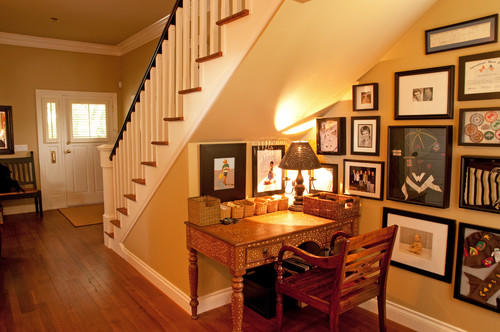
This clever arrangement draws attention to the unique architecture in the space and illustrates a smart use for the area under the stairs: an office nook. This area is nicely decorated, not staged. (Photo by Warline Painting Ltd.)

If I were staging this area, I would keep the desk, chair and lamp, remove overly personal items such as family photos, and leave a few pieces of art and an attractive notebook and pen. Simple accessories can help draw attention to a functional space.

If you are updating a kitchen or bath before putting your home on the market, keep the finishes neutral and classic. This is not the time to show off your personal style. You want to broaden your buying audience by appealing to a wide variety of tastes and preferences. This bathroom would definitely appeal to buyers with either traditional or contemporary taste, and could later be personalized with the new homeowner's preferences for color and accessories.

Sure, this may not be what normally sits on your countertop, but doesn't it look better than the usual bills and coupons? Remember, you are selling an idealized lifestyle, not your reality.

The bottom line is that you have to get outside your head and inside the mind of a potential home buyer. It's very difficult to be objective about your own home, but it's crucial if you want to sell it.

To read the original article click here.

Posted in
Jan. 12, 2017

Six Mistakes to Avoid When Decluttering Your Home


HomeAdvisor editor Andrea Davis wrote this wonderful article on some ways to make decluttering your home effective. Even if you don't plan on buying or selling a place anytime soon, these tips will make for a better living space overall.


If you're getting ready to move or sell your home, clutter is your worst enemy. It makes packing a nightmare, and finding the one item you need could take an extra 15 minutes to more than an hour. Decluttering is a great way to get rid of the things you don't need before moving or preparing your house for a walkthrough. But you need to avoid some of the common mistakes that come with this seemingly daunting job. Here are some of the roadblocks you could run into and how to handle them:

#1 Laziness or procrastination.

If you don't feel like decluttering your house will achieve significant results or make your house feel cleaner, then you're not going to do it effectively. At the same time, if you drag your feet, it may take weeks to get the job done. Have a set goal in mind and stick to it when starting this project, especially if you plan to do the entire house. If you need someone to help or keep you on track, you can hire a home organizer to set a schedule and make the process more manageable.

#2 Tackling too much at once.

You can't organize the entire house in a day. It's simply not doable. And it will sound far too overwhelming from the start, deterring you from ever finishing. Spend just a few hours each day decluttering, tackling one room at a time. If that's too much to do, start with one closet or a few drawers and work your way up. Remember, you will always have a bigger mess before you have something more manageable. If you make a mess of your entire house, you may never regain the energy or desire to go back to the project. For more tips on how to organize your home quickly and easily, check out this post from HuffPost Homes.

#3 Not having an organization plan.

Once you start pulling items from your closets, drawers and other parts of your room, you need to have an organization plan in place. You don't want to throw everything into one big pile -- that creates another mess to sort through later. Instead, tackle it strategically by putting each item into a dedicated pile: donate, sell or throw away. That way, you'll know where it goes and how to handle it once the room is completely decluttered.

#4 Letting emotions do the talking.

You may be tempted to keep certain items because of their sentimental worth -- they were a present, belonged to a family member, have old memories attached, etc. -- but oftentimes the pieces we hold onto are of no use. You shouldn't keep pointless items just for emotions' sake, unless the emotions are so overwhelming that you simply can't help yourself. Old toys, pieces of clothing, shoes -- these are better off at secondhand stores or in the trash. Yes, there will be pieces of jewelry or photos to keep, but be choosy.

#5 Getting rid of things.

Once everything is organized and out of the room, take the next step. Don't let the garbage, donation items or garage sale pieces just sit around. You need to drive them down to the secondhand store or landfill. If you need to sell stuff, arrange a garage sale for the following weekend. Waiting until the opportune moment to finalize your decluttering could lead to more piles, which means more hassle for you.

#6 Waiting too long to declutter again.

Once you've decluttered every room -- whether in preparation to move or sell your home -- don't get too relaxed. There will be another time, perhaps in the near future, where you will need to declutter again. It's a natural part of life - getting rid of old items and making room for new ones. People accumulate things throughout their lives, and it's imperative to keep cleaning out the house. Otherwise, you'll be back at square one in a few years.

To read the original article click here.

Posted in
Jan. 6, 2017

Area Winter Festivals to Know About


Hopefully, if you're living in Vermont, you actually like the snow, cold temperatures, and all the wonderful activities that come with this type of climate... or at least you don't dislike them. But whether you're a seasoned winter enthusiast, or are just starting to work on your 'icy-parking-lot-walking' form, there are a few winter celebrations in the area you won't want to miss.

Stowe Winter Carnival - January 14 - January 28

In its 43rd year, this Stowe carnival is 15 days long and full of tournaments, ice carving, skating, dance parties, movie nights, karaoke nights, brews, and a fishing derby. 

Shelburne Winterfest - Saturday, January 21

This indoor/outdoor winterfest at Shelburne Farms includes family friendly activities including sledding, horse-drawn rides, crafts, music, and a rock climbing wall by Northern Lights Rock and Ice.

Waterbury Winter Fest - January 17 - February 5

New England Landmark is a Proud Sponsor of Waterbury Winterfest!

10 days of awesome winter activities in and around Downtown Waterbury, and Waterbury Center. Partake in anything from guided hikes and classes to the Winterfest Snowball, craft beer tastings, and the highly competitive annual broomball tournament! (Some preregistration needed, so check out the schedule in advance.)

Montpelier's Ice on Fire Winter Festival - Sunday, January 29

A celebration of community along with the season, this festival features storytellers, theatre acts, music, facepainting, crafts and winter games, hot cider, chili, and warming hut to help keep warm.

Brrrlington Winter Bash - Saturday, February 25

A kid-centered celebration of snow-fun a the Miller Recreation Center in Burlington. Free snowshoeing, xc skiing, face painting, crafts, and youth yoga classes by Spark Youth Yoga. 


Posted in
Dec. 27, 2016

9 Tips for Selling Your House in Winter

Laura Gaskill wrote this excellent article for Realty Times on how to make winter work for you when you're selling your house. Winters, especially in Vermont, can be harsh and make the showing of your home's assets a little tricky. Here are some tips and tricks to stand out this winter:

With people away on trips and cold weather making house hunting less appealing, winter can be a challenging time to sell your home. On the other hand, fewer homes on the market means yours will get more attention from buyers. By upping the cozy factor, making the most of winter assets and paying attention to details, you can make your house really stand out.

Here are nine ways to prepare and stage your home for success, and create a warm and welcoming vision for buyers, even when the weather outside is frightful.

1. Have a cozy, crackling fire (or not).

If you have a gas fireplace or new clean-burning woodstove, go ahead and light a fire to welcome visitors. But if your home's wood-burning fireplace is older and leaves a smoky smell in the room, hold off. Those with allergies or smoke sensitivities can be turned off — or literally turned away when they have to go outside. No fire? Consider offering warm apple cider instead.

2. Keep entryways scrupulously clean.

As with any time of year, a clean and clutter-free house will sell more easily (and maybe at a higher price) than one with more visible clutter. During winter it is especially important to remove mucky boots outside and keep family gear hidden in a closet or trunk, where potential buyers won't trip over them. A Swiffer-style mop kept in the coat closet can be used to quickly freshen entry floors before each showing.

3. Give each room a warm touch.

A folded throw draped over the back of an armchair, a plump quilt at the foot of the bed or an area rug in warm hues are a few small additions that will make a big difference in the way a room feels to prospective buyers. Also, be sure that every light is on — even for daytime showings. Winter days can be quite dim, and your house will look its best when it's as warmly lit as possible.

4. Show how outdoor rooms can be used even in the coldest months.

If you have a covered porch or outdoor fireplace, be sure to keep the area fully furnished. Turn on outdoor lights, build a fire in the fireplace and drape a few thick throws over your outdoor furniture.

5. Emphasize spaces that will appeal in winter.

Basement playrooms, indoor exercise areas, heated toolsheds and the like will be especially welcome in a place with a cold winter. Remove all unrelated stuff to make the purpose of the room clear, and be sure to have your Realtor bring it up when showing the house to potential buyers.

6. Showcase the entertaining possibilities of your home.

Winter is prime time for festive parties and holiday open houses, so whet prospective buyers' appetites with an enticing display. Set out stacks of plates and fresh flowers on a dining room buffet or display holiday cookies on cake stands in the kitchen.

7. Use structural elements in the garden for winter interest.

In the middle of winter, it can be hard to visualize a blooming garden. Large urns and planters, benches, rock walls and other garden structures will help buyers see the potential even in the snow.

8. Clear all exterior pathways of snow and ice.

Nothing will turn away potential buyers faster than a treacherously icy path. Open-house guests should be able to easily walk all the way around the house and access outbuildings. Provide as much off-street (snow-cleared) parking as you can to make things easy for visitors.

9. Do decorate for the holidays.

Buyers want to be able to envision living in your home, so it pays to make that vision as inviting as possible. Festive twinkling lights, green wreaths or topiary, and a decorated tree near Christmas will strike the right note. That doesn't mean you have to go overboard — in fact, a house overly cluttered with holiday decor can be a real turnoff.

To read the original article,  click here.

Posted in