When geography, lifestyle, and equity converge—and why ski-town real estate in Vermont is still printing money.
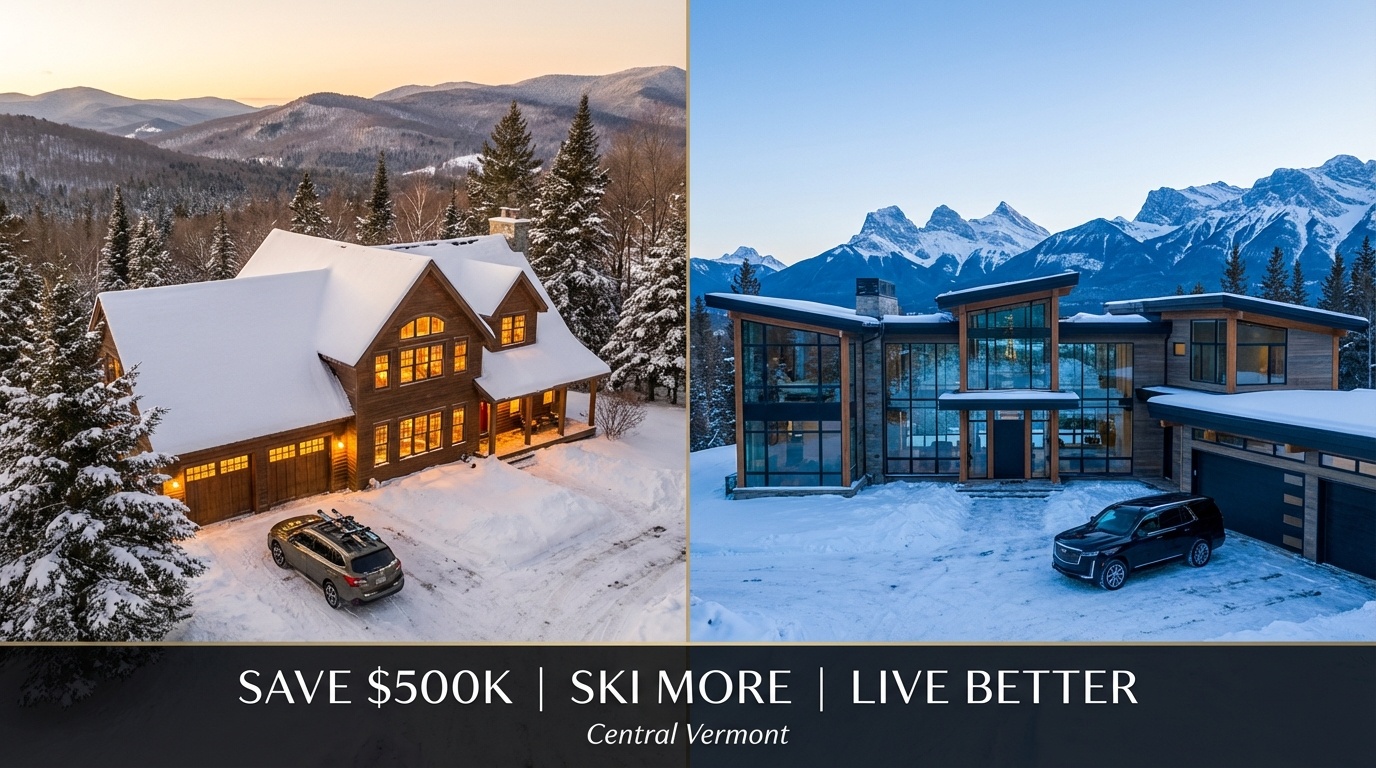
The math is ugly and beautiful at the same time.
Aspen median home price: $850K–$1.2M+
Stowe median home price: $994K–$1.2M
Mad River Valley median: $450K–$1.2M+
Killington area: $385K–$650K
Translation: You can buy a four-bedroom ski chalet in Central Vermont with equity left over for the same price as a 1,200-square-foot condo in the Rockies. And that's before we talk about drive times.
But here's the thing winter-sports buyers—especially second-home buyers from Boston, New York, and Montreal—have figured out: the best ski towns aren't the ones with the biggest Instagram followings. They're the ones you can actually reach on a Friday night.
The 3-Hour Advantage: Access Is Equity
Central Vermont sits in the sweetest real estate arbitrage zone on the East Coast:
- Boston → Killington: 2h 45min
- Boston → Sugarbush: 3h 30min
- NYC → Killington: 5 hours
- NYC → Sugarbush: 6 hours
- Denver → Aspen: 3.5 hours (plus you flew cross-country first)
What buyers tell me: "I can leave Boston at 5 p.m. Friday and be on the slopes by 9 a.m. Saturday—without missing my kid's soccer game or burning vacation days on travel."
That access premium is translating directly into price appreciation. According to recent market data, Stowe home values climbed 41% year-over-year, while Mad River Valley properties in the $450K–$1.2M range saw steady rental demand and resale strength.
When your ski home is a weekend commute instead of a cross-country expedition, you use it more. You rent it more. You love it more. And the market rewards that.
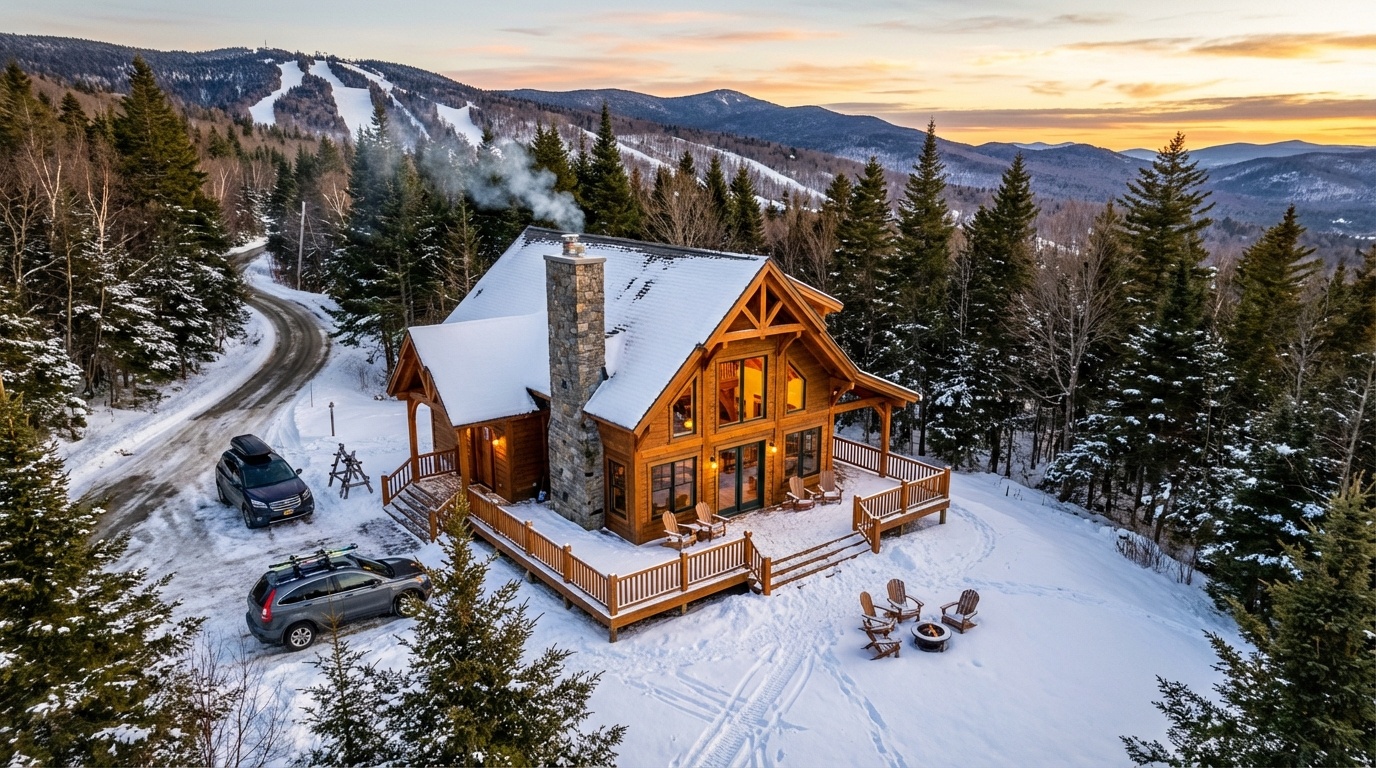
Snow + Terrain: Vermont Is the Top-Ranked Non-Western Ski State
Let's talk performance metrics.
This season (2025–26):
- Stowe: 168 inches and counting
- Jay Peak: ~470 inches (2024–25 season total)
- Mount Mansfield: Hit 100 inches on March 2, 2025—the third time in 60 years
Skier visits: Vermont logged 4.16 million skier visits in 2024–25, up 1.1% year-over-year (Ski Vermont).
And here's the kicker: Vermont is ranked the #1 ski state outside the Rockies. East Coast terrain? Sure. But Killington's 1,509 acres, Sugarbush's 508 acres, and Stowe's 485 acres—backed by aggressive snowmaking infrastructure—mean you're skiing more days per season than most Western resorts promise.
What that means for real estate: Ski-home buyers aren't just betting on lifestyle. They're betting on consistent rental income. Killington alone generates an average $35K–$50K annually in short-term rental revenue for well-positioned properties (Steadily, 2026).
More snow = more bookings = stronger resale value = smarter equity play.
The Design Edge: What Ski-Home Buyers Actually Pay For
Here's where Vermont sellers win—or lose—on listing day.
Winter-sports buyers aren't just buying square footage. They're buying a turnkey mountain experience. And the properties that sell fastest (and for the highest premiums) are the ones that nail these details:
1. The Mudroom (AKA the $20K ROI Move)
A heated, well-lit mudroom with built-in boot dryers, gear hooks, and a bench signals to buyers: "This seller understands what it's like to come home from the mountain."
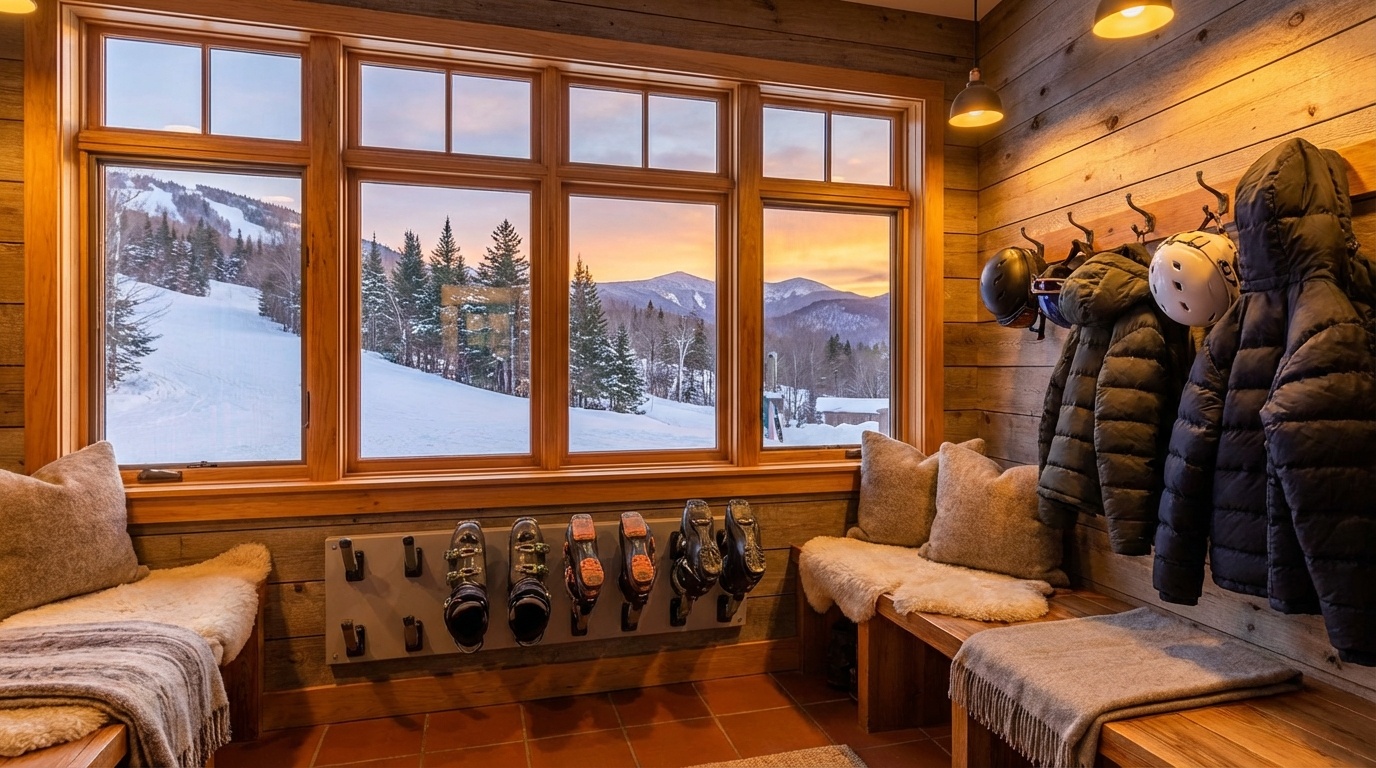
Properties with dedicated gear storage and drying zones sell 15–20% faster than comparable homes without them. Cost to retrofit? $8K–$20K. Value add on resale? $30K–$50K.
2. Energy Efficiency (Because Winter Is Expensive)
Vermont winters are cold. Buyers know this. What they want to know is: How much will it cost to heat this place in January?
Homes with new insulation, modern HVAC, and efficient windows get more offers—and fewer post-inspection re-negotiations. Bonus: Energy efficiency is now a financing factor for some buyers using green mortgages.
3. Four-Season Appeal (Because Ski Homes Can't Just Be Ski Homes Anymore)
The smartest Vermont ski-home buyers—especially second-home and rental investors—are asking: "What happens in July?"
Properties near mountain biking trails, lakes, and summer festivals (looking at you, Mad River Valley and Killington) hold value better because they generate year-round rental income. Design for this: outdoor decks, fire pits, easy trail access.
Why Central Vermont Ski Homes Are Still a Smart Equity Play in 2026
Here's the real estate truth no one wants to say out loud: Vermont ski-town inventory is still tight, and demand from out-of-state buyers is not slowing down.
Key numbers:
- Inventory up 33% statewide (but still below pre-pandemic levels)
- Median sale price: $406,100 statewide (up 3% year-over-year; December 2025 data)
- Average sale price in high-demand ski towns (e.g., Stowe, Killington, Mad River Valley): $540K+
- Jay Peak area: Average home value ~$413K, up 2% YoY
Translation: Prices are holding. Inventory is expanding just enough to give buyers options—but not enough to crater values.
And here's the demographic tailwind: Vermont remains the #1-ranked state in the U.S. for quality of life (CNBC, 2025), which means migration pressure from coastal buyers isn't going away. They're just getting pickier about where they land.
The Bottom Line: Geography Beats Glamour
The ski towns that win in 2026 aren't the ones with the fanciest lodges or the most celebrity sightings. They're the ones where buyers can actually build a life—and a rental income stream—without sacrificing half their net worth or burning weekends in transit.
Central Vermont offers:
- Access: 3–6 hours from Boston/NYC
- Terrain: Top-ranked East Coast skiing with 400+ inches of annual snowfall
- Value: $300K–$500K less than comparable Western resort towns
- Equity: Appreciation rates holding steady; rental income potential strong
- Lifestyle: #1 U.S. quality of life; four-season appeal; safe, tight-knit communities
And the design opportunities? They're everywhere. A $15K mudroom retrofit, a $10K energy audit and insulation upgrade, and a $5K outdoor deck refresh can turn a "nice Vermont home" into a six-figure equity gain on resale.
So here's the question: Are you buying a ski home because it looks good on Instagram—or because the numbers actually work?
The answer will determine whether you're still smiling in 2030.
What's Next?
If you're thinking about buying—or selling—a ski home in Central Vermont, let's talk. The market is shifting, but it's shifting toward buyers and sellers who understand the fundamentals: access, design, and year-round value.
- Buying a ski home? Start here: Vermont Home Buying Guide
- Selling a ski property? Get the data: Vermont Seller's Guide
Or just call me. I've been helping buyers and sellers navigate Central Vermont's ski-town markets since before "remote work" was a thing.
Tony Walton
Principal Broker, New England Landmark Realty
📞 Office: (802) 253-4711 | (866) 324-2427
📱 Cell: (802) 233-4107
✉️ Email: tony@nelandmark.com
🌐 Website: nelandmark.com
SOURCES:
- Zillow — Stowe, VT Housing Market: 2026 Home Prices & Trends — https://www.zillow.com/home-values/397783/stowe-vt/
- Mad River Valley Real Estate — 2026 January Market Data — https://www.mrvre.com/blog/2026-january---mad-river-valley-real-estate-driven-by-data
- Ski Vermont — 4.16 million skier visits in 2024–25 — https://skivermont.com/ski-vermont-2025-annual-meeting
- PeakRankings — USA Ski States Ranked 2025–26 — https://www.peakrankings.com/content/usa-ski-states-ranked-2025-26
- Catalyst Realty Collaborative — Vermont Real Estate Market Update January 2026 — https://catalystrealtycollaborative.com/vermont-real-estate-market-update-january-2026/
- CNBC — Vermont ranked #1 for quality of life in 2025 — https://www.cnbc.com/2025/07/14/americas-10-best-places-quality-of-life-top-states-for-business.html
- Your Vermont Homesearch — What Vermont Ski Town Should You Buy a Home In? — https://www.yourvermonthomesearch.com/blog/best-vermont-ski-town-to-buy-a-home/
- New England Landmark Realty — Will Vermont Home Prices Drop in 2026? — https://www.nelandmark.com/blog/will-vermont-home-prices-drop-2026-what-data-actually-says/

:format(webp):quality(80)/u.realgeeks.media/rgtemplate/Market-Report-2.png)