New England Landmark Realty covers the Vermont real estate market 

from the inside — market data, buyer strategy, seller timing, land 

use regulation, and the policy decisions shaping what homes cost and 

who can afford them.


Tony Walton has been working Vermont real estate since 1978. 

The analysis here reflects that depth.


Browse by topic below, or use the search to find what you need.

April 8, 2026

The Cost of Waiting: What Mortgage Rates Mean for Vermont Buyers Right Now


The Numbers Guy
Vermont Real Estate Data Analyst

New England Landmark Realty  ·  nelandmark.com March 6, 2026

Rates hit a 3.5-year low on February 26th. Then Iran happened. Here's the exact dollar math on what that rate move costs a Vermont buyer — and what the decision to wait actually buys you.

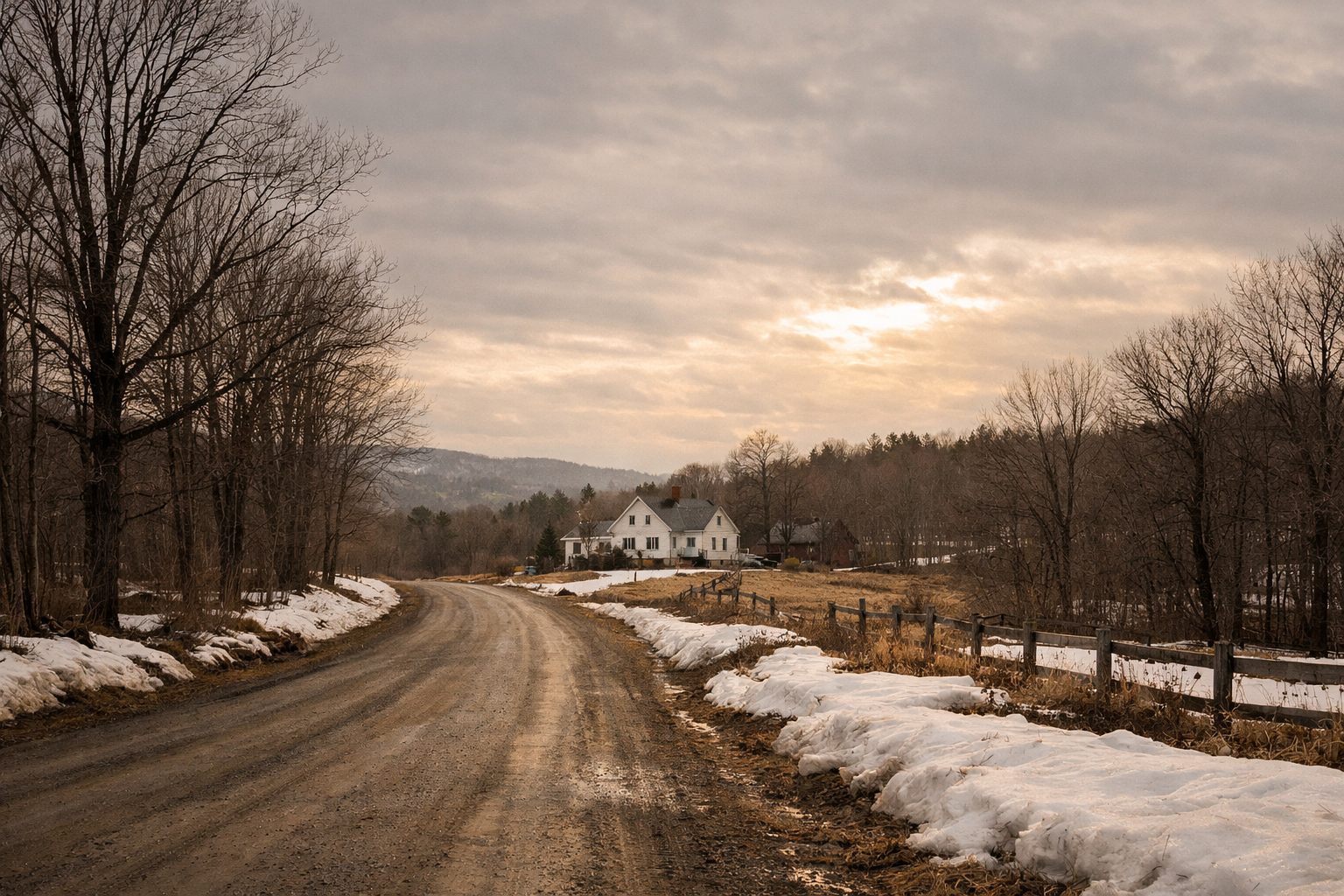
Vermont farmhouse at dusk in early spring — warm amber light glowing through windows, snow-dusted hills behind, tire tracks through a dormant field
Washington County, Vermont. Early spring. The world outside is loud. This place is not.

What Changed — And the One Number That Matters

Direct Answer

The 30-year fixed mortgage rate hit 5.98% on February 26th — the first sub-6% reading since 2022 — then jumped back to 6.00% within one week as U.S.-Israeli strikes on Iran drove oil prices higher and rattled the bond market. For Vermont buyers using 5% down on a median-priced home, that single basis-point move is the difference between momentum and paralysis. The action: don't wait for the rate to return. Get pre-approved at today's number.

Let's run the numbers. On February 26th, Freddie Mac published a figure that hadn't appeared in three and a half years: 5.98% on a 30-year fixed mortgage. The bond market was cooperating. The 10-year Treasury yield had slipped to 3.96%. Phones were ringing.

Then the bombs fell. U.S. and Israeli strikes on Iran over the weekend of March 1st sent oil prices surging and inflation expectations back up. The 10-year Treasury yield jumped from 3.96% to 4.13% in five trading days — 17 basis points. Mortgage rates followed. By March 5th, Freddie Mac reported 6.00%. The sub-6% window lasted exactly one week.

Translation: the rate environment didn't get dramatically worse. It got uncertain. And in real estate, uncertainty has a price — and that price is paid by the people who wait for clarity that may not arrive on schedule.

Here's What the Data Tells Us

Direct Answer

On a $435,000 Vermont home with 5% down, today's all-in monthly payment (principal, interest, and PMI) is approximately $2,765. If rates rise to 6.75% — the Iran escalation scenario — that payment becomes $2,973. That's $208 more per month, $2,496 more per year, and $74,880 more over the life of the loan. Vermont's median home price sits at approximately $435,000, up roughly 5% year-over-year. Vermont inventory is at 2.9 months of supply — still a seller-aligned market. The action: model your own scenario against the table below before rates make the decision for you.

Let's run the numbers.

Five rate scenarios. One Vermont home. Here's what each one actually costs you — not in abstract percentage points, but in dollars out of your account every month.

Rate Scenario Monthly P&I + PMI vs. Sub-6% Window Per Year
5.98% Feb 26 window 3.5-yr rate low $2,765
6.00% Today Freddie Mac, March 5 $2,771 +$6/mo +$72/yr
6.30% Base case plateau Q2 $2,851 +$86/mo +$1,032/yr
6.75% Iran escalation scenario $2,973 +$208/mo +$2,496/yr
7.00% Full oil shock $3,042 +$277/mo +$3,324/yr

$435,000 home · 5% down ($21,750) · $413,250 loan balance · PMI estimated at ~$293/mo (illustrative) · Excludes property taxes and homeowner's insurance · All figures illustrative

$74,880 Additional interest paid over 30 years if rates move from 5.98% to 6.75% on a $413,250 Vermont loan. Math doesn't care.
Bar chart: The Cost of Waiting — $435,000 Vermont Home / 5% Down. Monthly payments range from $2,765 at 5.98% to $3,042 at 7.00%.
Source: New England Landmark Realty (NELR) · Based on standard 30-year amortization · P&I + estimated PMI · All figures illustrative

So What Does That Mean for Vermont?

Direct Answer

Vermont's median single-family home price sits at approximately $435,000 — up roughly 5% year-over-year — and active inventory is at just 2.9 months of supply, well below the 4–6 month balanced-market threshold. That structural reality doesn't change with the headlines. Vermont buyers are not competing against a loosening market; they're competing against other buyers in a constrained one. The action: understand that the rate is the variable. The supply constraint is the constant.

Here's what the national coverage misses. Vermont is not a financial hub. We don't have an embassy that can be rocketed. What Vermont has — and what the data consistently confirms — is a buyer demographic that accelerates toward this state during national instability, not away from it.

Remote workers. Second-home buyers. Equity-rich relocators leaving Boston, New York, and D.C. These are the buyers who move Vermont's market. And they don't stop wanting to be here because the Middle East is on fire. That pattern isn't spin. It's thirty years of watching this market breathe through 9/11, 2008, COVID, and now this.

A couple reviewing mortgage documents at a Vermont farmhouse kitchen table — thoughtful deliberation in warm natural light
The decision isn't whether to engage the market. It's whether to engage it on your terms or the market's.

The inventory picture reinforces this. Active listings in Vermont are up 33.6% year-over-year — which sounds like relief. But 2.9 months of supply is still firmly seller-aligned. A balanced market sits at 4–6 months. Vermont isn't there yet. More options doesn't mean a buyer's market. It means a disciplined seller's market with better manners.

So what does the rate environment actually change in Vermont? It changes the entry price for buyers on the margin. First-time buyers, younger buyers, buyers stretching to make the monthly number work — those buyers feel every basis point. The $208/month difference between today and the escalation scenario is a car payment. It's a ski season. It's real.

Bottom Line

Direct Answer

The rate environment is uncertain in a way it wasn't three weeks ago. But the structural Vermont market argument — tight inventory, durable demand, resilient buyer base — has not changed. Waiting for certainty is a strategy, but it has a cost: every week of higher rates is a week of higher carrying costs and reduced purchasing power. The play is to get pre-approved now, model your scenario, and move when the right home arrives — not when the geopolitical calendar cooperates.

Vermont home for sale — classic New England colonial with bare maple trees, early spring light, gravel driveway
Central Vermont, spring 2026. The sign is there. The window is open. The math is on the table.

Here's the Play

If you're buying

You're not buying a stock. You're buying land in one of the most stable, community-rich states in America. The rate you lock today you can refinance when the world calms down. The house you lose to another buyer while you're waiting for clarity is gone. Get pre-approved. Know your number. Be ready to move.

If you're selling

Your equity is real. Your market position is strong. Vermont inventory is still lean at 2.9 months. The demographic wave driving demand here doesn't reverse because of geopolitical turbulence — historically, it deepens it. Price right. Show well. The buyers who qualify are motivated, and right now they're watching the same headlines you are.

If you're on the fence

Define your number. Write it down. "I'll move when rates hit X, when I find a home at Y price, when my situation allows Z." That's a strategy. Vague waiting isn't. The fence just got more expensive — every week of rising rates and rising prices is a week of reduced purchasing power. Clarity isn't coming fast. The house on the hill in Waterbury isn't getting cheaper.

Ready to Talk Vermont Real Estate?

Whether you're running numbers, weighing a sale, or ready to make your move —
the New England Landmark Realty team is here for a straight-shooting conversation.

Tony's Cell (802) 233-4107
Toll-Free (866) 324-2427

About The Numbers Guy

The Numbers Guy is a weekly column published by New England Landmark Realty (NELR) — Vermont's Central Region real estate specialists serving Washington, Lamoille, and Chittenden Counties. Data-first. Vermont-specific. No hype.

April 6, 2026

Bears Are Waking Up… and So Is the Vermont Real Estate Market

By Trish Sawyer, New England Landmark Realty

Jump to Key Takeaways

This seasonal look at the Vermont housing market is for buyers and sellers wondering what spring activity may mean for their plans. It highlights how timing, inventory, and buyer psychology often shift as winter loosens its grip.

In Vermont, spring doesn’t just wake up the bears — it wakes up the real estate market too.

Somewhere between the first warm afternoon and the first hopeful drip of maple sap, Vermonters start to believe winter might finally be loosening its icy grip.

Key Takeaways

Two-Sentence Summary

This seasonal guide helps Vermont buyers and sellers understand how spring typically reactivates housing activity across the state. It explains why inventory, mortgage rates, and buyer timing can suddenly shift once winter fades.

If You Only Remember 3 Things

  • Spring historically brings the largest wave of new Vermont listings.
  • Even modest increases in buyer activity can impact markets where inventory remains limited.
  • Preparation helps buyers and sellers move quickly when opportunities appear.

Quick Facts

  • Vermont typically sees its highest listing activity between March and May.
  • Housing supply in many Vermont communities remains below balanced-market levels.
  • Local market conditions can vary significantly from one Vermont town to another.

January and February tend to be quieter months. Many are recovering from the holiday hangover of Visa bills and too many parties, and would much rather sit near a warm woodstove binge-watching Netflix than tour houses in sub-zero temperatures. While we give our bank accounts time to recoup from the financial enthusiasm of December, the real estate market tends to crawl along like a maple sap line on a ten-degree morning.

But once March arrives, something begins to shift.

The days get a little longer. The sun begins to feel warm again. New listing alerts start popping up like spring dandelions. Buyers trade doomscrolling for house hunting online again. Sellers begin wondering whether this might be the year to make a move. And before long, the Vermont real estate market stretches, yawns, and slowly comes out of its winter hibernation.

Across Vermont, spring is historically the busiest time of year for real estate, with the largest number of listings typically hitting the market between March and May. Market reports from the Vermont Association of Realtors consistently show that listing activity climbs sharply as winter wanes and buyers begin preparing for summer moves.

Vermont Buyers Are Coming Back Out

There’s another reason we’re seeing renewed activity this year.

Mortgage rates have recently dipped below 6%, which is luring some buyers who pressed pause over the past couple of years. According to Freddie Mac’s Primary Mortgage Market Survey, the average 30-year mortgage rate recently fell below that threshold for the first time since 2022.

That change alone doesn’t transform the market overnight. But it does affect buyer psychology. When rates stabilize or decline, many buyers who have been sitting on the sidelines jump back into the game.

And here in Vermont, where housing inventory remains limited in many communities, even a modest increase in buyer activity can make a noticeable difference.

A Recent Reminder of How Quickly Things Can Change

I saw a perfect example of this just a few weeks ago.

A beautiful parcel of raw land had been sitting on the market since the summer of 2025. It was priced very reasonably and had all the ingredients buyers love: privacy, woods, and the promise of a future Vermont home tucked into the landscape.

But there was one small challenge.

The lot was heavily wooded, and by mid-winter the snow was nearly three feet deep. Walking the property required snowshoes, patience, and a certain Vermont optimism about winter adventures.

As you might imagine, interest in the property had been… quiet.

Then in February I met a lovely couple who had just begun their search for land. They were excited about building and fell in love with the possibilities of this particular parcel.

We walked through the logistics. We talked about septic design, building envelopes, access, and what the due diligence process might look like.

They were ready to move forward.

We were literally about an hour away from submitting an offer when I received a call from the listing agent.

The sellers had just accepted another offer.

After months of no activity, the property suddenly had two serious buyers within the same afternoon. My buyers were understandably heartbroken. They had already begun imagining the house they might build there, the view through the trees, and the life they could create on that land.

It was also a powerful reminder that there are often more buyers quietly looking in Vermont than there are properties available for them.

As I often tell clients:

In Vermont real estate, things can sit quietly for months — and then change faster than a New Year's Resolution. The Early Bird has a far better chance of getting the 'worm'!

Vermont Inventory Is Still Tight

Even as more listings begin appearing this spring, Vermont continues to face a housing shortage.

Statewide market data from the Vermont Association of Realtors shows that inventory levels remain well below what economists consider a balanced market. Many communities across Central Vermont and Chittenden County still have far fewer homes available than the number of buyers looking.

That imbalance is one reason why well-priced homes and appealing land parcels can attract strong interest when they appear.

What Buyers Should Keep in Mind

For buyers, the key takeaway is preparation.

If you’re planning to purchase this year, it helps enormously to:

  • speak with a lender early
  • understand your financing options
  • be ready to act when the right property appears

Because sometimes the perfect property sits quietly for months — until suddenly two buyers discover it on the same day.

And in Vermont, spring has a way of accelerating things. The snow melts, the sap runs, the robins return… and suddenly the real estate market gets busy too.

What Sellers Should Know

For homeowners considering selling, the early weeks of the spring market can offer an interesting opportunity.

Buyer activity is starting to increase, but the full wave of spring listings has not yet arrived. Listing during this window can sometimes allow sellers to benefit from strong demand while facing less competition from other properties.

Of course, pricing and preparation still matter. Vermont buyers are thoughtful and informed — and they appreciate homes that are well presented and realistically priced.

Vermont Real Estate Is Always Local

National headlines about housing trends can be interesting, but real estate decisions are ultimately made at the local level.

Conditions can vary dramatically between communities like:

Waterbury, Stowe, The Mad River Valley, Montpelier and Chittenden County

That’s why local knowledge and guidance are so important when navigating this market.

If you’re thinking about buying, selling, or simply curious about what the current market might mean for your property, I’m always happy to talk.

And remember — in Vermont, spring wakes up the bears, the maple sap, and the real estate market. Once it gets going, things can move pretty quickly.

Where to Go Next

Thinking About Buying or Selling in Vermont?

Whether you're preparing to buy land, sell a home, or simply want to understand your options in the current Vermont market, guidance from a local expert can make the process far easier.

Contact New England Landmark Realty

Office: (802) 253-4711
Toll-Free: (866) 324-2427
Trish Sawyer Cell: (802) 233-0554

Visit New England Landmark Realty
Work With Trish Sawyer

Posted in Community Insights
April 5, 2026

Spring Has Arrived. Housing Relief Has Not.

April 3, 2026 
Jump to Key Takeaways

The market is thawing, not healing.

Every spring, America stages the same morality play. The grass returns, listing photos get brighter, and everyone pretends housing is about optimism. It isn’t. Housing is about arithmetic, leverage, and the price of money. And the arithmetic remains hostile. Yes, existing-home sales rose 1.7% in February. Yes, pending home sales rose 1.8%. Yes, affordability has improved for eight straight months. But that’s the kind of progress you celebrate when you’ve spent the last two years in traction. Improvement? Yes. Relief? Not remotely. 

The most honest description of the national housing market right now is this: awake, anxious, and under-supplied. Realtor.com reported active listings up 7.9% year over year in February, with new listings up 2.4%. Homes spent a median 70 days on market, four days longer than a year ago. Buyers, in other words, can finally breathe through one nostril. The bidding-war psychosis has cooled, negotiation has returned, and sellers no longer walk into the room dressed like Louis XIV. But let’s not confuse “less insane” with healthy. When a nation has spent a decade starving the market of supply, a few more crumbs on the table do not constitute abundance. 

Key Takeaways

Two-Sentence Summary

For buyers, sellers, and homeowners trying to read spring 2026 without the usual housing-industry perfume, this piece frames the market through rates, supply, and confidence. Use it to understand why more listings alone do not equal relief — and why national macro shocks now shape local real estate decisions.

If You Only Remember 3 Things

  • Supply still sets the rules.
  • Mortgage-rate volatility matters as much as the rate level.
  • Spring activity is real, but fragile.

Quick Facts

  • Late-March mortgage-rate pressure changed the tone of the spring market.
  • Contract activity improved before financing costs turned higher again.
  • Inventory is better than a year ago, but the supply problem is still structural.

The structural problem is still the main character. Reuters reported that Realtor.com’s 2026 Housing Supply Gap report put the national housing shortfall at 4.03 million homes, up from 3.80 million the year before. Another Reuters housing poll found analysts estimating the U.S. still needs about 2.5 million additional homes, and most said it would take more than five years to close the gap. This is not a cyclical inconvenience. It is a generational policy failure with granite countertops. We under-built, over-restricted, and then acted surprised when shelter became a luxury good in a country with plenty of land, capital, and self-congratulation. 

And then there’s the cost of money, housing’s favorite assassin. The latest hard data got worse in late March. Freddie Mac’s average 30-year fixed mortgage rate climbed to 6.38% on March 26, up from 6.22% the prior week, a six-month high and the fourth straight weekly increase. Realtor.com called it the largest one-week jump since April 2025 and the biggest three-week increase since October 2024. That’s the real story: the market doesn’t just struggle with high rates, it struggles with rate whiplash. Buyers can adapt to expensive money. What they hate is moving goalposts. Families do not make the biggest purchase of their lives when borrowing costs keep lurching higher.

To be fair, there was a flicker of life before rates lurched higher. The latest pending-home-sales report, still the freshest contract data available ahead of April 3, showed February contracts rising 1.8% month over month to 72.1, beating expectations. The Midwest led with a 4.6% gain, the South rose 2.7%, the West edged up 0.9%, and only the Northeast fell, down 3.6%. That suggests the spring market had started to find its footing when rates were softer. But year over year, pending sales were still down 0.8%, and NAR’s Lawrence Yun warned that improved affordability could reverse if higher oil prices push mortgage rates upward. 

Why the renewed pressure? Because housing is now downstream from everything. Reuters tied the late-March mortgage spike to rising oil prices, inflation fears, and higher Treasury yields as the Iran conflict dragged on. February CPI looked moderate on the surface, but gasoline and food prices were already climbing, and tariff pass-through remains a live threat. Housing used to be driven by bedrooms, schools, and commute times. Now a ranch in Ohio is partially priced by geopolitics in the Middle East and trade policy in Washington. A family shopping for a three-bedroom colonial now has to monitor bond yields like they’re running macro at Goldman Sachs. That is not normal. It is merely contemporary. 

Meanwhile, the people who might solve the supply problem — builders — remain trapped in a business model best described as “attempting to sprint in wet cement.” The NAHB/Wells Fargo Housing Market Index rose to 38 in March, still below the 50 break-even mark for the 23rd straight month. Builders continue to face elevated land, labor, and construction costs. Tariffs are making materials and appliances more expensive. Immigration crackdowns are tightening labor supply. And nearly two-thirds are still offering incentives to move inventory. That’s not builder confidence. 

Washington, sensing voters get irritable when shelter starts to resemble a luxury handbag, has rediscovered housing. In March, the Senate passed a bipartisan housing affordability bill by an 89-10 vote aimed at boosting affordable construction, speeding reviews, expanding financing, and curbing some institutional investor activity in single-family housing. Good. Necessary, even. But legislation is not lumber, and speeches do not pour foundations. The bill matters politically because housing has become an electoral issue. It matters economically only if it produces actual units, actual speed, and actual scale. America doesn’t have a shortage of plans. It has a shortage of execution — and an abundance of ribbon cuttings for projects that haven’t been built yet. 

So where does that leave the spring market? Somewhere between healthier and humbled. Inventory is better. Buyers have more leverage. Pending sales showed that lower rates can still coax people back into motion. But the late-March rate spike was a reminder that this market remains fragile, conditional, and one inflation scare away from another stall. The boom is over. The bust never fully arrived. What’s left is a housing market trying to function while absorbing contradictory signals: more choice, modestly better affordability, stronger contracts, and then a fresh mortgage-rate surge just as the season begins. That’s not recovery. That’s resilience under duress. 

America did not fix housing. It trained households to normalize scarcity, tolerate expensive debt, and delay adulthood. We told young families that seven years to save a down payment was prudence, not indictment. We treated under-building like weather, as if it fell from the sky rather than rising from zoning, inertia, and political cowardice. Spring 2026 is not the return of a healthy housing market. It is the return of activity to an unhealthy one. Better, yes. Solved? Only if you confuse movement with progress. 

Where to Go Next

For Buyers

Read the Vermont Home Buying Guide for a step-by-step look at financing, timing, and strategy.

For Sellers

Read the Vermont Home Selling Guide to sharpen pricing, prep, and negotiation decisions.

For Local Context

Visit New England Landmark Realty for Vermont-focused guidance, listings, and market perspective.

Need a Vermont Read on a National Story?

The macro matters. So does the block, the street, and the buyer pool actually showing up in your market. If you want help translating national housing noise into a Vermont buying or selling decision, talk with Tony Walton and the team at New England Landmark Realty.

Toll-Free

(866) 324-2427

Tony's Cell

(802) 233-4107

Website: www.nelandmark.com

April 3, 2026

My Sister Sent Me to the Airport at 3 A.M. So I Could Spend Four Hours Becoming Close to Strangers

NELR Edge Edition


I had been in Houston for five days visiting my sister, which is enough time to remember three things: I love her, she loves me, and she believes travel should be managed with the tactical precision of a hostage extraction.

For the entire week, she had been less interested in my visit than in my departure.

Key Takeaways

Two-Sentence Summary

For readers who like travel humor with a pulse, this column turns airport purgatory into a sharp, generous story about accidental fellowship. It helps skimmers get the emotional coordinates fast before diving into the full piece.

If You Only Remember 3 Things

  • Arrive earlier than the most anxious sibling recommends, then subtract another hour.
  • A four-hour line can turn strangers into local government.
  • Kind competence at dawn still counts as civic infrastructure.

Quick Facts

  • Setting: Houston airport before dawn; destination: Vermont.
  • The line lasts four hours, with no visible TSA for roughly the first three.
  • Vermont becomes both punch line and landing strip.

“What time is your flight?”

“8:30.”

“So you’re leaving for the airport at 3.”

This was not a question. It was delivered in the tone of a woman who had already consulted maps, weather, folklore, and the Book of Revelation.

Every morning, over coffee, she revisited the matter.

“The lines are terrible.”

“I know.”

“No,” she said, narrowing her eyes, “I don’t think you do.”

By Thursday evening, she was texting me from the other room.

Set three alarms.
Don’t wear complicated shoes.
And whatever you do, don’t get in one of those mystery airport lines.

I looked up. “One of those what?”

“You know,” she said. “One of those lines where everyone looks confident, nobody knows what it’s for, and four hours later you find out you’ve been waiting to register a Labrador for international travel.”

Then came the final text:

If you miss this flight, I am not adopting you.

So at 3:07 a.m., I found myself in a rideshare to the airport, carrying a backpack, a coffee, and the subdued obedience of a man who has accepted that his younger sister is now, in several key respects, his emergency management agency.

The airport was awake in the sinister way airports are. Not lively. Not cheerful. Just fully illuminated, as if sleep had been outlawed.

Inside, the TSA line was already enormous.

Not chaotic, exactly. Orderly in the way a glacier is orderly. It was barely after 3:30 in the morning, and the line already had the settled permanence of a thing that would outlast empires.

I took my place in it and immediately understood that my sister had been right, which is her preferred emotional climate.

In front of me stood a man in a pearl-snap shirt holding his boots in one hand and a breakfast taco in the other, like the state of Texas had been asked to go through screening and was trying to remain polite about it. Behind me was a woman with two children, an insulated tumbler the size of municipal water storage, and the level gaze of someone who could navigate a school fundraiser, a thunderstorm, and an interstate cloverleaf without altering her pulse. Off to one side stood a college kid in an Astros hoodie and slides, staring into the middle distance with the serene vacancy of a young man who had made several educational decisions in Houston and was now being returned to his institution.

For the first hour, we were strangers in the formal American style, which is to say we avoided eye contact while learning intimate things about one another from luggage, footwear, and sigh cadence.

Every few minutes the line moved eight feet, and we all rolled our bags forward with the hopeful grimness of miners hearing a noise above ground.

For three full hours, we could not even see TSA.

That was what made it surreal. The line had all the theology of airport security — shoes, liquids, electronics, whispered warnings about pockets — but none of the clergy. Somewhere far ahead, unseen agents were presumably guiding civilization. Here, where I stood, we were simply believers.

By the second hour, the atmosphere changed.

A long line before dawn dissolves the outer shell. You stop pretending to be self-contained and begin revealing your operating system.

The woman behind me asked where I was headed, which in airport terms is roughly equivalent to exchanging medical records.

“Home,” I said. “Vermont.”

The taco man turned around. “Vermont?”

“Yes.”

He considered this. “What state is that in?”

There was a pause.

Now, I understood what he meant. He was tired. We were all tired. Geography before sunrise is an ambitious hobby. Still, it was a remarkable sentence to hear aloud.

“The Vermont one,” I said.

He nodded as if this clarified a great deal.

The college kid took out one earbud. “I don’t think I’ve ever seen anyone from Vermont,” he said, with the respectful curiosity usually reserved for owls.

This is one of the things I love about leaving Vermont: it briefly turns you into folklore.

“Mostly we stay in the trees,” I said.

That was enough for everyone. In a TSA line, plausibility is a luxury item.

“Vermont’s nice,” the woman behind me said.

“It is,” I said, with the proprietary calm of a man who had not personally made it nice but was willing to accept partial credit.

Then she asked why I was at the airport so obscenely early, and I said, “My sister sent me here at 3 a.m. so I’d have enough time to age in line.”

“She sounds smart,” the woman said.

“She’s authoritarian,” I said.

“Same thing before sunrise,” she replied.

The taco man nodded. “My wife’s the same way,” he said, as if we were now in a support group for men managed by competent women.

And just like that, we were no longer strangers. We were associates.

The woman with the tumbler became, in my mind, the acting governor of our section. The taco man turned out to work in “something energy-related,” which in Houston is like saying you work in “something building-related” if you live in ancient Rome. The college kid explained that he was going back to school after “kind of extending spring break,” a phrase with the same vague accountability as “events occurred.”

By hour two and a half, the delirium set in.

This is the dangerous phase of a four-hour airport line. Once the body realizes it will not be escaping soon, the mind begins manufacturing side plots.

I became convinced we were in the wrong lane.

There was no evidence for this. None. We were moving, slowly, toward some administrative destiny. And yet suddenly all I could hear was my sister’s voice:

Don’t get in one of those mystery airport lines.

What if this wasn’t the regular TSA line? What if this was PreCheck? What if this was family assistance? What if this line ended at a kiosk where I registered a Labrador for customs clearance? What if I had spent two and a half hours participating in an adjacent but meaningless queue because I looked, at 4:50 in the morning, like a man who belonged nowhere specific?

I looked up at the signs with the panic of a man decoding maritime law. I studied the people around me for clues. Too many roller bags? Not enough confidence? Was the taco a sign?

Finally I leaned toward the acting governor behind me and whispered, “This is the normal line, right?”

She looked at me with the extraordinary tenderness reserved for the sleep-deprived.

“Honey,” she said, “at this point, this is our line.”

That calmed me more than logic could have.

By hour three, we had become a small town.

People held places for bathroom runs. Information moved backward from the invisible front with the urgency of wartime dispatches.

“They’re asking for laptops now.”

“There’s a dog.”

“Someone tried to bring a full smoothie.”

The taco man acquired a second taco somehow — no one saw him leave, which only increased his stature. The college kid joined a conversation about whether any human being is meant to be conscious before 5 a.m. One of the children behind me fell in love with the retractable belt stanchions and began referring to them as “our fences.”

There is a stage in prolonged waiting where inconvenience becomes fellowship. Not because anyone enjoys it. Let’s remain serious. But because four hours is too long to remain politely detached. Eventually you have to admit that the strangers around you are now part of your storyline.

I checked my phone.

A text from my sister:

How bad is it?

I typed back:

I think I may live here now.

The dots appeared immediately.

At least it’s not a mystery line.

This is her version of reassurance.

At last, sometime in the fourth hour, we saw them.

A glimpse first: blue gloves, gray bins, actual TSA agents on the horizon.

You would have thought we were sailors spotting land.

The line straightened emotionally. Shoes were reconsidered. Laptops were unearthed with the seriousness of archaeological finds. The members of our little society prepared to return to individual citizenship.

And when I finally reached the agents, after four hours of low-level spiritual formation, they were exactly what I needed them to be: calm, patient, kind.

Not cheerful. That would have been suspicious. But kind.

One agent gently explained the tray system to a man who seemed to believe his tablet was morally exempt from electronics rules. Another repeated, “Everything out of your pockets,” with the tranquil certainty of someone who knows there is always one more pocket. There is. There always is.

When my turn came, I placed my belongings into the gray tray with the solemn concentration of a man submitting evidence.

Phone. Wallet. Watch. Belt. Shoes.

Shoes, once removed in public, become weirdly autobiographical. Mine looked like the shoes of a man who had been lovingly terrorized into arriving five hours early by a sibling with superior judgment.

An agent glanced at them, then at me.

“Morning,” he said.

“Legally,” I replied.

He smiled just enough to suggest I had not entirely wasted his time.

That, at 7 a.m., is intimacy.

I stepped into the scanner with my arms raised in the universal posture of modern travel: cooperative, exposed, and faintly apologetic. A moment later, I was waved through to the other side, where people were reconstructing their identities from plastic bins.

The acting governor got both children re-shoed, which should qualify her for federal office. The college kid rediscovered his wallet with the expression of a man granted an extension by fate. The taco man, somehow still composed, nodded at me with the understated dignity of someone who had seen a lot and kept salsa off his shirt.

I checked my phone once more.

Did you make it? my sister wrote.

I looked around at the trays, the shoelaces, the bins, the tired little victories taking place on every bench.

Then I typed back:

Yes. Your hostage extraction plan worked.

She replied at once.

You’re welcome. Don’t miss boarding.

And that, I think, is family.

You fly across the country to see someone who feeds you, corrects you, and loves you in the practical, slightly threatening language of logistics. Then you stand in line for four hours with a breakfast-taco cowboy, a field general with a tumbler, a college kid being gently returned to consequence, and a hundred other people you’ll never see again.

At first, we were just Americans: private, tired, mildly suspicious. But somewhere around hour three — after the whispered updates, the place-holding, the bag-watching, and my brief panic that I had devoted half my remaining life to a mystery line — we became something else.

Not friends, exactly. More useful than that.

People who will hold your place.
People who will tell you if the line splits.
People who will hear “Vermont,” ask what state it’s in, then nod as if it sounds lovely anyway.

A minute later they called boarding.

And after four hours in that line, with those people, getting on the plane felt less like triumph than release: the quiet relief of having endured something ridiculous in public and come through it with your shoes, your humor, and a slightly better opinion of strangers.

It’s one of the reasons I love Vermont.

Which may be the most Vermont feeling there is: surviving a long inconvenience, saying almost nothing about it, and then being quietly grateful to be home.

Thinking About Coming Home to Vermont?

If this piece reminded you what “home” feels like, New England Landmark Realty can help with the real version. Whether you are buying, selling, or just starting to think out loud, Tony Walton and the NELR team are easy to reach and unusually good at making complicated moves feel manageable.

Where to Go Next


March 26, 2026

The Spring Buyer’s Kitchen Checklist: Read the Room Before You Read the Granite

counter intelligence

A kitchen can look expensive and still fail the daily test. In Vermont, spring is when the room stops performing for the listing photos and starts telling the truth.

Jump to Key Takeaways
Spring Vermont kitchen during a home showing with island, vent hood, durable flooring, and side entry near a mudroom
This is the kind of kitchen buyers love to photograph. The real question is whether it can handle wet boots, groceries, sheet pans, and a Tuesday night without turning into a traffic jam.

Granite gets the glory because granite can be photographed. Function gets ignored because nobody puts a trash pull-out, landing space, or a properly ducted hood on Instagram.

Spring is when Vermont kitchens stop lying. Snowmelt, mud, humidity, and open-house traffic expose the difference between a room that looks finished and a room that actually works, which is why buyers should judge kitchens like operators and sellers should improve them like adults. 

Key Takeaways

Two-Sentence Summary: This article is for Vermont home buyers, sellers, and renovation-minded homeowners who want to evaluate a kitchen by how it works, not by how it photographs. It helps readers spot the difference between functional value and cosmetic theater before they overpay, overspend, or miss the room’s real liabilities during spring showings and inspections.

If You Only Remember 3 Things:

  • A pretty kitchen can still fail the daily test if it lacks landing space, storage logic, ventilation, and cleanup flow.
  • Spring is the best time to catch a kitchen telling the truth, because moisture, mud, odors, and drainage issues stop hiding.
  • Buyers should price kitchens by replacement pain and workflow risk, not by stone counters and trendy hardware.

Quick Facts

  • Vermont mud season usually begins in late March or early April and can run into early June. Source
  • A general home inspection in Vermont typically runs about $400 to $700, with specialized add-ons costing extra. Source
  • The National Kitchen & Bath Association recommends real landing space at the cooktop, because decorative drama does not prevent burns or broken workflow. Source

Why This Matters

Direct answer: The kitchen still drives emotional reactions faster than almost any room in the house. That matters because buyers routinely mistake finish for function, and in Vermont the cost of that mistake rises fast once mud season, older housing stock, and real cooking enter the frame.

A buyer can forgive a dated paint color. A buyer cannot easily forgive a kitchen that forces every grocery bag, roasting pan, and coffee mug through one bottleneck while the hood recirculates fish smell back into the room. The problem is that cosmetics are loud and workflow is quiet, at least until you live there.

Sellers make the same mistake from the other side. They spend money where the camera can see it and ignore the friction buyers can feel in five minutes if they know what to look for. That is not staging. That is expensive camouflage. 

The Countertops Are Not the Kitchen

Direct answer: Materials get attention because they are easy to notice. Function gets ignored because you only discover the failure after you have nowhere to land a hot pan, nowhere to hide the recycling, and nowhere for steam to go except into the house.

A slab of quartz is not a kitchen strategy. Neither is a waterfall island, a brass pot filler hung like jewelry, or open shelving loaded with bowls that will spend the first Vermont winter collecting grease and dust.

What matters is uglier and therefore more valuable: landing space beside the cooktop, drawer storage instead of cave-style lower cabinets, lighting that hits the work zone instead of your forehead, and ventilation that actually leaves the building. The NKBA recommends at least 12 inches of landing space on one side of a cooking surface and 15 on the other, which is less glamorous than stone selection and far more useful. 

Beautiful but poorly functioning kitchen with waterfall island, decorative lighting, and weak prep space
Pretty kitchens can be the real estate equivalent of a showroom sports car in February: seductive, expensive, and badly matched to the road. If the room cannot support prep, cleanup, and ventilation, the finishes are just theater.

What Buyers Should Check in a Five-Minute Showing

Direct answer: You do not need a design degree to read a kitchen. You need five disciplined minutes, the nerve to open cabinets, and the imagination to picture a wet April Thursday in Vermont instead of a staged Sunday afternoon with lemons in a bowl.

  • Look for landing space. Can you set groceries near the refrigerator, plates near the sink, and a hot sheet pan near the stove without playing Twister? If not, the room is working against you.
  • Check the hood. A big hood that only recirculates is costume jewelry. Ask whether it vents outside, because moisture and cooking grease do not disappear just because the appliance is stainless.
  • Open the lower cabinets. If everything is a deep cave with one shelf, you are buying future aggravation. Full-extension drawers beat kneeling on old flooring like a medieval penitent.
  • Find the trash and recycling. If there is no logical home for them, daily life gets stupid fast. Good kitchens let garbage disappear close to prep and cleanup zones.
  • Read the floor and traffic path. In Vermont, the route from exterior door to kitchen matters. Mud, dogs, boots, ski gear, and spring moisture will punish a weak layout and delicate finish. 

Then do one more thing buyers forget: treat the kitchen as part of due diligence, not just seduction. New England Landmark Realty’s own buying guidance already pushes buyers toward inspections, radon testing, septic review, and a serious walkthrough of systems. Kitchens live inside that same logic. 

Diagram showing what buyers should check in a kitchen, including landing space, ventilation, storage, trash placement, flooring, and traffic flow
A smart kitchen checklist is not aesthetic. It is operational. Buyers should evaluate the room as a system: prep, cook, clean, store, and move without collision.

What Sellers and Renovators Should Fix Before Spending Big

Direct answer: The highest-return kitchen improvements are usually boring. That is good news, because boring tends to cost less than performative luxury and does more to improve buyer confidence, daily function, and the feeling that the room has been intelligently maintained.

  • Add task lighting. Under-cabinet lighting or better overhead placement usually runs about $300 to $1,500, often takes half a day to one day, and carries low risk. Buyers feel good lighting immediately, even if they cannot name why.
  • Fix ventilation honestly. A proper ducted correction can run roughly $800 to $3,500+ depending on the route, takes one to two days, and carries medium risk if walls or roof penetrations are involved. It is still a better use of money than another designer faucet.
  • Improve storage logic. Drawer retrofits, trash pull-outs, and pantry clean-up often run $250 to $2,500, take half a day to a weekend, and usually carry low to medium risk. This is where kitchens quietly start acting richer than they look.

If you are selling, resist the urge to cosplay renovation. Clean hard. Declutter hard. Use neutral presentation, modern fixtures where needed, and let the room breathe. Good staging is a confidence move, not a magic trick. 

Local Context: Mud Season, Old Houses, and Real-Life Kitchen Use

Direct answer: A Vermont kitchen is not just a cooking room. It is a checkpoint between weather and shelter, often attached to boots, dogs, groceries, garden produce, and old-house infrastructure that was never designed for modern electrical loads, storage expectations, or traffic patterns.

This is why national kitchen advice can feel like a postcard from another planet. Vermont brings thaw cycles, damp entries, preserving season, heavy outerwear, and a lot of housing stock where the kitchen was expanded by addition, improvisation, or wishful thinking.

So if you are buying in Waterbury, Stowe, Montpelier, or anywhere else in Central Vermont, pay attention to adjacency. Where do the boots land? Where does the wet dog shake off? Where does the farm share box go when the counters are already full? The answers tell you more about the room than the countertops ever will. 

Split-screen comparison of a cluttered Vermont entry kitchen and a corrected layout with better storage and flow
The difference between a frustrating kitchen and a valuable one is often not luxury. It is containment, traffic flow, and a place for the mess of Vermont life to stop before it reaches the prep zone.

Bottom Line

Direct answer: The best kitchen is not the one that makes strangers say “wow.” It is the one that makes breakfast easier, cleanup faster, resale cleaner, and future renovation decisions more rational. In Vermont, function is not the compromise. It is the feature.

If you are buying, score the room for workflow before you score it for style. If you are selling, remove friction before you swap finishes. If you are renovating, put money where the room earns its keep every single day.

Where to Go Next

Direct answer: Good decisions need a next step, not just a clever opinion. If this column helped you read the room better, these guides will help you turn that instinct into a cleaner search, a smarter prep plan, or a less painful inspection process.

For broader technical planning standards on layout and clearances, the National Kitchen & Bath Association guidelines are worth a look. 

Evaluating a Kitchen During Your Search? Or Figuring Out What Yours Could Become?

Let’s talk. I have walked through hundreds of Central Vermont kitchens as a chef and as a broker, and those are not the same skill set until they suddenly are.

Tony Walton
Principal Broker, New England Landmark Realty
Cell: (802) 233-4107
Office: (802) 253-4711 or (866) 324-2427
Website: www.nelandmark.com

Read the Buyer’s Guide | Read the Seller’s Guide

March 24, 2026

Grandma Chic Is the 2026 Design Trend Vermont Sellers Already Own

New England Landmark Realty  |  Kore’s Design Eye  |  Vermont Real Estate Staging & Design Strategy  |  Spring 2026


Key Takeaways — If You Only Read This Far

Two-sentence summary: Vermont sellers have spent fifteen years apologizing for the most valuable design assets in their homes — wide pine floors, original millwork, braided rugs, and grandma’s quilt — by hiding them, but Pinterest now calls that a mistake and buyers already know it. This article shows Vermont sellers exactly which pieces to keep, which to edit, and the three things agents will flag before any listing goes live.

  • 1. Stop hiding the character. Display the quilt, the braided rug, and the original millwork as features — they are what out-of-state buyers are paying $435,000 to find.
  • 2. Edit, don’t erase. Remove worn or smelly pieces; keep anything with warmth, pattern, and story. A $30 thrift-store quilt can stop a scroll.
  • 3. Know the three things agents hate before listing: imperfect wallpaper, heavy drapes that block winter light, and worn or fraying textiles. Fix those. Keep everything else.

Kore’s Take: Pinterest Just Corrected Eight Years of Bad Advice

Grandma Chic — layered textiles, vintage china, braided rugs, quilts as wall art, floral upholstery, and original millwork — is Pinterest’s most-saved home aesthetic for 2026. I’ve been waiting for this moment for years. Vermont farmhouses were made for it. The question is whether your listing shows that or buries it.
Vermont farmhouse living room in Grandma Chic style: amber pine floors, burgundy wool rug, camelback sofa with patchwork quilt, botanical-print armchair, fieldstone fireplace, silver candlesticks, glass-front hutch with Rose Medallion china, warm afternoon light

I walk into Vermont listings every spring and I see the same thing. Painted beams. Grey jute rug over perfectly gorgeous pine. White linen pillow on a white sofa. One sad succulent on the mantel.

And I think: who told you to do this?

Here is what actually happened. You had a braided rug. Probably your mother’s, or something you found at a barn sale for thirty dollars. An armchair with a wild floral print. Maybe a quilt on the back of the sofa. And somebody — a well-meaning friend, a staging blog, a Pinterest board from 2017 — told you it looked “too old.” So you hid it. Donated it. Replaced it with the staging equivalent of a beige hotel room.

That braided rug now sells for $400 on Chairish. The grey jute communicates nothing except that you were nervous. And the buyer scrolling Zillow at 11pm from a Boston apartment? They are not looking for a blank canvas. They can build a blank canvas anywhere. They came to Vermont for the opposite of that. They came for the room their grandmother had — made warmer, made intentional, made theirs.

Pinterest just said so, officially, with 80 million saves. Your farmhouse was built for this moment. Let’s stop apologizing for it.

The Quiet Problem: You Staged the Soul Out of Your House

From roughly 2015 to 2023, the staging industry handed out the same prescription to every house in America: neutralize everything, remove personality, make it a blank canvas. In a Vermont farmhouse with original pine floors, hand-hewn beams, and three generations of collected objects, that prescription was malpractice.
Vermont farmhouse living room staged in modern minimalist style: original pine floors hidden under grey rug, hand-hewn beams painted white, walls in greige, white slipcovered sofa, bare mantel, cold flat lighting — instructional contrast image

I call this look “the Airbnb apology.” Wide pine floors buried under a cool-grey rug. Hand-hewn beams — hand-hewn! — painted the same flat white as a box store. A slipcovered sofa. One abstract print above the mantel, greige on greige. The kind of room that photographs competently and makes buyers feel absolutely nothing.

Nothing is technically wrong with any of those choices in a different house. A new construction Colonial in Williston? Sure. Fine. But in a 180-year-old Vermont farmhouse, it communicates exactly one thing: we were embarrassed by what this place actually is.

Buyers feel that embarrassment. They don’t name it. They just click to the next listing.

Here is the irony. The grey jute rug, the white beams, the sad succulent — those are not free. You spent money to strip the character out of a house that buyers would have paid more for if you’d left it alone. The greige era was expensive. Grandma Chic costs almost nothing, because most of you already own it.

The Fix: What $200 and One Saturday Actually Buys You

This is not a renovation conversation. I repeat: you do not need to buy anything significant. The Grandma Chic fix is an edit and a reframe — and most Vermont sellers are sitting on a house full of the right pieces, currently in storage, in the attic, or boxed in the basement because someone once called them “a lot.”
Budget Grandma Chic staging vignette: beeswax-treated pine floor, terracotta wool rug, navy-cream floral skirted armchair, mismatched silver candlesticks, cobalt ginger jar, double-wedding-ring quilt as wall art, brass lamp, warm amber light

$0–$200 / One Saturday. Go to the attic first. Retrieve the braided rug, the quilt, the candlesticks, and whatever is in the box labeled “grandma’s china.” Put the rug down. Hang the quilt flat on the wall above the sofa — the patchwork geometry is more striking in a listing photo than anything you can buy new. Display the china. Beeswax the pine floors. Swap every overhead bulb to 2700K warm-white LED (the cool-blue ones are killing your photos). Open the curtains. That’s the whole job.

$200–$600 / Two weekends. Find one armchair at an estate sale or on Facebook Marketplace and reupholster it in a bold floral or stripe. A single statement piece changes the energy of a room. Add a brass or aged-bronze pendant where you currently have a builder-grade drum shade. A botanical print, framed simply, above the mantel. None of this is renovation. It is decision-making. That is what stagers get paid for — but you can do it yourself.

$600–$2,000 / Let a pro do it. If you want to hand it off entirely, call one of the Vermont stagers I mention below. They speak this language fluently and they know what photographs for Central Vermont buyers. Staged homes sell approximately 5–10% more and 73% faster, according to NAR and The Zebra (2025 data). Do the math on a $435,000 median price. That’s not a decorating budget. That is an investment return.

Kore’s non-negotiables: one version of this photographs like a dream. The other looks like an episode of Hoarders. There is a version of Grandma Chic that stops the scroll and a version that stops the showing. Here is how to stay on the right side of that line:
  • Wallpaper: I love wallpaper. I will fight anyone who says it is “too much.” But if the seams are sloppy, the paper is bubbling, or the pattern is a dated border print from 1993, take it down. Wallpaper done wrong reads as deferred maintenance. Wallpaper done right reads as a designer’s decision. There is no middle ground in a listing photo.
  • Heavy drapes: Vermont homes already fight for light from October through April. If your drapes are blocking the windows in your listing photos, you are actively working against yourself. Swap to light linen, sheer panels, or leave the windows completely bare if the trim is in good shape. Natural light is your best staging tool and it costs nothing.
  • Worn or fraying textiles: A stained quilt is not character. A rug with a torn edge is not charm. Anything that looks tired, smells like storage, or has visible wear tells buyers to start wondering what else in the house has been neglected. Kate Ziegler, a Boston agent who deals in exactly this buyer demographic, put it bluntly: “If it’s not immaculate, it feels just old, and buyers get nervous about updates and systems behind the decor.” (via Apartment Therapy)
Fix those three things. Aggressively. Keep everything else.

Vermont’s Secret Weapon: The Designers Who Were Already Here

Here is something I appreciate about Vermont: we did not need Pinterest to tell us. There is a whole community of designers and stagers in this state who have been working in exactly this aesthetic — layered, warm, pattern-forward, collected — for years. Pinterest just gave it a name and 80 million saves. These are the people worth calling before you list.

Jen Novak — The Gilded Elephant (Charlotte, VT)

Houzz calls her practice “new traditional, transitional, eclectic.” I call it what it is: the exact aesthetic buyers are currently losing their minds over on Pinterest. Jen has been reinventing vintage pieces with bold color and pattern for years — custom upholstery, window treatments, serious vintage finds. She was doing Grandma Chic before it had a hashtag. Charlotte-based, serves Chittenden County and beyond.

Pam Carter & Chelsea Audy — Keeping Good Company (Vergennes, VT)

A mother-daughter team — which, yes, is exactly as charming as it sounds — specializing in Vermont second homes. They do furniture, custom rugs, full staging, and turn-key services for people buying Vermont properties remotely. Their Instagram is a tutorial in layered warmth done right. Vergennes-based, available across the state.

Elizabeth DeCecco — Corduroy + Pine Interiors (Williston, VT)

If you have a wallpaper project — and I think you might, after reading this — Elizabeth is who you call. Her signature is wallpaper done correctly: pattern with intention, scaled precisely, installed impeccably. That is the difference between “Grandma Chic” and “my grandmother’s bathroom in 1994.” Williston-based, full-service interior styling.

Janine Conti — Janine Home & Style (West Dover, VT)

Janine calls her work “Vermont rustic chic,” which is the closest existing label to what we are talking about here. She is a stager and stylist — she knows what sells in this market, which rooms photograph first, and which pieces need to go. If you are in the southern part of the state and you want a professional eye before your listing goes live, start here.

Hannah — @haninthecountryside (Vermont, 30K+ followers)

Not a stager — a real person living in a 184-year-old Vermont farmhouse who has accidentally created the most accurate visual representation of what your buyers are dreaming about. Wide pine floors. Quilts on everything. Objects with actual history. Open her feed and show your seller clients: this is what they are coming to Vermont to find. That is not a renovation project. That is already your house. Stop hiding it.

The Lineup: Grandma Chic vs. Modern Farmhouse vs. Modern Minimalist

I get asked this constantly. “My house has a shiplap wall — is that still okay?” (Depends.) “Should I paint everything white before I list?” (Please do not.) Here is the honest breakdown of how these three dominant staging aesthetics actually perform in the Central Vermont market right now.
Split-panel comparison graphic: left panel shows modern minimalist Vermont staging with greige walls and grey rug; right panel shows Grandma Chic Vermont staging with warm layered textiles, quilt, candlesticks, pine floors — buyer reaction and listing performance comparison
Dimension Grandma Chic Modern Farmhouse Modern Minimalist
Vibe Layered, personal, pattern-rich Clean, neutral, shiplap-and-barn-door Spare, white/greige, minimal
Palette Rich florals, warm jewel tones, burgundy, navy, amber Crisp white, black accents, warm wood Cool whites, greige, concrete tones
Signature pieces Quilts, braided rugs, china cabinets, candlesticks, botanical prints Shiplap, open shelving, reclaimed beams, barn doors Invisible storage, clean sightlines, no decor
What it says to buyers Character, warmth, story worth paying for Updated, move-in ready Blank canvas, modern calm
Vermont fit Near-perfect — existing homes have the bones Good for new builds or full gut renovations Difficult — old homes resist bleaching
2026 market status Trending up sharply (Pinterest’s most-saved, 2026) Peaking / fading (shiplap fatigue is real) Fading (the “sad beige” era is closing)
Listing photo performance High — stops the scroll Medium — functional, forgettable Low — vacant feel, hard to photograph warmly
Biggest risk Looks “just old” if poorly edited or worn Generic sameness in a crowded market Cold, vacant, no emotional hook
Cost to achieve in a Vermont home Low — sellers usually own the pieces Medium to high — requires renovation or purchase Medium — requires removal, painting, replacement
Kore’s verdict Play it. Vermont was built for this. Use selectively for specific property types. Step away from the greige.

Kore’s Bottom Line

I am going to say this directly, as a person who looks at Vermont listings for a living: the wide pine floors, the original millwork, the braided rug, the china cabinet with the Rose Medallion plates — those are not staging liabilities. They are the product. They are why someone is going to drive four hours from Boston to walk through your house instead of buying new construction twenty minutes from their office.

The grey jute runner and the white linen pillow are not wrong. They are just not this. And this is a 180-year-old Vermont farmhouse. Give it what it deserves.

Edit with intention. Beeswax the floors. Hang the quilt. Display the china. Fix the three things that read as wear. Then call a stager who speaks this language — or call Tony’s team at New England Landmark Realty, and we will connect you with exactly the right person for your property before your listing goes live. Vermont was built for this moment. Do not let your staging be the reason it does not sell that way.

Ready to Stage and Sell? Let’s Talk.

New England Landmark Realty connects Vermont sellers with the right preparation strategy — staging advice, market pricing, and two decades of Central Vermont expertise. Before you list, talk to us.

Office: (802) 253-4711  •  Toll-Free: (866) 324-2427  •  Tony’s Cell: (802) 233-4107

Sources & Data

  1. Pinterest Predicts 2026 — Most-saved home trends including Grandma Chic / Grandmillennial aesthetic
  2. Country Living — “Grandma Chic Is Back in 2026: 5 Cozy Decor Trends to Try Now”
  3. Homes & Gardens — “The Grandma Chic Aesthetic Is Back for 2026”
  4. Apartment Therapy — “The 8 Hottest Vintage Items of 2026, According to Designers”
  5. Apartment Therapy — “Real Estate Agents on Grandmillennial Staging Trends” (Kate Ziegler quote)
  6. National Association of Realtors — “A Home Stager Reveals 3 Hot Design Trends for 2026”
  7. The Gilded Elephant — Jen Novak, Charlotte, VT (gildedelephanthome.com)
  8. Keeping Good Company — Pam Carter & Chelsea Audy, Vergennes, VT (kgcvt.com)
  9. Corduroy + Pine Interiors — Elizabeth DeCecco, Williston, VT (corduroyandpine.com)
  10. Janine Home & Style — Janine Conti, West Dover, VT (janine-homeandstyle.com)
  11. @haninthecountryside — Vermont farmhouse lifestyle Instagram (30K+ followers)

Tony Walton, Principal Broker & Founding Partner — New England Landmark Realty
Kore’s Design Eye — Serving Washington, Lamoille & Chittenden Counties, Vermont
© 2026 New England Landmark Realty. All rights reserved.

Posted in Home Staging
March 21, 2026

Ice Dams and Spring Water Damage: What Vermont Homes Are Hiding Right Now

The Inspector’s Log — Vermont Home Systems & Risk Translator

 New England Landmark Realty (NELR)  |  March 6, 2026  |  Jump to Key Takeaways

Vermont farmhouse with large ice dam along the eave edge in late winter early spring conditions

A classic Central Vermont scene: heavy ice dam loading the eave edge, icicles masking the water intrusion already working its way under the shingles.

Key Takeaways — Read This First

Two-Sentence Summary

Ice dams are a Vermont winter fixture, but the real damage — soaked insulation, rotted sheathing, stained ceilings, compromised air barriers — does not announce itself until the snow pulls back and mud season sets in. If you bought, sold, or currently own a Vermont home that carried roof ice this winter, the next four weeks are your window to catch it before minor moisture becomes a major repair bill.

If You Only Do 3 Things

  • Get into the attic now — before the heat of spring masks the moisture staining, compressed insulation, and daylight gaps that ice dam intrusion leaves behind.
  • Walk the roofline from the ground — look for lifted or missing shingles, staining on fascia boards, and soft spots in the soffit; these are the fingerprints of water that found a way in.
  • Check every exterior wall below a roof valley or eave — press the drywall, look at the baseboard paint, smell for mustiness; ice dam water travels further inside a wall cavity than most homeowners expect.

The Walkthrough Moment

You are standing in a Vermont living room in early March. The ceiling has a faint brown ring — about the size of a dinner plate — directly below the roofline. The seller says it is old. Maybe it is. But right now, with ice still on the eaves and mud season a week away, that stain is a question that needs an answer before you sign anything — or before you list.

Here’s what I see in Vermont homes every single spring: the ice dam forms quietly over January and February. The icicles look almost decorative. Nobody goes in the attic. Nobody presses the drywall. And then the snow pulls back in March and April, and suddenly there is a water stain on the ceiling, a soft spot in the sheathing, insulation that looks like a wet sponge, and a repair bill that could have been caught for the cost of an hour and a flashlight.

This is not a catastrophe article. Ice dam damage is common in Vermont, it is well understood, and the fix ladder is clear. But the window to act — before moisture drives deeper into cavities, before mold gets established, before a buyer’s inspector finds it on the table instead of you finding it first — is right now.

What You Are Really Looking At

An ice dam is a ridge of ice that forms at the eave edge of a roof when heat escaping from a warm attic melts snow on the upper roof surface, the meltwater runs down to the cold overhang, and refreezes. The backed-up water has nowhere to go except under the shingles — and once it is under the shingles, it is inside your house. In Vermont, where a single winter can deliver a dozen freeze-thaw cycles, this process repeats all season long.

Vermont attic showing water staining on roof sheathing, compressed insulation, and early mold growth from ice dam water intrusion

This is what ice dam intrusion looks like from the inside: stained sheathing, saturated insulation, and the early signature of mold. Most homeowners never see this until a home inspector does.

The Failure Sequence

Symptom: Brown ceiling stain, dripping during thaw, frost on attic sheathing, soft fascia board, peeling interior paint near exterior walls.

Cause: Heat loss through an under-insulated or poorly air-sealed attic floor warms the roof deck, melts the snowpack, and sends water downhill to the frozen overhang where it backs up under the first course of shingles.

Consequence: Water intrudes into the insulation layer, the roof sheathing, the wall cavity, and in persistent cases, the ceiling drywall. Saturated fiberglass batt insulation loses most of its R-value. Wet sheathing begins degrading. If the moisture persists through mud season without drying out, mold can establish in as little as 48 to 72 hours under the right temperature and humidity conditions.

What it is not: Ice dams are not a roof failure in themselves. They are a building-science symptom — a signal that the attic thermal boundary is not doing its job. Fix the boundary, and the ice dams stop forming.

Where to Look

  • Attic sheathing at the eave end — look for dark staining, frost, soft spots
  • Top of exterior walls in the attic — compressed or discolored insulation at the perimeter
  • Ceiling directly below the eave — any brown ring or soft drywall
  • Fascia boards and soffits from outside — staining, rot, paint failure
  • Interior walls below roof valleys — bubbling paint, mustiness at baseboard level

Why Vermont Amplifies It

Vermont’s climate does not give ice dam damage a chance to dry out between events. A Central Vermont winter delivers repeated freeze-thaw cycles from November through March, heavy snowpack that can sit on a roof for weeks, and old housing stock — much of it built before modern insulation and air-sealing standards — that was never designed to hold heat at the attic floor. The result is a state where ice dam damage is not an outlier. It is a pattern.

The physics are straightforward. Vermont homes — particularly pre-1980 farmhouses, cape cods, and colonials — were built when heating fuel was cheap and attic insulation was an afterthought. Many have R-11 or less in the attic floor when current best practice for Central Vermont is R-49 to R-60. That gap in thermal resistance is exactly what feeds an ice dam: heat rises, escapes through the attic floor, warms the roof deck, melts the snow, and the cycle begins.

Compound that with Vermont’s roofline geometry. Steep pitches, dormers, skylights, roof valleys, and cathedral ceiling sections all create thermal irregularities — spots where heat escapes unevenly and ice concentrates. A home that looks fine from the street can have three or four distinct ice dam zones working simultaneously on the back side.

And then mud season arrives. Ground saturation is already high. Basement moisture is already elevated. The last thing a Vermont home needs in April is additional water migrating down through a compromised roof assembly into wall cavities that have no path to dry. That is when a manageable repair becomes a significant one.

The Fix Ladder

Ice dam remediation runs three levels: immediate damage control, professional removal and assessment, and the permanent building-science fix that stops ice dams from forming again. Most Vermont homeowners stop at level one or two and find themselves back in the same conversation the following March. The permanent fix — air sealing the attic floor plus adequate insulation — is the only one that actually ends the cycle.

Properly insulated and ventilated Vermont attic showing rigid foam air barrier at eave, ventilation baffles, and dense-pack insulation as the correct ice dam prevention solution

The correct fix: a continuous air barrier at the attic floor, adequate insulation depth, and preserved ventilation channels from soffit to ridge. This keeps the roof deck cold and uniform — no warm spots, no melting, no ice dam.

Level 1: Immediate / DIY

Typical cost: $0 to $150 in materials

  • Use a roof rake to pull snow back from the lower 3 to 4 feet of the roof after each significant storm — this removes the fuel for ice dam formation
  • Do not chip at existing ice with a hammer or ice pick; you will damage shingles and create new entry points for water
  • Lay calcium chloride ice melt in a nylon stocking across the ice dam perpendicular to the eave — this creates a channel for meltwater to drain (do not use rock salt; it damages shingles and vegetation)
  • Inside: place buckets, note the stain location precisely for your inspector or roofer, photograph everything
And as always — if you are getting on a ladder in winter conditions, use a spotter, wear non-slip footwear, and keep your weight below the eave. Roof work in ice and cold is where serious injuries happen. If you are not comfortable doing that, this is exactly the right place to bring in a pro.

Level 2: Professional Removal and Assessment

Typical cost: $400 to $1,500 depending on roof size and access (estimate only; not a bid)

  • Low-pressure steam removal is the professional standard in Vermont — it removes ice without shingle damage; avoid contractors who use pressure washers or chipping
  • Once ice is removed, have a roofer assess shingle condition at the eave, inspect the first two courses for lifted nails, and check the ice-and-water shield (if present) for breaches
  • Follow with an attic inspection — a home inspector or energy auditor can assess insulation condition, air sealing deficiencies, and sheathing moisture with a moisture meter
  • If moisture readings in the sheathing exceed 19 percent (approximate threshold for mold risk), the assembly needs to dry before any repair work begins

Level 3: The Permanent Fix

Typical cost: $2,500 to $8,000+ depending on attic size, access, and existing conditions (estimate only; not a bid)

  • Air seal the attic floor first — this is the step most contractors skip and the reason ice dams return; every penetration (plumbing stack, electrical box, recessed light, partition wall top plate) needs to be foam-sealed before adding insulation
  • Bring insulation to R-49 minimum at the attic floor — dense-pack cellulose or open-cell spray foam are the typical Vermont choices; both have good performance in cold climates
  • Preserve ventilation channels — baffles must be installed at every rafter bay from soffit to ridge to maintain airflow; insulation that blocks soffit vents creates moisture problems of its own
  • Efficiency Vermont offers rebates for attic insulation and air sealing work that can offset a meaningful portion of the project cost — worth verifying current program availability before contracting
Cutaway diagram showing ice dam formation sequence on left with heat loss, snowmelt, ice dam, and water intrusion labeled, and correct insulation and ventilation solution on right

Left: the failure sequence — heat escapes, snow melts, ice dams form, water backs up under shingles. Right: the solution — a cold, uniform roof deck maintained by proper air sealing, insulation, and ventilation.

Buyer vs. Seller Checklist

Ice dam history is a legitimate and common disclosure issue in Vermont real estate transactions. Buyers need to know what to look for and what to ask. Sellers who get ahead of it — with documentation, a completed repair, or a clear-eyed disclosure — come out ahead of the ones who leave it for the inspection table. Neither side benefits from surprises in April.

If You Are Buying

  • Ask the seller directly: has the home had ice dam issues? Any ceiling stains, attic moisture, or roof repairs in the last five years?
  • Schedule your home inspection to include an attic inspection — not all inspectors go into attics by default; confirm this is in scope
  • Ask your inspector to use a moisture meter on attic sheathing at the eave end — readings above 19 percent are a flag
  • Look at the ceiling directly below the roofline in every room — faint brown rings, paint discoloration, or wavy drywall tape are all evidence of past water intrusion
  • Press the drywall on exterior walls below roof valleys and dormers — any softness warrants investigation
  • Ask for any Efficiency Vermont energy audit reports — these will document insulation levels and air sealing deficiencies directly
  • If damage is found: request a repair or a credit; do not accept verbal assurances that “it dried out” without a moisture meter reading to confirm

If You Are Selling

  • Get into the attic before you list — find the staining, compressed insulation, or sheathing damage yourself before the buyer’s inspector does
  • If you have had ice dam issues, document what was done: dates, contractors, materials, any receipts
  • A pre-listing energy audit from Efficiency Vermont is a strong move — it gives you documented insulation levels and positions you as a transparent seller
  • Repair lifted shingles and damaged fascia before listing — these are visible from the street and will come up in every showing
  • If the attic has moisture damage, dry it out and remediate before listing; wet wood smell in an attic is one of the fastest ways to lose a buyer at inspection
  • Disclose known ice dam history — Vermont’s disclosure requirements are real, and a proactive disclosure with a completed repair is far stronger than a discovered problem

Bottom Line

Ice dam damage is one of the most common and most manageable issues in Vermont residential real estate — but only if you find it before mud season drives moisture deeper into the assembly. The order of operations is simple: look now, document what you find, act at the right level, and get the permanent fix on the schedule. Every week you wait is a week the moisture has to travel further.

This is a pretty common problem in Vermont. I have walked through it in hundreds of homes across Washington, Lamoille, and Chittenden Counties. The good news is that the failure mode is well understood, the fix ladder is clear, and most ice dam damage — when caught in the spring thaw window — is entirely solvable without a gut renovation.

What turns a manageable problem into an expensive one is time. Not the ice. The waiting.

Get in the attic. Take the flashlight. Look at the sheathing, press the insulation, check the moisture. If you are not comfortable doing that, or if you want a second set of eyes on what you find — that is exactly the conversation New England Landmark Realty (NELR) is set up to have. Send us the inspection report. We will translate it.

Got an Inspection Report? We’ll Translate It.

Found something in the attic and not sure what it means? Buying or selling a Vermont home and want a straight read on what the inspector found? Tony Walton and the New England Landmark Realty (NELR) team will triage what matters — no upsell, no alarm, just clarity.

www.nelandmark.com

Where to Go Next

© 2026 New England Landmark Realty (NELR)  |  nelandmark.com  |  (802) 253-4711  |  Washington, Lamoille & Chittenden Counties, Vermont

March 18, 2026

Vermont's 802 Homes Catalog: Free Plans, Real Shortcut — And What It Still Can't Do For You


Blueprint: Vermont Design & Build  ·  New England Landmark Realty

A well-proportioned duplex nestled on a Vermont village street — the kind of missing middle housing the 802 Homes catalog is designed to produce
Missing Middle Housing in Vermont: duplexes and cottage-over-garage designs built to fit existing neighborhoods — exactly the typology the 802 Homes catalog targets. The design question isn't whether it looks good. It's whether the ground beneath it cooperates.

Two-Sentence Summary

Vermont's new 802 Homes catalog offers 10 free, pre-vetted home designs — duplexes, ADUs, and small multi-units — engineered to fast-track local permitting in pilot communities Essex Junction, Hartford, and Manchester. The plans are a genuine shortcut through design review, but they don't touch the four things that actually determine whether your project gets built: site engineering, soil and drainage conditions, trades availability, and construction financing.

If You Only Do 3 Things

  1. Call your local zoning administrator now. Find out whether your municipality qualifies as a 802 Homes "development-ready" partner before spending a dollar on design work.
  2. Budget for what the catalog doesn't cover. Soil tests, frost-depth engineering, utility connections, and a builder who has actually priced a catalog build are all still entirely on you.
  3. Match the tool to your land. These designs are built for infill lots in existing neighborhoods — not rural acreage, steep-slope parcels, or off-grid sites. Know what you own before you get excited.

Why This Matters: Vermont Is 22,000 Homes Short and Counting

Direct Answer

Vermont needs 24,000+ new year-round homes by 2029 but builds barely 2,000 a year — roughly a quarter of what the state's own housing commissioner says is needed. The 802 Homes catalog is Vermont's most concrete policy response yet: free, pre-permitted design plans for small-scale developers and property owners who want to add housing without hiring an architect and surviving a three-board approval gauntlet.

The math is tough and it isn't moving. Vermont permitted just 2,654 housing units last year. Experts say the state needs 7,500 or more annually just to stabilize the market. The median price of a newly-built home hit nearly $625,000 in 2024, according to Vermont housing data. Renters, workforce households, and young families are running the calculation and leaving.

For anyone who owns a parcel or is thinking about building, this gap is both a problem and an opportunity. The wall between "I want to add a unit" and "shovels in the ground" has historically been formidable: hire an architect, survive design review, satisfy local boards, revise, wait, resubmit. The 802 Homes catalog is Vermont's attempt to knock that wall down — or at least install a door.

That's worth paying attention to. Even if your parcel isn't in a pilot community today, the statewide version is coming. Understanding how this program works now is how you position yourself to use it when it does.


The Principle: What "Pre-Vetted" Actually Means (And What It Doesn't)

Direct Answer

Pre-vetted means the design has been reviewed and approved within the local design review process in the three pilot communities — not that it's cleared for your specific lot. Think of it as a green light for the architectural drawings. The civil engineering, site conditions, and your town's individual quirks are still your homework. The state paid design firm Utile $500,000 to build 10 "Missing Middle" plan sets that any property owner can then download for free.

Missing Middle Housing (MMH) — the design category between the large single-family home and the 50-unit apartment complex — is exactly what Vermont lacks and exactly what these plans deliver. The 10 catalog types include accessory dwelling units (ADUs), cottage apartments above garages, duplexes, townhomes, and buildings up to four units. All are designed to look like they already belong in a Vermont village or neighborhood. No glass towers. No suburban-beige awkwardness. The brief was Vermont character, and the architects took it seriously.

The designs support both traditional stick-built construction (platform framing — the way most Vermont carpenters have built for generations) and modern off-site methods: modular, panelized, and pod-based assembly. Translation: you can build these with a local crew or on a factory floor. That flexibility is the program's most underappreciated feature.

Gov. Phil Scott has asked the legislature to expand 802 Homes statewide via H.602, effectively giving catalog designs state-preemption in local zoning codes. That bill is active. Watch it.


Vermont Reality Check: Free Plans Are a Starting Line, Not a Finish Line

Direct Answer

Free plans mean free design drawings — not free engineering, free permitting outside pilot towns, or a free builder waiting by the phone. Vermont construction runs $250–$400 per square foot for standard builds, with custom work pushing $600+. The state targets $450,000 per unit through the catalog, achievable only with the simplest designs, modular construction, and a genuinely cooperative site. Most Vermont parcels don't start there.

Here is what the catalog does not cover — and what you still own entirely:

Geography of availability. Right now, the program lives in three communities: Essex Junction, Hartford, and Manchester. The catalog itself won't even be finalized until the end of 2026. If your land isn't in one of those towns, you're watching from the sideline — usefully, but from the sideline. Statewide expansion requires H.602 to pass.

Site engineering. Every parcel in Vermont still needs a soil test, a percolation test (perc test — measuring how fast water drains through soil, which determines septic viability), frost-depth calculations (Vermont's ground freezes to 48 inches or more), drainage design, and utility hookup planning. A catalog plan assumes a cooperative, flat, serviced infill lot. Reality is rarely that clean.

The trades gap. Having plans doesn't put a framer on your lot. Vermont's construction workforce has never fully recovered from the 2008 crash. Skilled trades are thin. A builder who has specifically priced a catalog build — and understands the modular delivery option — is not a given. Lead times are real.

Modular capacity. Huntington Homes in East Montpelier — Vermont's one major modular home factory — can build a complete house in 96 factory hours. The efficiency is extraordinary. But they produce roughly 70 homes a year. Demand is rising. Getting on their calendar is not a same-week conversation.

A vacant infill lot in a Vermont neighborhood, hemmed between two occupied homes — the kind of gap-site the 802 Homes catalog is designed to fill
The gap that should have a house in it. Vermont's infill lots sit empty not because people don't want to build, but because the design-review-plus-permit gauntlet made the math not work. The 802 Homes catalog attacks that exact problem — on qualifying lots, in qualifying towns.

What Works: Three Moves to Make Before the Catalog Even Goes Live

Direct Answer

The 802 Homes catalog is most powerful for property owners who already hold a qualifying infill lot in Essex Junction, Hartford, or Manchester and want to add a unit without hiring an architect from scratch. If that's your situation, the timeline compression is real — weeks instead of months through design review. If it's not, the catalog still rewards preparation: statewide expansion is coming, and getting ahead of it costs nothing.

  • 01
    Map your parcel's eligibility today. Call the planning department in Essex Junction, Hartford, or Manchester directly and ask whether your specific lot qualifies as a 802 Homes development-ready site. This is a five-minute phone call that prevents a five-figure mistake. Time: 1 call  ·  Cost: free  ·  Risk: discovering your lot doesn't qualify — which is better to know now than after $10,000 in builder conversations
  • 02
    Commission a preliminary site assessment before you fall in love with a plan. A civil engineer's preliminary site visit evaluates soil type, drainage patterns, frost exposure, perc viability, and utility hookup complexity. This is the work the catalog doesn't do for you — and it determines whether your lot is a $450,000 project or a $650,000 one. Time: 2–4 weeks to schedule  ·  Cost: $500–$1,500 (illustrative range, Vermont market)  ·  Risk: discovering the site has a drainage or soil problem — again, better now
  • 03
    Start the modular conversation 12–18 months before you want to break ground. If modular delivery is on your radar — and the cost and speed arguments are real — contact Huntington Homes in East Montpelier or another regional off-site builder now. Capacity is constrained. Lead times are not a formality. Summit Properties saved roughly 10% on construction costs using modular for 45 units in Middlebury. That math compounds. Time: start today  ·  Cost: exploratory call is free  ·  Risk: waiting until you have approved plans and finding the calendar is full
Architectural blueprint drawing juxtaposed with a completed Vermont duplex — illustrating the 802 Homes concept of moving from catalog plan to built result
From plan to place. The 802 Homes concept is deceptively simple: a free, pre-approved architectural drawing that skips design review. What it doesn't skip is the site engineering, the builder search, and the financing. Know where the shortcut ends.

Vermont Context: Why These Three Towns, and What It Means for Central Vermont

Direct Answer

Essex Junction, Hartford, and Manchester weren't chosen randomly. They represent Vermont's three major housing pressure zones — Chittenden County suburban growth, Upper Valley workforce demand, and southern Vermont's second-home and seasonal market — and they've each already rewritten local zoning to permit denser development. Their permitting data will determine whether this program scales statewide.

Essex Junction has been Vermont's most aggressive housing reformer. Its new zoning permits denser infill, encourages mixed-use, and now pairs with 802 Homes to test whether catalog designs can actually compress approval timelines from months to weeks. The February 7, 2026 public workshop — packed with planners, builders, and property owners reviewing poster boards of duplex designs — wasn't theater. It was a production test.

In Manchester, developer Bill Drunsic owns a parcel and is working with the state to build a cluster of catalog homes as a proof-of-concept. His framing is direct: "This hopefully will tear down that wall and make the field a lot more attractive and interesting for people to participate." He's right — if the wall comes down, the field changes.

The catalog home concept is not new. A century ago, Sears sold mail-order blueprints that built thousands of modest, durable homes across America and Vermont. Vermont is going back to that well — not out of nostalgia, but out of necessity. The housing math leaves no room for elegance as an excuse for delay.

For buyers and builders in Central Vermont — Washington, Lamoille, and Chittenden Counties — the statewide expansion under H.602 is the number to watch. When it passes, the question shifts from does my town qualify? to is my lot ready? That preparation window is open right now.

Timeline comparison diagram: Traditional custom build path versus 802 Homes catalog path, showing where permitting is accelerated and where site engineering work remains
The shortcut is real — but it's in one lane. The 802 Homes catalog compresses design review and local approval. Site engineering, builder procurement, and construction financing are unchanged. Map your project against both timelines before you assume the fast track applies to you.

Bottom Line: Vermont Is Finally Serious About Building Faster. Are You Ready?

Direct Answer

The 802 Homes catalog is the most significant housing production tool Vermont has launched in a generation. For the right person — qualifying lot, pilot town, cooperative site — it compresses a 12–18 month permitting and design process into weeks. For everyone else, it's a signal: statewide expansion is coming via H.602, and the preparation window is open now. The question isn't whether to pay attention. It's whether you're positioned to act when it arrives in your town.

Free plans are not a free house. They are not a free permit. They are not a free builder. What they are — in the right hands, on the right lot, in the right town — is a genuine compression of the most expensive and unpredictable part of the build process: the front end. That is worth something. In Vermont's construction market, where every week of permitting delay is a week of rising material costs and thinning trades, it may be worth quite a lot.

Bottom line: Understand what this program does and doesn't do before your neighbors do. Call your zoning administrator, get your site assessed, and have the builder conversation before everyone else in your municipality is trying to have it at the same time.

If you're evaluating land in Washington, Lamoille, or Chittenden County — or trying to figure out whether a parcel you already own is positioned for what's coming — New England Landmark Realty's Vermont Home Buying Guide is a strong starting point. And then call Tony.

New England Landmark Realty  ·  Blueprint: Vermont Design & Build

Ready to Read the Land Before You Build on It?

Tony Walton has been helping buyers and builders navigate Central Vermont's land and housing market since 2003. Whether you're evaluating a parcel, planning a build, or trying to understand what Vermont's new housing programs mean for your specific situation — this is a conversation worth having before you spend a dollar on plans.

Where to Go Next

Posted in Design Build
March 16, 2026

83 Days on the Market. That Number Should Get Your Attention.

The Numbers Guy — Vermont Real Estate Data

Vermont farmhouse for sale in late winter, for sale sign visible, bare trees and snow on ground
A Vermont listing in 2026 faces a different market than it would have three years ago. The data is telling a specific story. — New England Landmark Realty

Vermont homes are averaging 83 days on the market — and by the industry's own definition, anything over 70 days is a buyer's market. Sellers who price like it's 2022 are getting a lesson from the data, one slow week at a time.

If you only do 3 things:

  • Sellers: Price accurately on day one. Overpriced listings in this market don't get a second look — they get a stigma.
  • Buyers: You have more negotiating room than you've had in years. Use it thoughtfully — quality homes are still moving.
  • Either way: Read local data, not national headlines. Vermont has its own math right now.

What Changed — and the One Number That Matters

Vermont homes are now sitting an average of 83 days on the market — well past the 70-day threshold that defines a buyer's market. That's a meaningful shift from the sub-45-day frenzy of the pandemic years, and it means sellers no longer control the room the way they once did. If you're listing in Central Vermont this spring, that number should be the first thing you discuss with your agent.

Here's the standard read on days on market (DOM): under 45 days signals a seller's market, 45–70 days is balanced, and over 70 days favors buyers. Vermont is sitting at 83. That's not a rounding error. That's a clear signal that the market has shifted.

What it doesn't mean: collapse. Vermont's median sale price is still around $428,300, essentially flat year over year. Homes aren't losing value. They're just not flying off the shelf anymore — and that distinction matters a great deal depending on which side of the transaction you're on.

Days on market benchmark chart showing seller's market under 45 days, balanced market 45 to 70 days, buyer's market over 70 days, Vermont currently at 83 days
Days on Market benchmarks. Vermont's current 83-day average sits clearly in buyer's market territory. — Illustrative, based on industry-standard DOM thresholds.

83 Average days on market, Vermont — 2026 (Houzeo / MLS data)

The Data — What the Numbers Are Actually Saying

Three data points tell the story: 83 days on market, roughly 3 months of statewide supply, and a documented trend of Chittenden County sellers receiving less than asking price through 2025. Together they describe a market that still has underlying value but demands pricing discipline. Sellers who ignored this in 2025 paid for it in time and in price reductions. Spring 2026 is setting up the same way.

Let's run the numbers. Statewide inventory sits around 3 months of supply. A balanced market runs 4–6 months. So Vermont is not a buyer's market by the supply metric alone — but 83 DOM tells you buyers are taking their time. They're comparing. They're negotiating. That's a behavioral shift, even if supply hasn't fully caught up to confirm it.

Translation: the market is technically still undersupplied, but buyers have stopped acting like it. That's what DOM captures that inventory numbers miss.

Couple reviewing real estate documents at a kitchen table, deliberate and thoughtful expression, natural light
The decision calculus has changed. Vermont buyers in 2026 are taking more time — and the data backs them up. — New England Landmark Realty

So What Does That Mean for Vermont?

In Central Vermont — Washington, Lamoille, and Chittenden counties — the 83-day average masks meaningful variation by town and price point. Homes priced correctly and presented well are still competitive. Homes that aren't are sitting, accumulating days, and eventually negotiating from a weakened position. The market isn't punishing sellers. It's just stopped rewarding bad pricing.

Here's what the data tells us about spring 2026 in Vermont: more inventory is coming to market. New listings are trending up statewide, and the "lock-in effect" — owners frozen by their 3% pandemic-era mortgages — is fading as life changes force decisions. More supply plus a buyer base that is already taking its time equals a longer runway for each listing.

The towns that are still moving quickly? Properties in the $300K–$500K range that show well, are priced to the current market, and hit MLS clean. Everything else is contributing to that 83-day average. Math doesn't care about what the neighbor's house sold for in 2022.

Vermont county map highlighting Washington, Lamoille, and Chittenden counties — Central Vermont real estate focus area for New England Landmark Realty
New England Landmark Realty (NELR) operates across Central Vermont, with primary coverage in Washington, Lamoille, and Chittenden counties. Local data matters more than statewide averages.

Bottom Line — Here's the Play

The Vermont housing market in 2026 rewards preparation and punishes assumptions. Sellers who price accurately from day one avoid the compounding damage of price reductions and extended DOM. Buyers who understand they have negotiating room — without expecting deep discounts — are the ones closing. The opportunity on both sides is real, but it requires reading the current data, not the last cycle's memory.

If you're selling: The listing price you set on day one is your most powerful tool — and your biggest risk. An overpriced home in an 83-day market doesn't just sit. It signals to every buyer's agent in the MLS that something is off. By the time you cut the price, the best buyers have already moved on. Price it right. Once.

If you're buying: You have more room to breathe than you've had since before the pandemic. Inventory is up, sellers are more realistic, and 83 days on market means you're not the only offer on the table — or you don't have to be. The expensive mistake here is waiting for a crash that isn't coming. The smarter move is finding a well-priced property and negotiating from the real data.

Ready to Make the Numbers Work for You?

Tony Walton and the team at New England Landmark Realty have been reading Vermont's market data — town by town, price point by price point — for years. If this article changed how you're thinking about your next move, the next step is a conversation with people who know what the numbers look like on your specific street.

Whether you're pricing a home to sell, trying to figure out your buying window, or just want a straight read on what your property is worth in this market — Tony's team is the call to make.

📞 Office: (802) 253-4711  |  (866) 324-2427

📱 Tony Walton, Principal Broker: (802) 233-4107

🌐 www.nelandmark.com

Sources:
Days on market and inventory data: Houzeo Vermont Market Data, 2026  |  Vermont 2025 market performance: Hickok & Boardman Vermont Market Report, Early 2026  |  DOM benchmark definitions: industry-standard real estate market classification (NAR / MLS convention). Median price figures are approximate and reflect MLS-reported statewide data. Central Vermont figures vary by town and price point. The Numbers Guy is a market analysis column produced by New England Landmark Realty (NELR). Tony Walton, Principal Broker.
Posted in Home Selling Tips
March 13, 2026

Vermont Has Two Real Estate Markets. When One Collapses, So Does the Other.

Vermont Dual Market Graphic

Vermont’s Dual Real Estate Market: The Structural Shift We Can’t Ignore

Strategic Executive Summary

Vermont is currently operating under a dual-market system. One is fueled by local wages; the other by external equity. These two systems have become dangerously decoupled, creating a structural fragility that affects every buyer and seller in the state.

  • For Sellers: Your equity is real today, but it depends on a shrinking pool of external buyers. Prioritize an "exit with certainty" over chasing a peak price that may have already passed.
  • For Local Buyers: Do not mistake a "correction" for "affordability." Even if prices drop 10%, tighter lending and higher taxes often cancel out the savings. If the payment works for your 10-year plan, utility is more important than timing.
  • For Investors: You are the liquidity in this market. Ensure your assets can survive a shift from "short-term vacation rental" back to "local residential fundamentals" if external demand continues to slow.

I’ve been in the trenches of Vermont real estate since 2003, and it is time to have a candid conversation about the mechanics of our market. Vermont's real estate environment isn't a single market. It's two separate systems stacked together, and we are currently seeing the gap between them widen.

Market #1: The External Liquidity Market

Today, Vermont's pricing floor is set by external liquidity. This market is dominated by out-of-state buyers importing equity from more expensive metros like Boston and New York.

The data is clear: Vermont has the second-highest rate of second-home ownership in the nation. When 41% of our housing stock is either rental, vacation-based, or vacant, we are no longer a local market; we are an equity-export destination. These buyers compete with cash or massive down payments, setting a price floor that local wages simply cannot reach.

Market #2: The Local Wage Market (Displaced)

While external buyers set the prices, the people who keep Vermont running—the teachers, tradespeople, and healthcare workers—must react to them. The numbers reveal a staggering gap: 91% of Vermont households are now effectively priced out of the median market ($385,000).

This dependency on external money is a fragility, not a strength. When that external "faucet" of equity slows down due to economic shifts in other states, Vermont's market loses its primary engine of liquidity. This is where the risk of a "freeze" begins.

The 2026 Warning: The Velocity Trap

We are entering a period of Stagnant Velocity. In this environment, prices may look high on paper, but the ability to sell (liquidity) disappears. A house "valued" at $600k that takes 10 months to sell is a liability for a seller who needs to move for a job or a family change.

Historical Context: Why This Time Is Different

During the Great Recession (2008–2010), Vermont home prices only fell about 5% on paper. However, when you adjust for inflation, it actually took seven years for Vermont home prices to recover in real terms.

In 2008, our market was more balanced. In 2026, we are far more dependent on out-of-state buyers. If that pool of buyers shrinks—which is already happening as Vermont saw the largest percentage population decline in the region in 2025—there is no local buyer base large enough to catch the fall. This is why resort towns like Stowe and Woodstock are often the "canaries in the coal mine."

The Bottom Line

We are transitioning from a market of speculation to a market of transactional reality. The period of "easy equity" is ending, and we are entering a period of price discovery. For anyone involved in Vermont real estate, the question is no longer "How much can I get?" but "How liquid is my position?"

Success in 2026 requires moving away from the "Zoom Boom" mindset and looking at the hard data. Whether you are holding, buying, or selling, your strategy should be based on long-term sustainability rather than short-term appreciation.

Ready to Navigate the Shift?

Whether you are evaluating your home's equity or trying to find a path to homeownership in Central Vermont, let’s talk through the data-driven reality of your options.

Tony Walton
Principal Broker, New England Landmark Realty
Waterbury, Vermont

Direct: (802) 233-4107
Email: tony@nelandmark.com
Web: www.nelandmark.com

Sources & Data References

  1. VT Legislative Joint Fiscal Office (JFO), "Housing Stock" fact sheet, 2025.
  2. Vermont Housing Needs Assessment 2025-2029, JFO Executive Summary.
  3. U.S. Census Bureau data via Vermont Futures Project, January 2026.
  4. Vermont Public Radio, "Vermont population declines again," Jan 2026.
  5. VHFA historical data on real vs. nominal price recovery (2008-2015).

About the Author: Tony Walton is the Principal Broker and founding partner of New England Landmark Realty in Waterbury. He has guided clients through multiple market cycles in Central Vermont since 2003, focusing on market mechanics and regional economic trends.